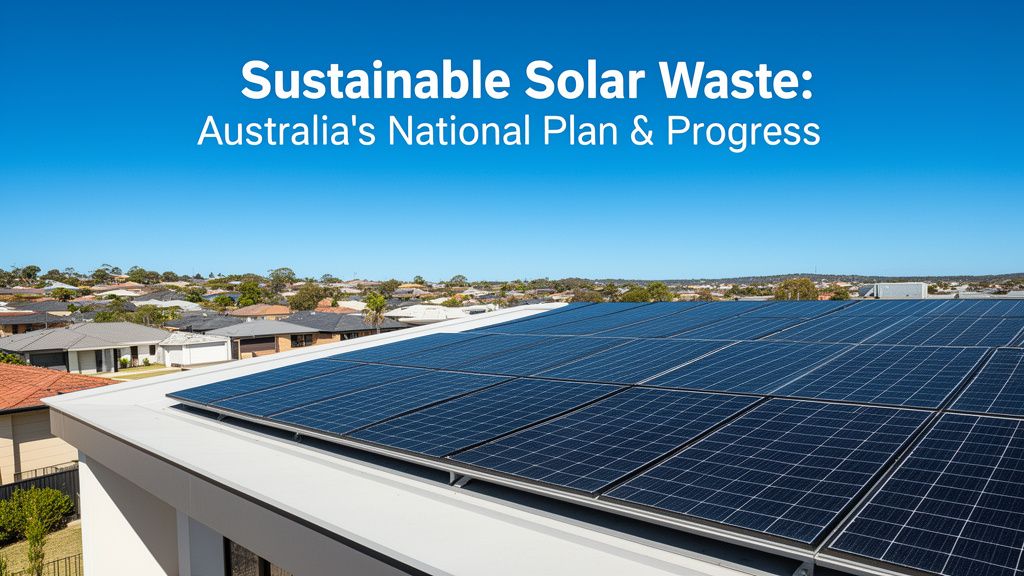
TL;DR: Australia is actively working towards a national plan for solar panel waste, driven by the increasing volume of end-of-life panels and the need to prevent landfill. This involves developing product stewardship schemes, investing in recycling infrastructure, and fostering a circular economy approach to manage solar PV waste sustainably.
Why is a National Solar Waste Plan Essential for Australia?
Australia's rapid adoption of rooftop solar presents a significant challenge as panels reach their end-of-life, necessitating a robust national management plan. Without a coordinated approach, the projected 100,000 tonnes of discarded solar panels annually by 2030 will strain landfills and lead to the loss of valuable resources. A national strategy is crucial to establish consistent recycling standards, encourage infrastructure investment, and ensure environmental protection while fostering a circular economy for solar PV.
The Growing Solar Waste Challenge
The significant volume of solar panels installed over the last two decades means a large wave of end-of-life panels is imminent. Most panels have a lifespan of 20-25 years, and early adopters' systems are now reaching this threshold. Without a scalable, nationally coordinated collection and recycling scheme, Australia risks simply landfilling millions of panels, wasting valuable materials and creating an unnecessary environmental burden. This challenge highlights the urgency for a unified and forward-thinking solution.
Unlocking Economic and Environmental Value
Landfilling solar panels not only wastes precious raw materials but also poses potential environmental risks, particularly from older panel technologies containing hazardous substances. A national plan facilitates the systematic recovery of valuable components such as glass, aluminium, silicon, and trace metals like silver and copper. Re-entering these materials into the manufacturing supply chain reduces reliance on virgin resources, lowers the carbon footprint of new solar products, and creates new jobs in the recycling sector, positioning Australia as a leader in sustainable energy practices.
What are Australia's Key Challenges in Solar Recycling, and How are They Being Addressed?
Australia faces significant obstacles in establishing effective solar panel recycling, including high processing costs, complex logistics across vast distances, and a lack of a mandatory funding mechanism. Unlike general e-waste, solar panels require specialised, costly processes, making landfilling the cheaper option for many. However, national efforts are gaining momentum to overcome these hurdles, primarily through developing a national product stewardship scheme and fostering innovation in recycling technology. These initiatives aim to transform end-of-life panels from waste into valuable resources, driving Australia towards a sustainable circular economy.
Overcoming Economic and Logistical Hurdles
The economic viability of advanced solar panel recycling remains a significant barrier. The current market value of recovered materials often doesn't offset the costs of collection, transport, and specialised processing, which can range from $200-$400 per tonne compared to landfill fees of around $50 per tonne. Furthermore, Australia's vast geography presents considerable logistical challenges for collecting heavy, bulky panels from urban centres and remote areas, creating a need for a distributed and efficient collection network.
Advancing Through Product Stewardship and Innovation
To address these challenges, Australia is actively pursuing a national product stewardship scheme for solar PV, similar to the successful National Television and Computer Recycling Scheme (NTCRS). This scheme would place financial responsibility on manufacturers and importers for their products' end-of-life, creating a sustainable funding model for recycling infrastructure and collection points. Concurrently, investments in research and development are exploring more cost-effective and efficient recycling technologies, supported by collaborations between government, industry, and academia to pilot new solutions and scale up existing facilities like Reclaim PV.


How Can Homeowners and Businesses Contribute to Sustainable Solar Waste Management?
Australian homeowners and businesses are key to building a sustainable solar waste system, empowered to make informed choices at purchase and actively support responsible disposal. Opting for reputable, Clean Energy Council (CEC) accredited installers ensures access to advice on product longevity and end-of-life solutions. Actively seeking ethical disposal pathways for old panels and advocating for stronger policy significantly contributes to the national effort to establish a thriving circular economy for solar PV.
Making Responsible Choices for Your Solar System
When investing in a solar system, consider more than just the upfront cost. Inquire about the manufacturer's warranty, their commitment to product stewardship, and any take-back programs they offer. Choosing high-quality, durable panels with longer warranties (e.g., a 6.6kW system costing between $5,000-$8,000) extends their lifespan, delaying the waste challenge. For decommissioning, avoid general landfill; instead, check with your local council for e-waste drop-off points or seek specialist PV recyclers, who typically charge around $20-$30 per panel to ensure proper recycling.
Advocating for and Participating in the Circular Economy
Beyond individual choices, homeowners and businesses can play a vital role in advocating for robust national solar product stewardship. Participate in government consultations or support industry bodies like the Clean Energy Council. By demonstrating demand for responsible end-of-life solutions, you help accelerate the development of national infrastructure and policies. Every informed decision and active contribution helps transform solar waste from an environmental liability into a valuable resource, securing a greener future for Australia’s energy landscape.
Key Takeaways
- Australia faces a significant and growing solar waste challenge that demands a national solution.
- A national product stewardship scheme is crucial for funding and coordinating effective solar panel recycling efforts.
- Homeowners and businesses should choose reputable installers and inquire about end-of-life panel management options.
- Responsible disposal through specialist recyclers is vital to prevent landfilling and recover valuable materials.
- Advocacy for stronger government policy and support for industry initiatives will accelerate Australia's transition to a circular economy for solar PV.
Read More
For a comprehensive overview, check out our master guide: Read the Full Guide Here.