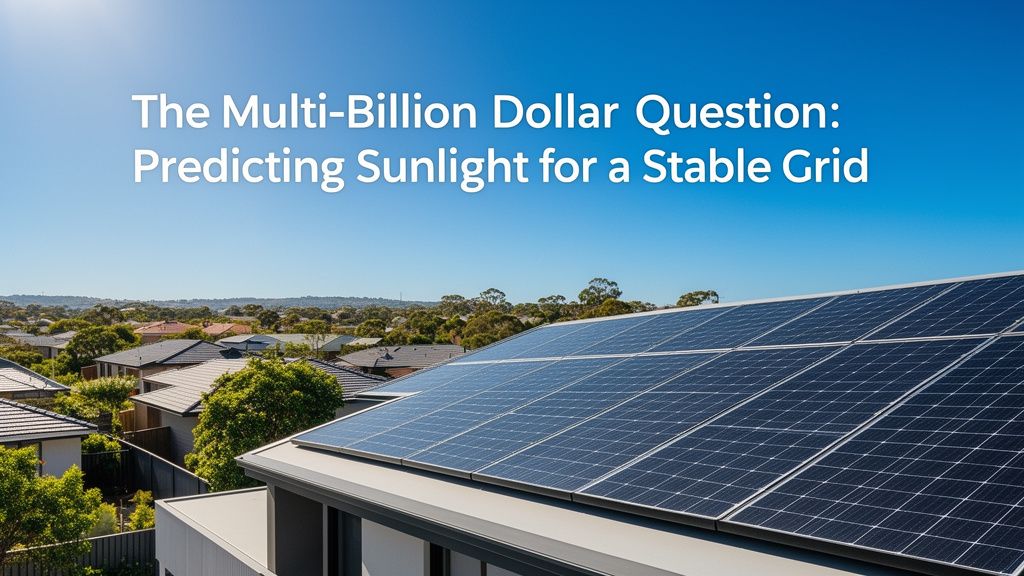
The Multi-Billion Dollar Question: Predicting Sunlight for a Stable Grid
Australia, the sunburnt country, is rapidly becoming the solar powerhouse of the world. With over 3.7 million rooftop solar systems generating a significant chunk of our national electricity, and immense utility-scale solar farms sprouting across the continent, sunshine has become a critical ingredient in our energy mix. This revolution is fantastic for reducing emissions and lowering power bills, but it presents a unique challenge: how do we keep the lights on when the sun hides behind a cloud, or a storm rolls in? This isn't just an academic question; it's a multi-billion dollar one that our grid operators, energy retailers, and even households grapple with daily.
The Solar Revolution Down Under
We’re not just dabbling in solar; we’re leading the charge. Australian homes boast the highest per-capita rate of rooftop solar globally. From the scorching deserts of South Australia to the bustling suburbs of Sydney, solar panels are an ubiquitous sight. This decentralised generation, alongside massive installations like the Limondale Solar Farm in New South Wales or the Sunraysia Solar Farm in Victoria, means that on a sunny day, solar can supply well over 50% of our grid’s electricity demand. It’s an incredible achievement, positioning Australia at the forefront of the global energy transition. But this very success introduces complexity.
The Flickering Challenge: Why Prediction Matters
Unlike baseload power stations that can reliably generate electricity 24/7, solar power is intermittent. Clouds, dust storms, bushfire smoke, or just the natural progression from day to night all cause fluctuations in output. The Australian Energy Market Operator (AEMO) works tirelessly to balance supply and demand every five minutes across the National Electricity Market (NEM). An unexpected drop in solar generation can create a sudden shortfall, requiring expensive, fast-acting gas or diesel peaker plants to fire up, or even risking grid instability and blackouts. Conversely, an unexpected surge can lead to oversupply, potentially damaging infrastructure or necessitating curtailment – meaning solar farms are paid to switch off, wasting clean energy. Accurate prediction is the lynchpin for managing this variability, ensuring a stable, affordable, and reliable electricity supply.
The Science of Sunshine Forecasting
Predicting solar output is a sophisticated blend of meteorology, satellite technology, and cutting-edge artificial intelligence. It’s far more than just checking the weather app. Advanced forecasting systems in Australia utilise several key components:
Satellite Imagery: Geostationary satellites like Japan’s Himawari-8 provide high-resolution images of cloud cover and movement over Australia every 10 minutes. This data is crucial for short-term forecasts, tracking how clouds will impact generation over the next few hours.
Ground-Based Sensors: Networks of pyranometers, instruments that measure solar radiation, are deployed across the country, often at large solar farms. These provide real-time, ground-truth data to calibrate and improve satellite models.
Numerical Weather Prediction (NWP) Models: These complex supercomputer models simulate atmospheric conditions, predicting cloud formation, wind patterns, and temperature hours and days in advance. AEMO and the Bureau of Meteorology collaborate extensively on these models.


Artificial Intelligence and Machine Learning: AI algorithms crunch vast datasets from satellites, sensors, and NWP models. They learn historical patterns, identifying correlations between weather conditions and actual solar output, constantly refining predictions to improve accuracy down to individual solar farm levels.
Australian Innovation Leading the Way
Australia is not just a consumer of these technologies; we’re actively developing them. Organisations like the Australian Renewable Energy Agency (ARENA) have invested millions into improving solar forecasting capabilities. Projects range from sophisticated modelling platforms to networks of ‘sky cameras’ that use computer vision to track cloud movements over specific sites. Universities and private companies are collaborating to develop next-generation AI tools that can provide hyper-local, ultra-short-term forecasts, even distinguishing between different types of clouds and their impact on solar irradiance. This local innovation is critical for tailoring solutions to Australia’s unique climate and vast geography.
The Multi-Billion Dollar Impact
Improved solar forecasting directly translates into massive savings and benefits for the nation:
Reduced Reliance on Fossil Fuels: More accurate predictions mean AEMO can better anticipate solar generation, reducing the need to keep expensive, polluting gas-fired power stations on standby. This saves hundreds of millions of dollars annually in operating costs and dramatically lowers carbon emissions.
Optimised Battery Storage: When we know how much solar is coming, we can intelligently charge and discharge grid-scale batteries. Instead of reacting to sudden drops, batteries can be pre-emptively charged during peak solar and dispatched precisely when needed, earning revenue and stabilising the grid.
Lower Energy Prices: By reducing reliance on expensive peaker plants and enabling more efficient use of renewable energy and storage, forecasting helps stabilise wholesale electricity prices, which ultimately flows through to lower bills for households and businesses. The cost of grid instability can easily run into hundreds of millions each year; better forecasting directly mitigates this.
Enhanced Grid Planning: Longer-term forecasts inform strategic decisions about grid upgrades, new transmission lines, and the optimal placement of future solar farms and energy storage projects. This ensures investments are made where they deliver the most value.
The Future is Bright (and Predictable)
As Australia continues its world-leading transition to renewable energy, the "multi-billion dollar question" of predicting sunlight will only grow in importance. The ongoing advancements in satellite technology, AI, and atmospheric modelling promise even greater accuracy, paving the way for a grid that is not just clean and affordable, but also incredibly stable and reliable. Our continued investment in this crucial area ensures that Australia remains at the forefront of the global energy transformation, harnessing the power of the sun with unprecedented precision for the benefit of all.
Read More
For a comprehensive overview, check out our master guide: Read the Full Guide Here.