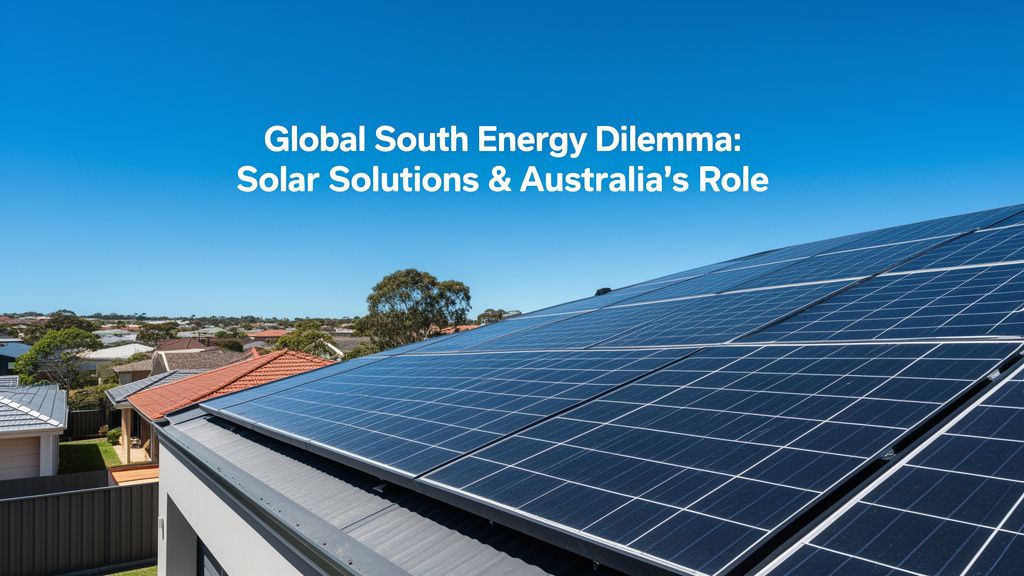
TL;DR: Billions in the Global South face a dual energy crisis, relying on polluting traditional cooking fuels while simultaneously increasing their dependency on fossil fuels for development. This dilemma exacerbates health issues, deforestation, and climate change, but affordable and accessible solar energy offers a viable pathway to clean cooking, decentralised power, and a sustainable future.
Why Do Billions in the Global South Still Rely on Traditional Cooking Fuels?
Billions of people in the Global South continue to rely on traditional biomass fuels like wood, charcoal, and animal dung for cooking due to affordability, accessibility, and deeply ingrained cultural practices. For many families, especially in rural areas, these fuels are often free or very low cost, harvested directly from their local environment, making them the only practical option despite their significant drawbacks. The high upfront cost of cleaner alternatives, like LPG or electric cookers powered by grid electricity, puts them out of reach for a substantial portion of the population, trapping them in a cycle of energy poverty. This reliance is not just an inconvenience; it's a major barrier to health, environmental sustainability, and gender equality, impacting daily life in profound ways.
The Health and Environmental Toll of Open Fires
The burning of traditional biomass in open fires or inefficient cookstoves releases a cocktail of harmful pollutants, including fine particulate matter, carbon monoxide, and black carbon. Indoor air pollution from cooking is a leading cause of premature deaths, particularly among women and children, contributing to respiratory illnesses, heart disease, and eye problems. Environmentally, the demand for wood fuel drives deforestation, leading to soil erosion, biodiversity loss, and contributing to climate change. It's a dire situation that directly links daily survival to long-term ecological damage and serious public health crises, affecting entire communities.
Economic and Gender Disparities in Fuel Collection
The burden of collecting traditional cooking fuels overwhelmingly falls on women and children, especially young girls. This labour-intensive task can consume several hours a day, diverting time away from education, income-generating activities, and other productive pursuits. The distances travelled to find fuel are often increasing as local resources dwindle, exposing them to physical dangers and perpetuating cycles of poverty. This 'time poverty' is a significant barrier to empowerment and development, trapping women and girls in a daily grind that limits their opportunities and exacerbates gender inequality within communities.
How Is the Global South's Development Entwined with Fossil Fuel Consumption?
Rapid economic development and urbanisation in many Global South nations are increasingly driving reliance on fossil fuels for electricity generation, transportation, and industrial processes. As these countries strive to lift their populations out of poverty, expand manufacturing, and build essential infrastructure, the demand for reliable and affordable energy skyrockets. Historically, fossil fuels have been the cheapest and most readily available option to meet this surging demand, allowing for quick scaling of power grids and industrial output. This dependency, however, locks them into emission-intensive pathways, making the global climate challenge even more complex.
Bridging the Energy Access Gap with Conventional Power
Many developing nations face the enormous challenge of providing basic electricity access to large, often rural, populations. While renewable energy is becoming more competitive, large-scale fossil fuel power plants (like coal or gas) have historically offered perceived advantages in terms of speed of deployment and stability for burgeoning national grids. Governments, aiming to provide immediate energy security and support industrial growth, have often prioritised these conventional methods. This choice, while addressing urgent energy deficits, creates a long-term commitment to carbon-emitting infrastructure, requiring significant future investment to transition away.
The Climate Catch-22 of Developing Economies
The Global South faces a frustrating 'catch-22': they bear the brunt of climate change impacts despite historically contributing the least to global emissions, yet their development needs often push them towards higher fossil fuel consumption. Developed nations, including Australia, industrialised using cheap fossil fuels and now advocate for a rapid transition away. However, expecting developing economies to forgo this developmental pathway without significant financial and technological support is perceived as unjust. This creates a difficult balancing act between meeting immediate development goals and contributing to global climate action, often leading to increased fossil fuel dependency.
Can Solar Energy Provide a Sustainable Solution to the Global South's Energy Challenges?
Solar energy presents a transformative opportunity for the Global South to leapfrog traditional fossil fuel development and address both cooking fuel and electricity needs sustainably. With abundant sunshine across many of these regions, solar power offers a decentralised, clean, and increasingly cost-effective alternative to both polluting biomass and fossil fuels. From small-scale solar cookers replacing open fires to vast solar farms powering entire communities, it provides a pathway to energy independence, improved health outcomes, and a significantly reduced carbon footprint, aligning development with global climate goals.
Solar Cookers and Clean Kitchens
Solar cookers, ranging from simple parabolic concentrators to more advanced solar ovens, offer a clean, emission-free alternative to traditional cooking fuels. While adoption still faces challenges around cultural practices and intermittency, they eliminate indoor air pollution, reduce deforestation, and free up time spent collecting firewood. For a modest investment, typically less than $100 for basic models, families can drastically improve their health and quality of life. Alongside other clean cooking solutions like bio-gas or efficient electric cookers powered by renewables, solar cookers are a vital part of the transition to healthier homes.
Decentralised Solar for Powering Progress
Beyond cooking, solar power is revolutionising electricity access in the Global South through decentralised solutions. Mini-grids powered by solar arrays are bringing reliable electricity to remote villages without the need for expensive, extensive national grid connections. Solar home systems (SHS), typically costing a few hundred dollars or less, provide lighting, phone charging, and power for small appliances, dramatically improving education, communication, and economic opportunities. These solutions are often more cost-effective than extending traditional grid infrastructure, particularly in hard-to-reach areas, and represent a truly sustainable path to energy equity.


What Role Can Australia Play in Supporting the Global South's Energy Transition?
Australia, with its abundant solar resources, world-leading research, and significant expertise in renewable energy deployment, can significantly contribute to the Global South's energy transition through technology transfer, investment, and policy support. Given our own impressive uptake of rooftop solar – Australia leads the world in per capita solar installations – we possess valuable insights into scaling renewable technologies, managing grid integration, and developing effective policy frameworks. Sharing this knowledge and experience is crucial, not just as foreign aid, but as a strategic investment in regional stability and a collective fight against climate change.
Exporting Expertise and Green Technology
Australian innovation in solar technology, from advanced panels to battery storage solutions and smart grid management, can be exported to help developing nations build their own sustainable energy systems. We can facilitate technical training programs, share best practices in project development and implementation, and assist in setting up local manufacturing capabilities. Australian companies, with their experience in harsh conditions, are well-positioned to offer robust, reliable solar products suited for the diverse environments across the Global South. This not only benefits partner countries but also creates new markets and opportunities for Australian businesses.
Financial Support and Capacity Building Initiatives
Beyond technology, Australia can provide crucial financial support and engage in capacity-building initiatives. This could involve direct aid for renewable energy projects, facilitating concessional loans, or partnering with international development banks. Investing in local human capital – training engineers, technicians, and policymakers in renewable energy – is paramount to ensuring the long-term sustainability of these transitions. By helping countries develop robust regulatory frameworks and secure financing, Australia can empower the Global South to take ownership of their clean energy future, fostering genuine and lasting development.
Key Takeaways
- The Global South faces a dual energy crisis: reliance on polluting traditional cooking fuels and growing dependency on fossil fuels for development.
- Traditional cooking fuels cause severe health issues, deforestation, and exacerbate gender inequality due to fuel collection burdens.
- Fossil fuel dependency, while bridging immediate energy gaps, locks developing economies into emission-intensive pathways, challenging global climate goals.
- Solar energy offers a sustainable, clean, and increasingly affordable solution for both clean cooking and decentralised electricity generation in the Global South.
- Australia can play a significant role by sharing solar expertise, technology, and financial support to accelerate the Global South's crucial clean energy transition.
Read More
For a comprehensive overview, check out our master guide: Read the Full Guide Here.


