TL;DR: Australian households are increasingly considering electric vehicles (EVs) due to significant long-term financial savings, primarily driven by drastically reduced running costs from cheaper home charging (especially with solar) and lower maintenance requirements compared to traditional petrol cars. Government incentives further sweeten the deal, making EVs a compelling economic choice for many Aussies.
How Do Electric Vehicles Drastically Cut Your Fuel Bills?
Electric vehicles drastically cut your fuel bills by replacing expensive petrol with significantly cheaper electricity, especially when charging at home during off-peak hours or, even better, using power generated from your own rooftop solar system. Consider a typical Australian motorist driving 15,000 km per year. A petrol car averaging 8L/100km at $2.00/L would cost around $2,400 annually in fuel. In contrast, an EV consuming 15 kWh/100km, charged at an average grid electricity rate of $0.30/kWh, would only cost about $675 per year. This represents an immediate saving of over $1,700 annually, which can quickly add up over the lifetime of the vehicle. These substantial savings are a primary driver for Aussies looking to reduce their household expenses.
Charging at Home with Grid Power
Charging your EV at home is far more cost-effective than filling up at the bowser, especially if you can leverage off-peak electricity tariffs. Many energy providers in Australia offer time-of-use plans where electricity can be as low as $0.15-$0.20/kWh during overnight hours. If you charge a 60 kWh battery from near empty to full at $0.20/kWh, it costs just $12. The same range in a petrol car, say 400 km at 8L/100km, would require 32 litres of petrol, costing around $64 at $2.00/L. The difference is stark, providing compelling savings for daily commuters and long-distance drivers alike.
Supercharging Savings with Rooftop Solar
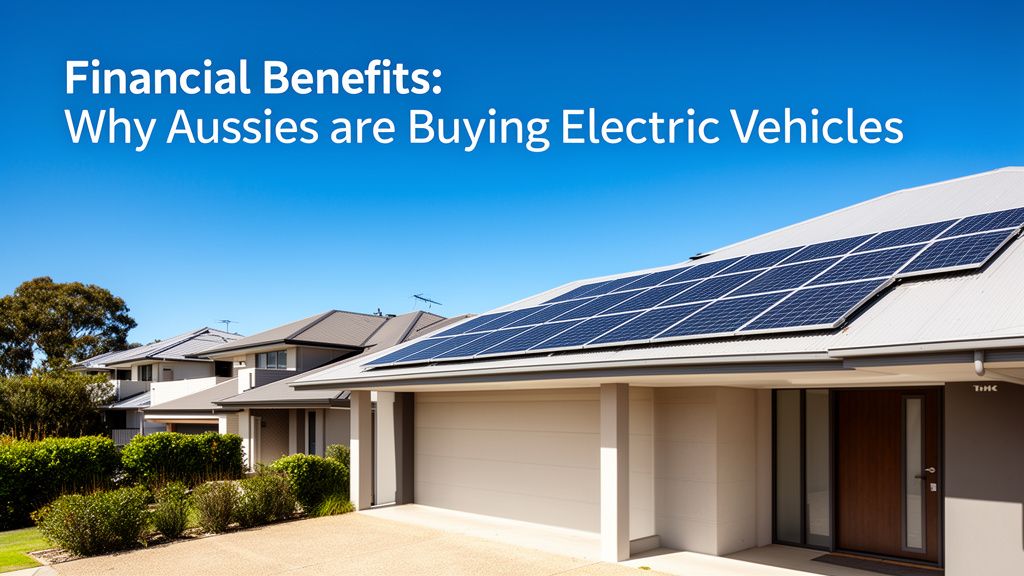
The financial benefits of an EV are supercharged when paired with a rooftop solar system. If you own solar panels, you can essentially fuel your car for free during the day by charging it directly with your self-generated electricity. This eliminates the grid electricity cost entirely, making your daily commute virtually free from a fuel perspective. For households with excess solar generation, this means maximising the value of their investment by using power that might otherwise be exported to the grid for a modest feed-in tariff. This synergy between solar and EVs creates an unparalleled level of energy independence and cost reduction.
What Are the Significant Long-Term Savings on Vehicle Maintenance?
Electric vehicles offer significant long-term savings on vehicle maintenance because their simpler powertrain design dramatically reduces the number of moving parts subject to wear and tear compared to internal combustion engine (ICE) vehicles. Traditional cars require regular oil changes, spark plug replacements, air filter changes, and transmission fluid services – none of which apply to EVs. This translates to fewer scheduled services, less labour, and fewer parts needing replacement, resulting in substantially lower ongoing maintenance costs over the vehicle's lifespan.
Fewer Moving Parts Mean Less Wear and Tear
The core difference in maintenance costs stems from the electric powertrain itself. An EV has an electric motor, a battery, and a simple single-speed transmission, whereas an ICE car has an engine with hundreds of moving parts, a complex multi-speed gearbox, fuel injection systems, and exhaust systems. This complexity means more components that can break, wear out, or need routine servicing. EV owners typically only need to worry about tyre rotations, cabin air filters, brake fluid checks, and general wear items, making their service schedules far less frequent and expensive.
Brake Regeneration Extends Component Life
One often overlooked aspect of EV maintenance savings is the extended life of brake components. Electric vehicles use regenerative braking, where the electric motor acts as a generator to slow the car down and recapture energy back into the battery. This means the friction brakes are used less frequently and less aggressively, significantly reducing wear on brake pads and rotors. While a petrol car might need brake pad replacements every 40,000-60,000 km, an EV could easily go 100,000 km or more before requiring new pads, saving hundreds of dollars per service.
How Do Australian Government Incentives Make EVs More Affordable Upfront?
Australian government incentives significantly enhance the upfront affordability of electric vehicles through various rebates, stamp duty exemptions, and even fringe benefits tax (FBT) exemptions for vehicles acquired via novated leases. These measures are designed to accelerate EV adoption by reducing the initial purchase barrier, making them a more accessible option for a broader range of Australian consumers and businesses. These financial boosts complement the ongoing running cost savings, making the switch even more compelling.


State-Specific Rebates and Concessions
Several Australian states and territories offer direct rebates and concessions to EV buyers, substantially lowering the effective purchase price. For example, New South Wales provides a $3,000 rebate for new EVs under a certain price cap, alongside stamp duty exemption. Victoria offers a similar $3,000 subsidy and registration fee discounts, while Queensland also has a $3,000 rebate. These state-level incentives can reduce the initial outlay by thousands of dollars, making popular EV models like the Tesla Model 3 or BYD Atto 3 more competitive with their petrol counterparts, especially when combined with ongoing fuel savings.
FBT Exemptions for Novated Leases
A powerful incentive for employees and employers alike is the federal government's FBT exemption for eligible EVs. If an EV is purchased through a novated lease, it is exempt from Fringe Benefits Tax, which can result in substantial savings for both parties. This exemption effectively reduces the total cost of ownership over the lease term by thousands of dollars, making EVs an extremely attractive option for salary packaging. It allows employees to drive a new EV with pre-tax income, dramatically improving affordability and accelerating the transition to electric fleets for businesses across Australia.
Key Takeaways
- Reduce Fuel Costs Significantly: Charging an EV at home, especially with solar, drastically cuts your annual fuel expenditure compared to petrol cars, saving you thousands of dollars each year.
- Lower Maintenance Expenses: EVs have fewer moving parts and benefit from regenerative braking, leading to less frequent servicing and longer lifespans for components like brakes, resulting in substantial long-term savings.
- Utilise Government Incentives: Take advantage of state-specific rebates (e.g., $3,000 in NSW, VIC, QLD) and stamp duty exemptions to lower the upfront purchase cost of an EV.
- Explore FBT Exemptions: For eligible employees, a novated lease on an EV can unlock significant FBT savings, making the financial transition even more attractive.
- Maximise Solar Investment: Pair your EV with a rooftop solar system to charge your car with free, clean energy, enhancing both your financial savings and your environmental footprint.
Read More
For a comprehensive overview, check out our master guide: Read the Full Guide Here.