TL;DR: Small, distributed green data centres leverage on-site renewable energy, primarily solar, to significantly reduce operational costs and enhance data resilience. For Australian businesses, this model offers substantial energy savings, strengthens ESG credentials, and capitalises on national incentives while addressing grid volatility and rising energy prices.
What is a Small, Distributed Green Data Centre, and Why are They Emerging?
A small, distributed green data centre is a compact, decentralised facility designed to process and store data closer to its source, powered predominantly by renewable energy sources like rooftop solar. This innovative model is rapidly gaining traction as the proliferation of IoT devices, AI applications, and increasing demand for real-time data processing necessitate ultra-low latency and enhanced data sovereignty. Unlike traditional hyperscale data centres, these smaller units reduce the physical distance data travels, minimising network congestion and improving application responsiveness. Integrating green power generation directly into their design not only slashes electricity bills but also aligns with the growing global emphasis on sustainability and corporate responsibility. For Australian businesses, where vast distances often mean data travels far, and renewable energy resources are abundant, this localised approach offers compelling operational and environmental benefits.
The Rise of Edge Computing and Data Localisation
The demand for edge computing, where data is processed at the network's edge rather than a centralised cloud, is a primary driver for distributed data centres. With everything from smart cities and autonomous vehicles to remote mining operations generating vast amounts of data, processing information closer to the source drastically cuts latency – crucial for time-sensitive applications. Australian enterprises, spread across a massive continent, benefit immensely from data localisation, which ensures compliance with data residency regulations and provides a more robust, resilient infrastructure less susceptible to single points of failure that larger, centralised facilities might present. This decentralisation fundamentally shifts how data is managed and consumed, bringing computing power directly to where it's most needed.
Solar Integration as a Core Design Principle
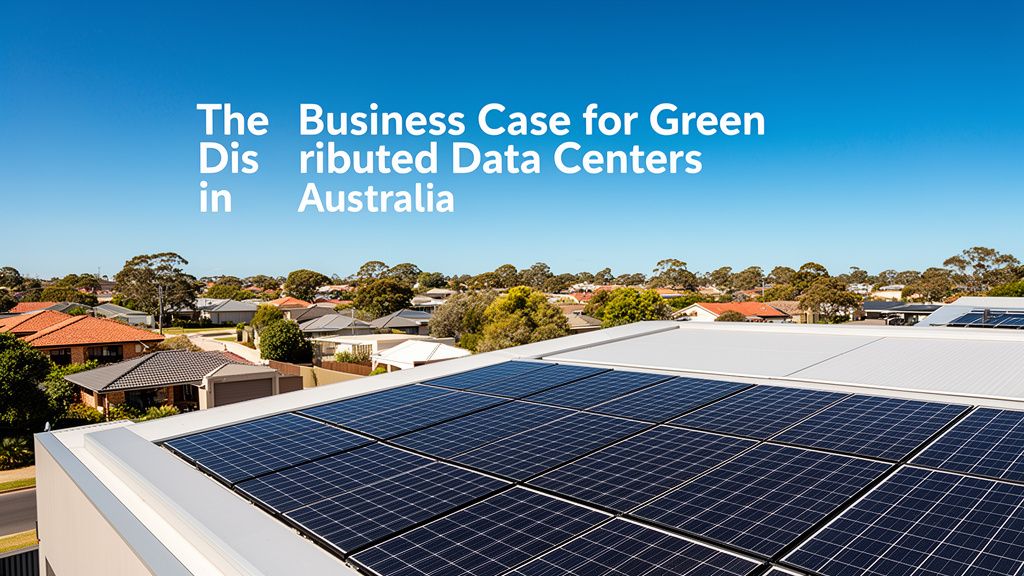
Integrating solar photovoltaic (PV) systems is not merely an add-on but a fundamental design principle for green distributed data centres. By directly harnessing Australia's abundant sunshine, these facilities can generate a significant portion, if not all, of their power requirements on-site. This architectural choice dramatically reduces reliance on the grid, mitigating exposure to volatile wholesale electricity prices which have seen significant spikes across the National Electricity Market (NEM). Beyond cost savings, using solar power substantially lowers the carbon footprint of data operations, making a tangible contribution to a company's environmental goals and demonstrating a commitment to sustainable practices. This proactive approach to energy sourcing is a game-changer for long-term operational viability.
How Do Distributed Green Data Centres Reduce Operational Costs for Businesses?
Distributed green data centres significantly reduce operational costs for businesses primarily by leveraging on-site renewable energy generation, which directly translates into lower electricity bills and greater energy independence. In Australia, where commercial electricity prices can range from 18 to 35 cents per kilowatt-hour (kWh) depending on location and demand, generating your own power through a commercial solar array can slash these expenses dramatically. The upfront investment in a solar system, which might cost anywhere from AUD$50,000 for a 50kW system up to AUD$500,000+ for a 500kW system, typically has a payback period of 3-7 years, after which the electricity generated is virtually free. This long-term cost predictability is a major financial advantage, protecting businesses from future energy price increases and providing a stable operating budget.
Significant Energy Savings Through On-Site Solar Generation
The most direct cost-saving benefit comes from offsetting grid electricity consumption with self-generated solar power. A typical small data centre might consume hundreds of thousands of kWh annually. If a 100kW solar system, costing around AUD$100,000-$150,000, can generate approximately 140,000 kWh per year in a sunny location like Queensland, it could save a business AUD$25,200 to AUD$49,000 annually based on average commercial rates. These savings accumulate over the 25+ year lifespan of the solar system, providing a substantial return on investment. Furthermore, any excess electricity generated can often be exported back to the grid, earning feed-in tariffs (FiTs) that, while modest for commercial systems (e.g., 5-8 cents/kWh), provide additional revenue or further offset costs.
Optimised Cooling and Reduced Grid Reliance
Smaller, distributed data centres often benefit from more efficient cooling strategies due to their compact size and ability to be located in areas with more favourable ambient temperatures or even direct liquid cooling opportunities. This contrasts with large, centralised facilities that require massive HVAC systems. Reduced cooling loads directly translate to lower power consumption, further decreasing electricity costs. Additionally, the ability to generate a significant portion of their own power lessens their reliance on the main grid, providing a degree of energy security and resilience against grid outages or fluctuations. This independence can be further enhanced with battery storage systems, ensuring continuous operation even during peak demand or unexpected blackouts, thereby preventing costly downtime.
What are the Environmental and Social Governance (ESG) Benefits for Australian Enterprises?
Adopting small, distributed green data centres offers Australian enterprises significant Environmental and Social Governance (ESG) benefits, enhancing their reputation, attracting conscious investors, and future-proofing their operations against increasingly stringent environmental regulations. By powering these facilities with renewable energy, businesses make a tangible commitment to reducing their carbon footprint, which resonates strongly with environmentally aware consumers, employees, and stakeholders. This proactive stance on sustainability demonstrates a company's dedication to responsible corporate citizenship, moving beyond mere compliance to genuine leadership in the green economy. Investing in such infrastructure also contributes to local economic resilience and job creation in the renewable energy sector.
Achieving Net-Zero Emissions and Boosting Corporate Reputation
One of the most compelling ESG benefits is the substantial reduction in Scope 2 greenhouse gas emissions (emissions from purchased electricity). By switching from grid power, which in Australia is still largely fossil-fuel dependent, to on-site solar, companies can drastically lower their carbon intensity. This directly supports corporate net-zero targets and aligns with national and international climate goals. A strong environmental performance enhances corporate reputation, making a business more attractive to ethical investors who increasingly screen for ESG criteria. It also improves brand perception among customers, who are increasingly favouring companies that demonstrate environmental responsibility, potentially leading to increased market share and brand loyalty.


Contributing to Local Grid Stability and Energy Security
Distributed green data centres, especially those integrated with battery storage, can play a vital role in enhancing local grid stability and energy security, which has significant social benefits. By generating power locally and potentially feeding surplus back into the grid, these facilities can reduce strain on transmission infrastructure, particularly during peak demand periods. This decentralised approach makes the energy network more resilient and less prone to widespread blackouts, which is a critical concern in Australia given recent grid challenges. Furthermore, by investing in local renewable energy infrastructure, businesses contribute to a more sustainable energy future for their communities, supporting the transition away from fossil fuels and reducing overall reliance on external energy sources.
Are There Specific Australian Incentives or Market Drivers Supporting These Solutions?
Yes, several specific Australian incentives and market drivers strongly support the development and adoption of small, distributed green data centres, making the business case even more compelling for enterprises. The high cost and increasing volatility of commercial electricity in Australia serve as a powerful economic incentive to generate power independently. Furthermore, both federal and some state governments offer various financial mechanisms to encourage renewable energy uptake, directly improving the return on investment for solar-powered facilities. The national push towards a net-zero economy also creates a supportive regulatory and social environment for green infrastructure investments.
Leveraging Federal STCs and State-Based Renewable Programs
The federal Small-scale Renewable Energy Scheme (SRES) provides Small-scale Technology Certificates (STCs) for eligible solar systems up to 100kW. While this primarily benefits smaller commercial systems, the value of these STCs can reduce the upfront installation cost by thousands of dollars, making solar more accessible. For larger systems above 100kW, the Renewable Energy Target (RET) offers Large-scale Generation Certificates (LGCs), providing ongoing revenue for generated power. Although the LGC market is more complex, it still adds a significant financial sweetener for substantial commercial solar projects. Some Australian states also periodically offer grants or rebates for specific renewable energy or energy efficiency initiatives, which businesses can explore to further enhance project viability.
Mitigating Australia's Rising Energy Costs and Grid Volatility
Australia has some of the highest electricity prices globally for businesses, and these costs have been notoriously volatile, particularly across the National Electricity Market (NEM). This fluctuating and often expensive grid power creates a strong impetus for businesses to seek energy independence. Small, distributed data centres with integrated solar and storage offer a tangible way to mitigate these risks by reducing reliance on grid power and providing a predictable, long-term energy cost. The ability to insulate operations from peak demand charges and potential blackouts offers not just cost savings but also business continuity and resilience, which are invaluable assets in an increasingly uncertain energy landscape.
Key Takeaways
- Small, distributed green data centres leverage on-site solar to dramatically reduce operational energy costs and hedge against rising grid prices.
- Adopting these facilities significantly enhances a company's ESG profile, contributing to net-zero goals and boosting brand reputation among stakeholders.
- Australia's unique market conditions, including high electricity costs and federal/state renewable energy incentives, make the business case particularly strong.
- Edge computing capabilities improve data processing speed and resilience, meeting the demands of IoT and AI applications across vast distances.
- Investing in green data infrastructure provides long-term energy security and operational stability, reducing reliance on a volatile main grid.
Read More
For a comprehensive overview, check out our master guide: Read the Full Guide Here.