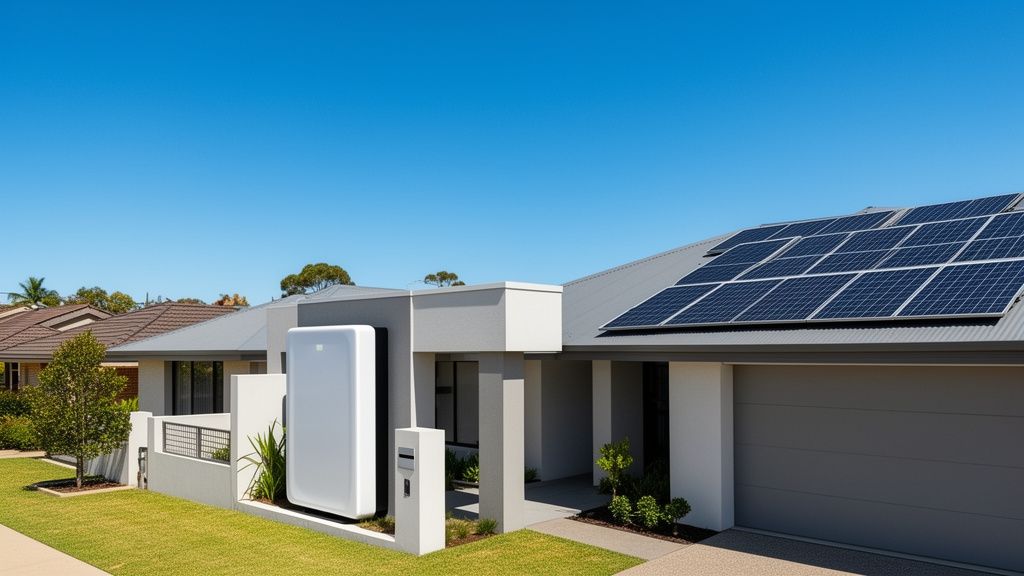
TL;DR: Powerwall 3 is one sealed box at 13.5 kWh with 11.5 kW of output, installed for roughly $16,000 to $20,000. SigenStor is a stack you size and extend, from about $12,000 to $17,000 for a comparable 10 kWh. Pick Tesla for simplicity and output; pick Sigenergy if you want to start small, extend later, or run DC-coupled.
How do the two systems differ in design?
Tesla builds one integrated unit. Sigenergy builds a stack of parts.
The Powerwall 3 includes a hybrid inverter, so on a new installation it handles solar and battery storage in a single box with no separate solar inverter. Fewer components, simpler install, one warranty, one app.
SigenStor is a hybrid inverter paired with stackable battery modules, an energy controller and optionally a DC EV charger. You configure it to the household and add to it later.
Neither approach is better in the abstract. Integration buys simplicity and takes away choice. Modularity buys flexibility and adds decisions.
What DC coupling changes
The SigenStor supports both DC and AC coupling. That matters more than it sounds.
On a DC-coupled system, solar DC goes straight into the battery without being converted to AC and back. Each conversion costs a few percent, so DC coupling can push round-trip efficiency to 97% or better from panel to battery.
AC coupling is what you use when adding a battery to existing solar panels with their own inverter. It works, and it loses a little more in conversion.
The practical rule: new solar and battery together, go DC-coupled. Retrofitting to a healthy existing array, AC coupling is usually the sensible compromise rather than replacing a working inverter.
How do the specifications compare?
Powerwall 3: 13.5 kWh usable, 11.5 kW continuous output, round-trip efficiency around 89 to 90%, integrated hybrid inverter, fast transfer to backup.
That output figure is the standout. 11.5 kW continuous runs ducted air conditioning, an induction cooktop and everything else simultaneously without tripping. Most residential batteries deliver half that, which is why so many installations back up a small essential circuit rather than the whole house.
SigenStor: battery modules from 5 kWh stacking to 10 kWh, 15 kWh and beyond. Inverters at 5 kW, 8 kW and 10 kW. DC coupling for higher round-trip efficiency.
So Tesla wins on raw output and Sigenergy wins on sizing precision. If your reason for buying is whole-home backup with heavy loads, that output number decides it. If it is bill savings and you want to match capacity to your evening consumption, the modular approach wastes less.
Sizing to what you actually use
Whichever you choose, size to your evening draw rather than your daily total.
A household using 25 kWh a day with only 8 kWh of it after generation stops does not need 15 kWh of storage. Your retailer holds interval data showing exactly when you consume, and it costs nothing to request. Paying for capacity that never discharges is the fastest way to a bad payback figure on either system.
What do they cost installed in Australia?
Powerwall 3: roughly $16,000 to $20,000 installed, including the unit, its integrated inverter and installation. Warranty is typically 10 years.
The integrated inverter is a genuine saving on a new installation, because you are not buying a separate solar inverter. On a retrofit to existing solar it is less of an advantage, since you already have one.
SigenStor: around $12,000 to $17,000 for a 10 kWh configuration, meaning the inverter plus two 5 kWh modules. Larger inverters and more modules move it up from there.
The lower entry point is the real difference. You can start at 5 kWh or 10 kWh, see how it performs against your actual consumption, and add modules later. That defers cost on an asset that warrants on cycles, and it avoids buying capacity ahead of need.
Before relying on that, confirm two things in writing: which module revisions your inverter and firmware will accept, and how long the module you are buying today will remain available. Modular expansion is only worth what the supply chain is worth in year five.
What the price does not include
Neither figure covers switchboard upgrades, an essential-loads panel if you want backup, or long cable runs. Those can add thousands, and they are where quotes on identical hardware diverge.
Federal and state rebates apply to both. The Cheaper Home Batteries discount cuts roughly 30% off eligible installed costs at the point of sale, and it steps down each year.
Which is better for expansion and grid participation?
Expansion. Sigenergy, clearly. Adding 5 kWh modules to an existing stack is cheaper per kilowatt-hour than any alternative. Tesla's answer is stacking additional Powerwall units, which works and jumps in 13.5 kWh increments at full unit cost.
Virtual power plants. Tesla has the longer track record, particularly in South Australia, and the largest installed base for aggregators to work with. Sigenergy's open architecture and third-party compatibility position it well and it has less history behind it.
Read any VPP offer carefully whichever you buy. VPP participation cycles the battery harder than household use alone, and most warranties expire at a stated energy throughput or cycle count, whichever comes first. Earning VPP credits can bring that expiry forward by years, and the credits do not always cover what that costs you.
Ecosystem. Tesla's integrates with its own solar and vehicle charging. Sigenergy offers its own DC EV charger and works more openly with third-party equipment. Which suits you depends on whether you value a closed system that works or an open one you can mix.
Which should you buy?
Powerwall 3 if you want whole-home backup with heavy loads, value one supplier and one app, are installing solar and battery together, and 13.5 kWh matches your evening consumption reasonably well.
SigenStor if you want to start smaller and extend, your evening load is not close to a 13.5 kWh multiple, you are installing new solar and want DC coupling, or you want an open system that will take third-party equipment.
As a rough shorthand for budgeting: Powerwall 3 lands around $16k to $20k installed, SigenStor around $12k to $17k for a comparable capacity, and switchboard work sits on top of both.
Get both quoted by the same installer. The install cost varies enough between houses that a comparison of list prices tells you very little.
Key Takeaways
- Powerwall 3 is an integrated 13.5 kWh unit with 11.5 kW continuous output, roughly $16,000 to $20,000 installed. The output rating is what makes genuine whole-home backup practical.
- SigenStor is modular, from about $12,000 to $17,000 for 10 kWh, and extends in 5 kWh increments.
- DC coupling on the SigenStor reaches 97% or better round-trip from panel to battery, which favours it when installing new solar and storage together.
- Size either one to your evening consumption, not your daily total, using interval data from your retailer.
- Read VPP terms against your battery warranty, because cycling for credits can bring the throughput limit forward by years.