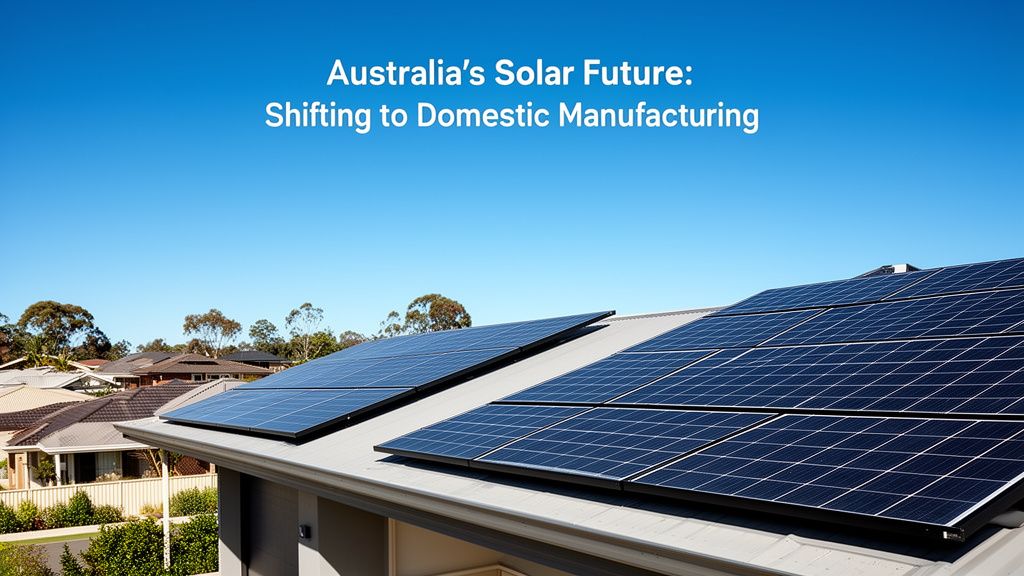
TL;DR: Australia needs to transition from solely installing imported solar equipment to manufacturing its own. This requires a significant mindset shift among industry, government, and consumers, focusing on long-term national benefits like energy security, job creation, and economic resilience over short-term import cost advantages. Strategic investment and a clear national vision are essential for building a domestic solar supply chain.
Why Does Australia Need a Local Solar Manufacturing Base?
Australia has led the world in household solar uptake for years, yet we import almost every panel, inverter, and battery we install. This reliance on overseas supply, primarily from China, creates vulnerabilities and misses significant economic opportunities. Building a local solar manufacturing base strengthens our energy independence, protecting us from global supply chain disruptions and geopolitical shifts that could impact our electricity supply. When a shipping container costs six times more than pre-pandemic rates, or when trade disputes halt specific imports, our vast solar installation industry faces genuine threats. Manufacturing panels, cells, and even raw materials here in Australia means greater control over our energy future.
Beyond security, local manufacturing drives economic growth. Establishing factories for solar cell production, module assembly, and battery components creates thousands of high-skilled jobs in regional and urban centres. These jobs extend across engineering, research and development, factory floor operations, logistics, and quality control. Furthermore, it builds an innovation ecosystem. Australian universities and research institutions are world-class in solar technology, holding numerous efficiency records. We risk losing these brilliant minds and their intellectual property if commercialisation opportunities do not exist locally. Converting research breakthroughs into Australian-made products keeps that value and expertise within our borders, contributing to a more resilient and diverse national economy.
Bolstering Energy Security and Resilience
Our current model means Australia depends entirely on global markets for critical energy infrastructure. A strong local manufacturing sector ensures we can scale up production of solar components quickly if international supply lines tighten or become unstable. This is not a hypothetical concern, as the COVID-19 pandemic highlighted how fragile global supply chains can be. Extreme weather events, political unrest, or even a major cyber-attack on a shipping port could severely impact the availability of solar panels. Investing in domestic production reduces this external reliance. It creates a strategic reserve of capability, ensuring that even if global trade slows, Australia can continue its transition to renewable energy without interruption. This resilience strengthens our entire national energy grid, providing a buffer against future shocks.
Driving Local Jobs and Economic Growth
A shift to local manufacturing moves beyond simply installing systems to creating the systems themselves. This means new industries and new employment. Consider the example of a new solar module factory: it requires engineers to design the production lines, technicians to operate and maintain the equipment, material handlers, quality assurance staff, and administrative support. The benefits extend beyond the factory gates, too, stimulating demand for local suppliers of raw materials, packaging, and logistics services. For instance, if Australia can develop the capacity to produce polysilicon, wafers, or even specialty glass for panels, it opens up entirely new supply chains within our borders. This type of industrial expansion strengthens regional economies, creating stable, long-term employment opportunities that complement our existing mining and agricultural sectors.
What Mindset Shifts Are Required for Australian Solar Manufacturing?
Achieving a substantial domestic solar manufacturing capability demands a fundamental change in how we perceive and value our renewable energy sector. For too long, the prevailing mindset focused on the cheapest possible installed cost, which almost invariably meant importing components. This approach overlooks the broader economic, strategic, and environmental benefits of local production. We need to shift from a short-term, cost-first perspective to a long-term, value-driven strategy that recognises the true worth of a resilient and self-sufficient energy industry. This means understanding that a slightly higher upfront cost for an Australian-made panel could deliver significant returns in terms of national security, job creation, and future innovation.
This shift also extends to government policy and investment. Instead of piecemeal support or reacting to immediate market pressures, we need a cohesive, national industrial strategy for solar. This involves identifying specific areas where Australia has a competitive advantage, perhaps in high-efficiency cell technology, advanced inverter manufacturing, or even green steel for mounting structures. Government grants, concessional loans, and targeted procurement policies can de-risk initial investments for private companies. Additionally, we need to recognise the role of large-scale renewable projects, like new solar farms, in driving demand for locally manufactured components. If major projects prioritise Australian-made materials where viable, it creates the market certainty necessary for factories to scale up.
Prioritising Long-Term Value Over Immediate Cost
For decades, the Australian solar industry concentrated on driving down the installed cost of systems to encourage rapid uptake. This strategy worked effectively in making solar accessible, with residential systems like a 6.6kW installation now costing between $6,000 and $9,000 in major cities. However, this focus inadvertently entrenched a reliance on mass-produced, low-cost imports. To build local manufacturing, we must begin to evaluate solar products not just on their sticker price, but on their whole-of-life value proposition, including the economic stimulus and energy security they provide. This means industry professionals, policymakers, and consumers need to appreciate that an Australian-made panel, even if it costs 10-20% more initially, delivers indirect benefits that outweigh that premium over time. This includes a reduced carbon footprint from less shipping, local product support, and the knowledge that every dollar spent circulates within the Australian economy.
Building National Collaboration and Policy Support
Building a manufacturing base requires more than just individual companies or clever engineers; it needs a concerted national effort. Universities, research institutions like the CSIRO, private industry, and all levels of government must collaborate. This includes establishing dedicated innovation hubs, creating clear regulatory pathways for new manufacturing facilities, and developing training programs to upskill the workforce for advanced manufacturing roles. For example, a national "Solar Manufacturing Fund" could offer grants for feasibility studies, pilot projects, and scaling up production lines. The Queensland Government's investment in a solar panel factory in Aldoga suggests a positive step, aiming to produce 1 million panels annually. Similar state and federal initiatives, coupled with 'Buy Australian' preferences in government tenders for large-scale solar projects, can create the stable demand needed for Australian companies to invest confidently in manufacturing at scale.
Key Takeaways
- Australia's strong reliance on imported solar components creates energy security risks and foregoes significant economic opportunities.
- Shifting to local solar manufacturing means creating high-skilled jobs across engineering, production, and R&D.
- We need a mindset change: prioritise long-term national value and resilience over the cheapest immediate import cost.
- Government, industry, and research institutions must collaborate on a national strategy with targeted investment and procurement policies.
- Supporting Australian-made solar products, even with a slight price premium, contributes to national energy independence and economic growth.
