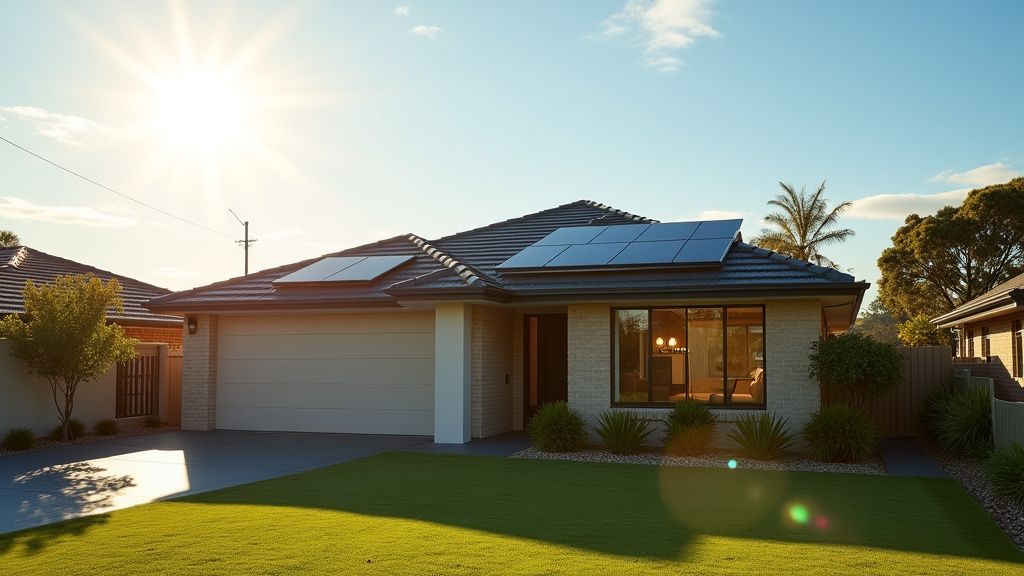
There is now a grant covering 50% of shared rooftop solar for apartment buildings, up to $150,000 per project. That changes the maths for strata, where the barrier has always been cost split across owners who benefit unequally.
Putting solar panels on an apartment building is harder than a house install, and most of the difficulty is governance rather than engineering.
Why Solar for Strata?
- Reduced Strata Fees: Common area power, hallways, lifts, pools, car park lighting, runs continuously and is billed to the body corporate. Cutting it cuts levies for everyone.
- Increased Property Value: A building with solar sells and leases better.
- Lower Electricity Bills for Residents: Depending on which model you choose, though not all of them deliver this.
The Challenges of Strata Solar
- Decision-Making: Getting owners to agree is the real obstacle. Committees need to run consultation and voting properly or the project stalls at a general meeting.
- Complex Systems: Distributing the benefit fairly across units is genuinely difficult.
- Roof Space Allocation: Limited roof relative to the number of units, especially in taller buildings.
- Installation Logistics: High-rise concrete roofs need installers who have done them before.
Strata Solar Solutions: Finding the Right Fit
Four models, simplest first.
1. Common Area Solar:
- How it Works: A system powering lighting, lifts and communal facilities.
- Benefits: By far the easiest to get approved, because the benefit is shared evenly through lower levies and nobody is arguing about roof allocation.
- Considerations: Does nothing for individual unit bills.
2. Individual Solar Systems:
- How it Works: Each owner gets their own system and a share of the roof.
- Benefits: Owners control their own generation.
- Considerations: Hard to allocate fairly when roof areas differ in size and sun exposure. Small systems cost more per watt, though a bulk buy across the building offsets some of that.
3. Shared Solar Systems:
- How it Works: One larger system, output distributed to units by smart metering.
- Benefits: Distributes fairly regardless of who is under which part of the roof.
- Considerations: Needs the metering technology and careful design.
4. Embedded Networks with Solar:
- How it Works: The building becomes a private microgrid, each unit metered behind a master meter, with on-site solar feeding it and residents buying at a lower rate.
- Benefits: The largest savings for residents.
- Considerations: The most complex and costly, with significant infrastructure work and ongoing regulatory obligations.
New Government Grants for 2026
The Solar for Apartment Residents Grant covers 50% of the cost of shared rooftop solar PV systems, up to $150,000 per project.
- Funding Amount: Up to $150,000 per project.
- Coverage: 50% of total project costs.
- Eligibility: Strata apartment buildings.
On a $200,000 shared system that is $100,000 off, which is often the difference between a proposal passing and failing at a general meeting.
Key Steps to Strata Solar Success
- Assess Your Building's Needs: Start with common area consumption, since that is the easiest win and the easiest approval.
- Engage a Solar Expert: One with actual strata experience. High-rise concrete roofs are a different job.
- Obtain Multiple Quotes: Compare on the same model and system size.
- Consult with Residents: Early and openly. Projects fail at the vote, not at the install.
- Secure Strata Approval: Follow your scheme's process exactly.
- Apply for Government Grants: The 50% grant is what makes the numbers work.
Looking Ahead to 2026
Start with common area solar and the grant. It is the model that gets approved, it cuts a bill every owner is already paying, and it establishes that the building can run a project like this before anyone proposes something more complicated.
