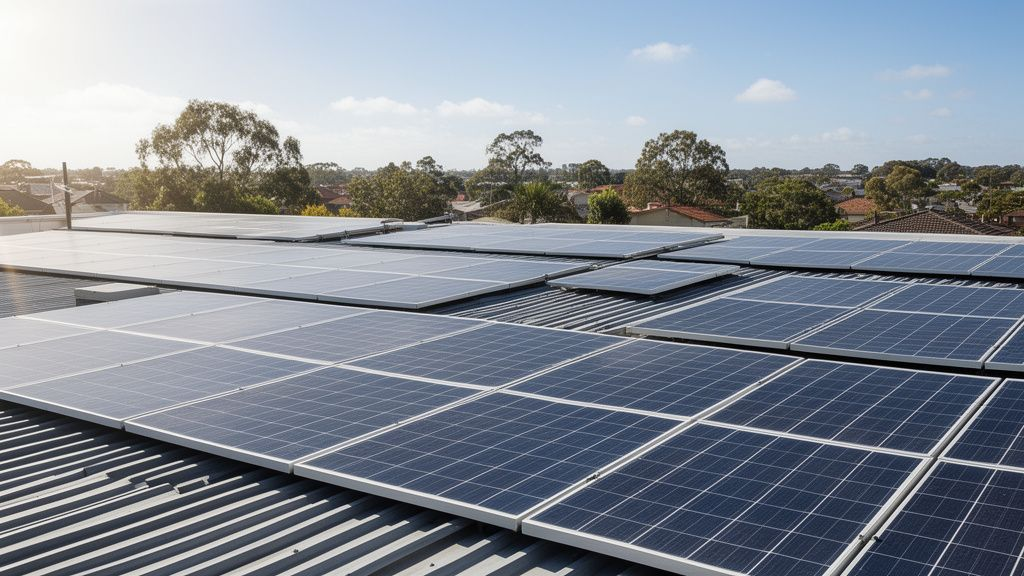
TL;DR: This guide explains how home and commercial solar designs are optimized using the Australian Photovoltaic Institute's mapping tools alongside on-site regional engineering practices implemented in Tasmania.
The Australian Photovoltaic Institute (APVI) Mapping Initiative
Designing an efficient solar energy system requires a deep understanding of regional climate conditions, localized rooftop shading, and historical generation data. The Australian Photovoltaic Institute (APVI) Solar Maps project, funded by the Australian Renewable Energy Agency (ARENA), provides a comprehensive suite of digital tools that allow stakeholders to analyze and optimize solar potential across Australia. By providing access to high-resolution geospatial and historical data, the APVI enables homeowners, businesses, and technicians to make informed decisions before initiating physical installations.
These public resources include a Live PV Map, which tracks live nationwide performance data alongside total electricity demand and PV contributions. For historical evaluations, the APVI's PV Postcode Data and Market Analyses track solar installations registered under the Commonwealth Government's Renewable Energy Target (RET) since 2007. This allows stakeholders to observe monthly installation trends and regional market penetration, helping them understand local grid dynamics.
SunSPoT and the Power of 3D Urban Mapping
One of the most valuable tools in the APVI suite is SunSPoT. This rooftop solar mapping tool uses advanced 3D geospatial data to assess annual and monthly solar PV potential within urban environments. Shading from trees, neighboring buildings, and roof gables can dramatically decrease a system's output if not accounted for during the design phase.
By utilizing SunSPoT, designers can:
- Map the exact dimensions and tilt of a roof.
- Model solar radiation levels across different months of the year.
- Analyze real-world shading profiles to determine the most productive locations for solar panel placement.
- Estimate the financial return of prospective systems based on realistic, site-specific generation forecasts.
This level of pre-installation modeling reduces guesswork, ensuring that residential and commercial systems are sized correctly and positioned for maximum long-term yield.
From Mapping to Practical Installation: Tasmania's Regional Adaptations
While digital mapping tools like the APVI suite provide valuable remote data, physical installation requires hands-on regional expertise to adapt designs to local climates. In Tasmania, solar specialist Degree C operates out of three statewide offices (including Longford in Northern Tasmania), delivering custom renewable systems designed for colder climates.


A common misconception is that solar panels do not work effectively in cooler regions like Tasmania. However, solar PV technology operates efficiently in cool and cloudy conditions, and Tasmania's long daylight hours during spring and summer provide steady, reliable generation across the year. By generating their own power, Tasmanian households can secure immediate utility savings, with systems typically paying for themselves within a few years.
Degree C conducts thorough, on-site technical inspections to confirm that digital planning aligns with real-world conditions. Their team of specialized designers and technicians handles projects of any complexity, from standard residential homes to unique commercial installations, offering 0% interest payment plans to make systems accessible to families, homebuilders, and property investors.
Long-Term Performance, Maintenance, and System Switchboards
To ensure a solar system performs at peak efficiency over its multi-decade lifespan, owners must look beyond the panels themselves to the underlying electrical infrastructure. Degree C provides a complete suite of services that covers system design, fabrication, and maintenance, including:
- Grid-Connected Solar Power Design & Installation: Creating standard systems that feed energy directly back into the local grid.
- Hybrid and AC-Coupled Battery Storage: Integrating storage systems so that households can save excess power for overnight use or emergency backup.
- Switchboard and Interface Protection Design: Custom-building solar switchboards, interface protection, and advanced metering systems to ensure safe grid connection.
- Fabrication of Mechanical Protection Components: Manufacturing physical protective casings and components to shield electrical infrastructure from harsh environmental conditions.
- System Testing, Inspection, and Maintenance: Conducting regular electrical testing on panels and battery systems to detect faults, degradation, or safety hazards.
Key Takeaways
- Data-Driven Planning: The APVI Solar Maps program, funded by ARENA, provides public tools to track live performance and historical installation data back to 2007.
- Shading Analysis: The SunSPoT tool utilizes 3D urban mapping data to calculate shading and roof potential, ensuring optimal panel placement.
- Tasmanian Viability: Despite cooler weather, Tasmania's long daylight hours support highly effective solar generation, as demonstrated by Degree C's regional operations.
- Full-Service Engineering: Designing a long-lasting solar system requires professional switchboard design, custom mechanical protection, and ongoing testing and maintenance.