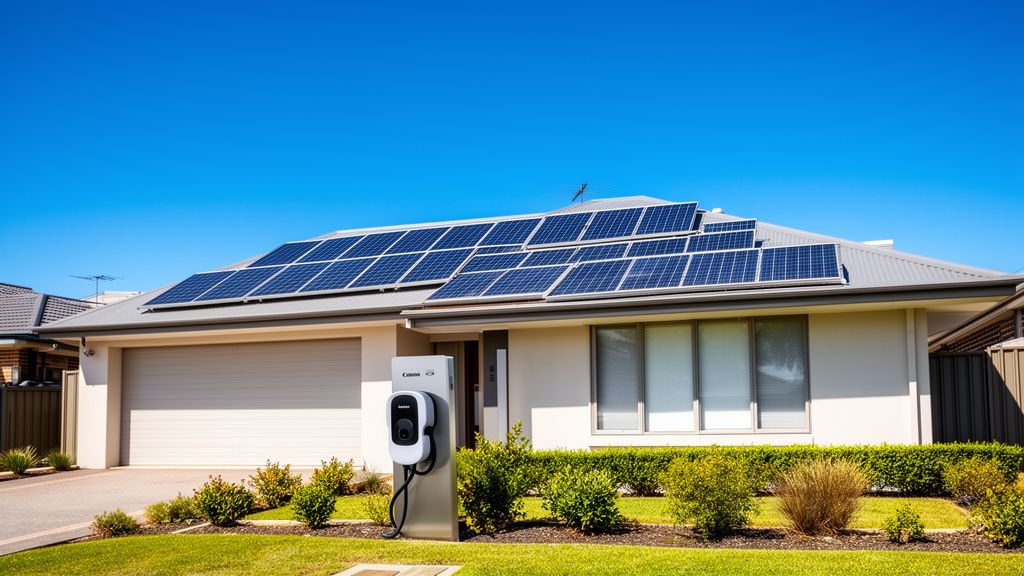
TL;DR: Direct, state-specific rebates solely for residential EV charger installations are increasingly rare across Australia, though some states previously offered them. Instead, support often comes through broader EV purchase incentives, interest-free loans for energy efficiency upgrades that can include chargers, or programs focused on smart grid integration and information provision. Homeowners are largely responsible for the cost of charger purchase and installation, with solar integration offering the best economic return.
Do Australian States Currently Offer Direct Rebates for Residential EV Chargers?
Direct, standalone rebates specifically for residential EV charger hardware and installation are not widely or consistently available across Australian states in 2024, representing a shift from earlier incentive programs. While most states have, or have had, various forms of support for the uptake of electric vehicles themselves, dedicated subsidies for the charging infrastructure within private homes have largely phased out or were never a primary focus. The current landscape often sees support channelled through broader energy efficiency schemes, interest-free loans that can include chargers, or via information and resources designed to help integrate EVs into the grid efficiently. This means the onus for purchasing and installing an EV charger, which typically costs between AUD $800 and $2,500 for the unit plus AUD $500 to $1,500 for professional installation, primarily rests with the homeowner.
The Evolving Landscape of EV Incentives
The landscape of EV incentives in Australia is dynamic, with policies frequently changing based on state budgets, uptake rates, and strategic priorities. Historically, some states like NSW offered incentives that could be indirectly applied to chargers as part of a larger EV package. However, the trend is moving towards market normalisation for chargers, with governments focusing more on public charging infrastructure and grid-level integration of EVs rather than direct residential hardware subsidies. This shift reflects a maturing EV market where the base technology for home charging is becoming more accessible and affordable, and the focus is turning to smart charging solutions and overall grid resilience.
Typical Costs for Home EV Charger Installation
Installing a home EV charger involves two main components: the charger unit itself and the electrical installation. A standard 7kW "Level 2" AC charger suitable for most homes ranges from AUD $800 to $2,500, depending on brand, features (like smart connectivity), and power output. The installation cost can vary significantly, usually between AUD $500 and AUD $1,500, influenced by the complexity of the electrical work required, the distance from your switchboard, and any necessary upgrades to your home's wiring. Factors like trenching for outdoor installations or upgrading an older switchboard can push costs higher. Given the current lack of direct state rebates, budgeting for these full costs is crucial for prospective EV owners.
What Indirect Support or Smart Charging Programs are Available in NSW and Victoria?
New South Wales and Victoria, as Australia's most populous states, have led various initiatives to support EV uptake, but their approaches to residential charger support are now more indirect or focused on smart grid integration rather than direct rebates. These states recognise the importance of home charging but tend to integrate it within broader energy or EV strategies. Rather than handing out cash for a charger, they often provide information, support vehicle purchase, or explore pilot programs for smart charging that could yield future benefits. This means homeowners in these states need to look beyond direct charger subsidies and consider the overall ecosystem of EV support.
New South Wales: From Direct Rebates to Broader EV Goals
New South Wales previously offered a AUD $3,000 rebate on eligible new EVs under AUD $68,750, a scheme that has now ceased. While this rebate didn't directly cover chargers, the financial relief could free up funds for home charging infrastructure. Currently, NSW's focus has shifted towards expanding public charging networks and developing a smart charging strategy. The state government provides extensive information and resources on EV ownership, including advice on home charging solutions. Future initiatives are expected to centre on integrating EVs into the grid as mobile batteries and optimising charging times to reduce grid strain, rather than directly subsidising the charger itself.
Victoria's Focus on Zero-Emission Vehicles and Grid Integration
Victoria has been proactive with its Zero Emissions Vehicle (ZEV) Subsidy, offering AUD $3,000 for new ZEVs under AUD $68,740, which also ceased in June 2024. While helpful for vehicle affordability, this didn't extend to direct residential charger rebates. Victoria has also run several pilot programs, such as the EV Smart Charging Trial, which explored how smart chargers can manage electricity demand. Although these trials don't offer direct charger rebates, they indicate a future where homeowners might receive incentives for participating in smart charging networks that help balance the grid. Currently, Victorian homeowners should factor the full cost of their home charger into their EV budget.
Are There Specific EV Charger Incentives in Queensland, South Australia, and Western Australia?
For Queensland, South Australia, and Western Australia, specific residential EV charger incentives are generally limited or absent in 2024. These states, much like NSW and Victoria, have primarily focused their support on the purchase of the electric vehicle itself or on building out public charging infrastructure. While homeowners in these regions are encouraged to install home chargers for convenience and efficiency, the financial burden of doing so typically falls entirely on them. However, some broader energy efficiency loan programs might indirectly assist.
Queensland's EV Support and Energy Initiatives
Queensland has offered a notable Electric Vehicle Rebate of up to AUD $6,000 for eligible new EVs, a strong incentive for vehicle purchase, but no direct residential EV charger rebate currently exists. The state government's focus is largely on increasing EV sales and expanding the Queensland Electric Super Highway. Queensland also has various general energy efficiency schemes, such as the Household Energy Efficiency Scheme, which sometimes provides advice or support for energy-saving upgrades, but these are not tailored specifically for EV chargers. Homeowners should investigate if any broader sustainable living loans or grants could potentially be leveraged for electrical upgrades that facilitate charger installation.
South Australia's Approach to Home Charging Infrastructure
South Australia's Electric Vehicle Subsidy, offering AUD $3,000 for eligible new EVs and a three-year registration fee exemption, was a significant boost for vehicle buyers but did not directly subsidise home chargers. SA Power Networks has run various trials related to EV charging and grid impact, which focus on understanding and managing electricity demand rather than offering direct charger rebates. Homeowners in South Australia will need to cover the full cost of their residential charger and its installation, though combining it with solar panel installation can make it a more attractive long-term investment.


Western Australia's General EV Strategy
Western Australia has historically offered fewer direct EV incentives compared to the eastern states. While it has invested in public charging infrastructure, there haven't been specific, widely available residential EV charger rebates. The state's Electric Vehicle Strategy focuses on accelerating EV uptake through public charging network expansion, fleet transition, and regulatory settings. Homeowners in WA looking to install a residential EV charger should expect to pay the full cost out-of-pocket, but like in other states, integrating with a home solar system can significantly reduce the running costs of their EV.
What Should Homeowners Consider When State-Specific Charger Rebates Are Limited?
Given the scarcity of direct state-specific rebates for residential EV chargers, homeowners should shift their focus from looking for subsidies to optimising their investment in home charging. This primarily involves leveraging existing solar power systems or installing one concurrently, and embracing smart charging technologies. By taking these steps, you can significantly reduce the operational costs of your EV, making the charger a worthwhile long-term investment despite the initial outlay. It's about smart energy management rather than relying on government hand-outs for hardware.
Leveraging Solar Power for Cost-Effective Charging
Pairing your residential EV charger with a solar power system is arguably the most financially astute move for Australian EV owners. By charging your EV during daylight hours using your own generated solar electricity, you can dramatically reduce or even eliminate the cost of charging. This avoids high peak grid electricity rates, which can be over AUD $0.30 per kWh in some areas. A typical 6.6kW solar system can generate enough power to substantially offset the charging needs of an average EV, saving you hundreds, if not thousands, of dollars per year on fuel costs. While the initial investment in solar and a charger is substantial (e.g., AUD $6,000-$10,000 for solar plus AUD $1,500-$4,000 for charger and installation), the long-term savings are significant.
The Benefits of Smart Charging Technology
Even without direct subsidies, investing in a "smart" EV charger can provide considerable long-term savings and convenience. Smart chargers connect to your home's Wi-Fi and often integrate with your solar inverter or electricity tariff. This allows them to:
- Charge during off-peak hours: Automatically schedule charging when electricity rates are lowest (e.g., overnight, often around AUD $0.15-$0.20 per kWh).
- Prioritise solar power: Direct excess solar generation directly to your EV battery, maximising self-consumption and reducing reliance on the grid.
- Optimise energy use: Adjust charging speed based on household demand to avoid exceeding your home's circuit capacity.
- Future-proof: Be ready for potential 'vehicle-to-grid' (V2G) or 'vehicle-to-home' (V2H) technologies, where your EV can supply power back to your home or the grid. While smart chargers might be slightly more expensive upfront (adding a few hundred dollars to the base cost), their ability to reduce running costs and enhance energy efficiency makes them a sound investment.
Key Takeaways
- Direct state government rebates specifically for residential EV charger hardware are rare across Australia in 2024.
- Most state support focuses on EV purchase incentives (many of which have now ceased or been reduced) or public charging infrastructure.
- Homeowners should budget for the full cost of an EV charger and installation, typically AUD $1,500 - AUD $4,000.
- Integrating a home EV charger with a solar power system offers the most significant long-term financial benefit by reducing charging costs.
- Investing in a smart EV charger can provide ongoing savings by optimising charging times and leveraging solar energy, even without direct rebates.
Read More
For a comprehensive overview, check out our master guide: Read the Full Guide Here.


