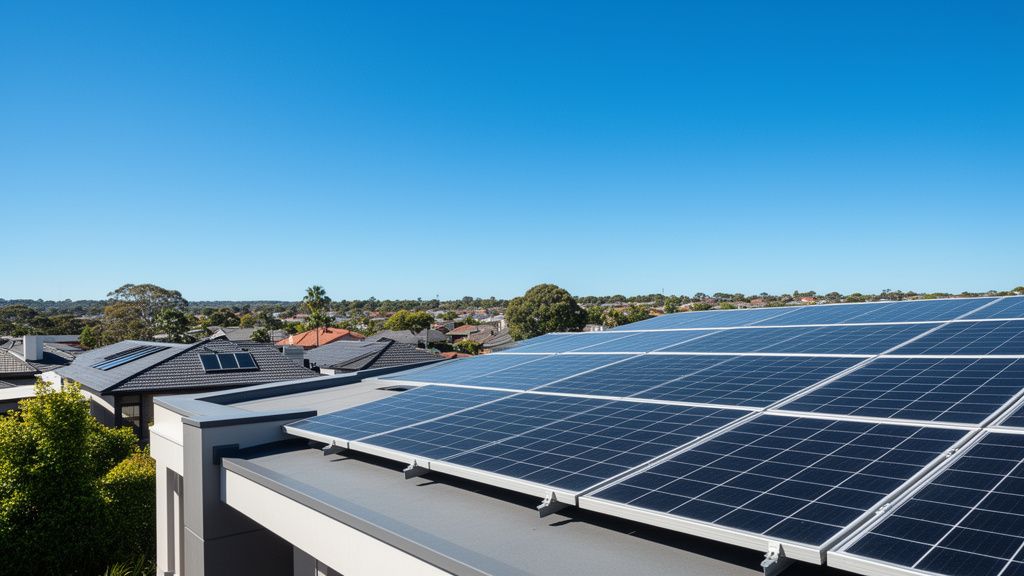
TL;DR: NSW's current planning application fees for large solar projects tie directly to the capital investment value, creating an unfair burden. This system, designed for traditional developments, significantly inflates costs for solar farms, slowing down the state's transition to renewable energy. A fairer, capacity-based fee structure is necessary to accelerate solar development.
What are NSW's capital-linked planning application costs for solar?
NSW calculates planning application fees for major projects, including large-scale solar farms, based on their Capital Investment Value (CIV). The Department of Planning, Housing and Infrastructure (DPHI) publishes a fee schedule where higher CIV projects incur substantially larger application costs. For instance, a solar project with a CIV between $50 million and $100 million faces an application fee of $128,000 plus 0.128% of the CIV above $50 million. If that project had a CIV of $200 million, the fee jumps to $192,000 plus 0.096% of the CIV exceeding $100 million. These fees represent an upfront cost that developers must pay before any construction starts or revenue generation occurs. This system was largely developed for traditional infrastructure, where CIV often correlates more closely with complexity or potential environmental impact.
How do these fees impact large-scale solar projects?
These significant upfront fees add a direct financial burden to large-scale solar projects. A typical 100-megawatt (MW) solar farm can easily have a CIV exceeding $150 million. Under the current DPHI schedule, the planning application fee for such a project could reach over $250,000. This is a substantial quarter-million-dollar cost simply to submit an application, regardless of whether it receives approval. This charge often doesn't reflect the actual planning assessment workload involved, but rather the sheer capital intensity of building a solar farm. It disproportionately penalises capital-intensive projects that offer long-term public and environmental benefits.
Why is the current fee structure not suitable for renewable energy?
The existing fee structure for planning applications in NSW does not suit renewable energy projects because it conflates high capital cost with high planning complexity or negative impact. Solar farms, while expensive to build, generally have a predictable environmental footprint and are critical for NSW's energy future. The fees often exceed what the DPHI spends on assessing these applications. A large commercial building or a mining extension with a similar CIV to a solar farm might demand more complex environmental assessments or require greater public infrastructure changes. Yet, solar is lumped into the same assessment category. This mismatch means the state inadvertently penalises the very investments it needs to reach its renewable energy targets, treating solar farm applications like any other high-value development.
What are the consequences of high planning fees for NSW's energy transition?
High planning fees slow down the rollout of new solar capacity across NSW. Developers absorb these costs into project budgets, which either reduces the project's overall profitability or increases the final cost of electricity. This makes NSW a less attractive location for new renewable energy investment compared to states with more equitable fee structures. The cumulative effect of these delays means NSW struggles to meet its ambitious renewable energy targets on schedule. Ultimately, this leads to a slower decarbonisation of the grid and higher energy costs for consumers, as new, cheaper renewable energy capacity comes online at a slower pace. The fees also contribute to uncertainty for investors, making it harder to secure financing for projects.
What changes could improve the planning fee system for solar projects?
Improving the planning fee system for solar projects in NSW requires a shift from capital-linked fees to a more appropriate metric for renewable energy. A tiered system based on generation capacity (megawatts or megawatts-hours) rather than CIV would be a more sensible approach. For example, a flat fee for projects up to 5 MW, a slightly higher fee for 5-50 MW, and a capped fee for projects over 50 MW could align costs with actual assessment effort. The government could also implement a specific fee schedule for renewable energy projects, acknowledging their strategic importance. Other states, such as Victoria, have mechanisms to waive or cap fees for specific types of renewable energy infrastructure, demonstrating that alternative models work. A review could also introduce a maximum cap for any renewable energy project, regardless of its CIV, ensuring fees remain reasonable.


How can industry and government collaborate on fee reform?
Industry bodies, such as the Clean Energy Council and the Australian Solar Council, routinely advocate for a more equitable planning fee system. Collaboration between these organisations and the NSW government, particularly the DPHI, is essential. Open consultation would allow industry professionals to present data on project costs, development timelines, and the real impact of current fees. The government could then better understand the unique characteristics of renewable energy projects and design a fee schedule that supports rather than hinders growth. Streamlining the application process and setting clear, proportionate fees benefits everyone: developers face fewer financial hurdles, the government processes applications more efficiently, and NSW consumers gain access to more affordable, cleaner electricity sooner.
Key Takeaways
- NSW planning application fees for large solar projects are tied to Capital Investment Value (CIV), not actual planning burden.
- This capital-linked fee structure disproportionately impacts solar farms, adding hundreds of thousands of dollars in upfront costs.
- The current system slows down NSW's renewable energy transition and makes the state less attractive for new solar investment.
- A fairer fee system based on generation capacity (MW) or with specific caps for renewable projects would better support solar development.
- Industry bodies and the NSW government should collaborate to reform planning fees, accelerating the state's clean energy goals.
Read More
For a comprehensive overview, check out our master guide: Read the Full Guide Here.