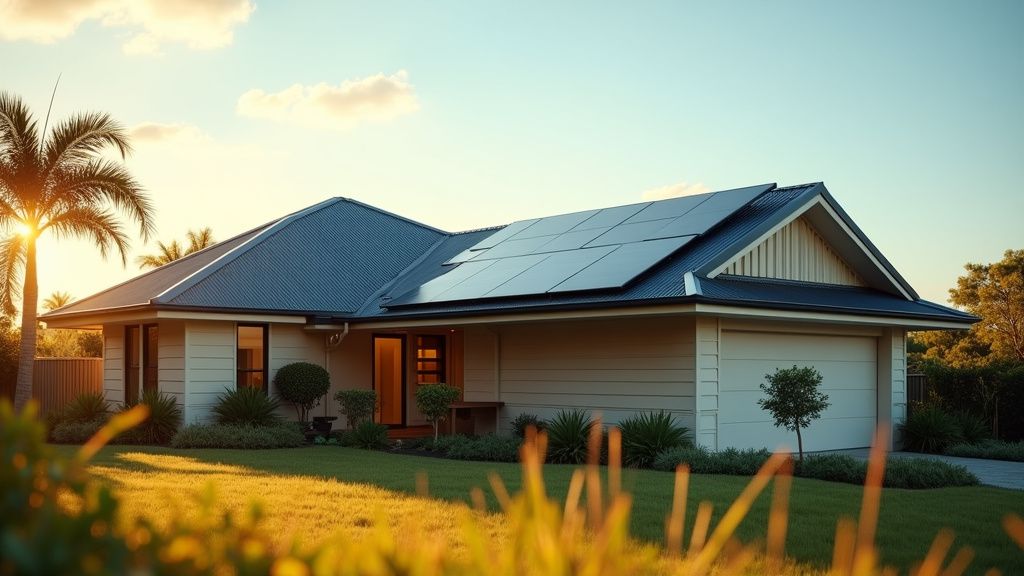
Free Midday Power: Sunshine and Savings or Cloudy Concerns for Aussie Households?
The Australian government is gearing up to launch a new initiative aimed at harnessing our abundant solar energy and potentially saving households money: free power for three hours in the middle of the day. Officially called the "Solar Sharer" program, this scheme promises to redistribute the benefits of solar power more equitably, especially to those who can't afford rooftop panels. But is it all sunshine and roses? Let us examine the potential pros and cons. You can find a Complete Guide here.
The Promise of Free Power: What's on Offer?
From July next year, households in NSW, South Australia, and South-East Queensland (with Victoria and Western Australia potentially to follow) will have the option to opt-in to plans offering three hours of free electricity during the day. The exact timeframe will likely coincide with peak solar generation, around midday.
The idea is straightforward: Australia experiences a surge in solar power generation during the day, often leading to an oversupply that can strain the grid. By incentivising households to use more power during these hours, the program aims to balance supply and demand, making the electricity grid more stable and efficient.
Potential Benefits: Saving Money and Green Energy
For households, the most obvious benefit is the potential to save money on electricity bills. Government estimates suggest possible savings of up to $800 per year. This could be a significant boon for families struggling with rising energy costs, especially given recent increases in electricity prices.
Here's how those savings might be achieved:
- Charging Electric Vehicles (EVs): If you own an EV, charging it during the free midday hours could drastically reduce your running costs.
- Running Appliances: Schedule energy-intensive tasks like doing laundry, running the dishwasher, or heating water with your electric hot water system to coincide with the free power window.
- Increased Solar Adoption: By making solar energy more accessible to everyone, regardless of their ability to install panels, the scheme could encourage further adoption of renewable energy.
The Concerns and Potential Drawbacks: A Closer Look
While the concept is appealing, several concerns have been raised about the "Solar Sharer" program:
- Retailer Concerns & Potential Cost Shifting: The Australian Energy Council, the peak body for electricity retailers, has criticised the lack of consultation surrounding the initiative. Their primary concern is that forcing retailers to offer free power could lead to increased costs and risks, particularly for smaller retailers. This could potentially lead to some retailers exiting the market, thus reducing competition. They fear these costs will be offset by raised power prices during non-peak times.
- Smart Meter Requirement: Participation in the program requires a smart meter. While many households already have them, some may need to upgrade, incurring an upfront cost.
- Behavioural Changes Needed: To maximise savings, households will need to actively manage their energy consumption and shift their usage to the midday period. This might not be feasible for everyone, especially those who work during the day.
- Pricing Outside Free Hours: The government has instructed the Australian Energy Regulator (AER) to prevent power companies from inflating electricity prices outside the free window. However, the effectiveness of this measure remains to be seen.
- Regional Availability: Initially, the scheme will only be available in select states. This raises questions about fairness and equitable access to renewable energy benefits across the country.
The Verdict: Promising, But With Caveats
The "Solar Sharer" program has the potential to be a positive step towards a more sustainable and affordable energy future for Australia. By harnessing the power of midday solar generation, it could help stabilise the grid, reduce electricity costs for households, and promote the adoption of renewable energy.
However, it is essential to acknowledge the potential drawbacks and ensure that the program is implemented carefully to avoid unintended consequences. Key to the success of the initiative is the AER's ability to prevent price gouging outside of the free midday window, and the willingness of consumers to change their energy consumption habits.
Ultimately, the success of the "Solar Sharer" program will depend on how effectively these challenges are addressed and whether it truly delivers on its promise of affordable and accessible solar power for all Australians. Keep an eye on Complete Guide for updates and further analysis as the launch date approaches.
