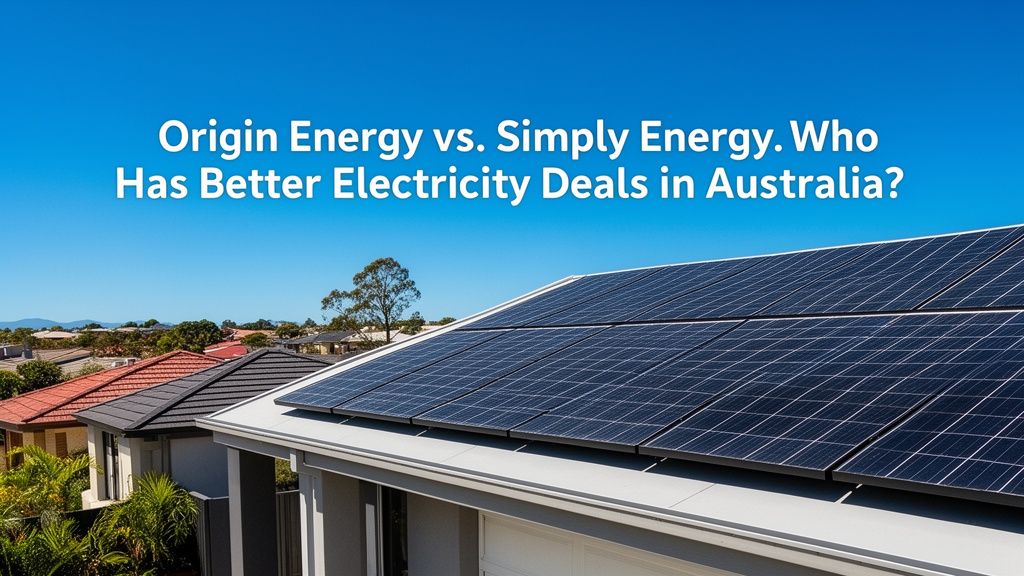
G'day Aussies! When it comes to powering our homes, especially with solar panels glinting on the roof, choosing the right electricity provider can feel like navigating the Nullarbor with a compass and a map drawn on a napkin. It's a big decision that can significantly impact your hip pocket. Today, we're pitting two major players against each other: the long-standing giant Origin Energy and the increasingly popular challenger Simply Energy. Who genuinely offers better electricity deals for Australian households, particularly those with solar? Let's dive in.
Who Are They? A Quick Rundown
Origin Energy is one of Australia's largest and most established energy retailers. They've been around the block, offering a comprehensive suite of services from electricity and gas to internet and mobile plans. With a vast customer base across multiple states, Origin is known for its extensive network and diverse range of plans, often catering to various household needs and consumption patterns.
Simply Energy, while perhaps not as old as Origin, has rapidly carved out a significant niche for itself, especially in competitive markets like Victoria, New South Wales, South Australia, and Queensland. They often differentiate themselves by offering competitive rates, straightforward plans, and sometimes more attractive solar feed-in tariffs (FITs), appealing to cost-conscious consumers and solar-savvy households.
What to Look For in an Electricity Deal
Before we start comparing apples with oranges (or solar panels with power lines), let's outline the key factors you should consider when evaluating any electricity deal:
Daily Supply Charge: This is a fixed daily fee, regardless of how much electricity you use. It's like a service charge for being connected to the grid. Usage Charges (Tariffs): These are the rates you pay for the electricity you consume, usually measured in cents per kilowatt-hour (c/kWh). These can vary based on peak, off-peak, and shoulder times. Solar Feed-in Tariff (FIT): Crucial for solar owners! This is the credit you receive for any excess electricity your solar panels export back to the grid, also measured in c/kWh. A higher FIT can significantly reduce your bill. Discounts and Incentives: Many plans come with conditional discounts (e.g., pay-on-time, direct debit) or sign-up bonuses. Always check the conditions and whether they apply to the entire bill or just usage charges. Contract Terms: Look out for lock-in contracts, exit fees, and the benefit period of any discounts. Flexibility is key. Customer Service: How easy is it to get in touch? What's their reputation for resolving issues? Green Credentials: If environmental impact is important to you, check their commitment to renewable energy and green power options.
Origin Energy Deep Dive: The Established Player
Origin Energy typically offers a wide array of plans, often categorised by their focus – basic, flexible, or those with specific add-ons like carbon offsets. Their main strengths include:
Stability and Reliability: As a large provider, they generally offer robust infrastructure and reliable service. Bundling Options: You can often get discounts by bundling electricity, gas, and even internet services, which can be convenient. Customer Service Channels: A broad range of support channels, including phone, online chat, and a comprehensive app.
For solar customers, Origin's FITs have historically been competitive, though they can vary significantly by plan and state. Some plans might offer a higher FIT but with a slightly higher usage charge, or vice-versa. Always read the Product Disclosure Statement (PDS) carefully. Their conditional discounts can be attractive, but missing a payment can mean losing a significant percentage off your bill.
Simply Energy Deep Dive: The Competitive Challenger
Simply Energy has gained traction by often undercutting the bigger players on price, especially for usage charges and solar FITs. Their key appeals often include:
Aggressive Pricing: They frequently offer some of the most competitive base rates and often have attractive sign-up bonuses or pay-on-time discounts. Strong Solar FITs: Simply Energy has historically been a strong contender for solar owners, often providing some of the more generous feed-in tariffs in various states. This can be a huge drawcard for households actively exporting solar power. Straightforward Plans: Their plans tend to be less complex than some larger providers, making it easier to understand your bill.
However, being a more agile player can sometimes mean their customer service experience might not always be as consistently smooth as the behemoths, though they are continually improving. It’s always worth checking recent customer reviews for your specific area.
Direct Comparison: Who Wins on What?
Pricing (Usage & Supply): This is highly variable by postcode and current offers. Simply Energy often aims to be price-competitive, particularly on usage rates. Origin, while competitive, might have slightly higher base rates offset by generous conditional discounts or bundling. Verdict: Often Simply Energy for raw price, but Origin can compete with bundles/discounts.
Solar Feed-in Tariffs: For many solar households, Simply Energy has been a standout performer, often leading with higher FITs. Origin’s FITs are competitive but tend to be part of a broader package. Verdict: Simply Energy often has an edge here.
Discounts and Incentives: Both offer them. Origin excels with bundling. Simply Energy focuses on competitive pricing and sometimes better new customer offers. Verdict: Neck and neck, depends on your needs.
Customer Service: Origin, being larger, often has more established customer service infrastructure. Simply Energy is improving but might still have some mixed reviews depending on the region. Verdict: Origin for established service, Simply Energy for improving agility.
Green Options: Both offer green power options and have commitments to renewable energy. Verdict: Fairly even.
Making Your Decision: It’s Personal!
Honestly, there’s no universal "better" provider. The best deal for you will depend heavily on:
Your Location: Electricity prices and available plans vary significantly by state and even postcode. Your Usage Habits: Are you a heavy daytime user, or do you mostly consume power in the evenings? Your Solar System: How much power do you export? A higher FIT is paramount if you export a lot. Your Payment Habits: Can you consistently meet pay-on-time conditions? Bundling Needs: Do you want to combine services?
The absolute best way to compare is to use government-run energy comparison websites like Energy Made Easy (federal), Victorian Energy Compare (VIC), or SA.gov.au’s electricity comparison tool (SA). Input your actual usage data if you can, and make sure to specify if you have solar. These tools are independent and provide a clear, apples-to-apples comparison of current offers in your area.
Conclusion
Both Origin Energy and Simply Energy have strong propositions for Australian households. Origin offers the stability, breadth of services, and bundling potential of a major player. Simply Energy often shines with aggressive pricing and particularly attractive solar feed-in tariffs, making them a top contender for solar-equipped homes looking to maximise their export value.
The real winner, however, is you – the informed consumer. Don't just settle for your current provider. Take a few minutes, jump onto a comparison site, and see which company truly offers the best deal for your unique energy needs. You might be surprised at how much you can save!
Read More
For a comprehensive overview, check out our master guide: Read the Full Guide Here.