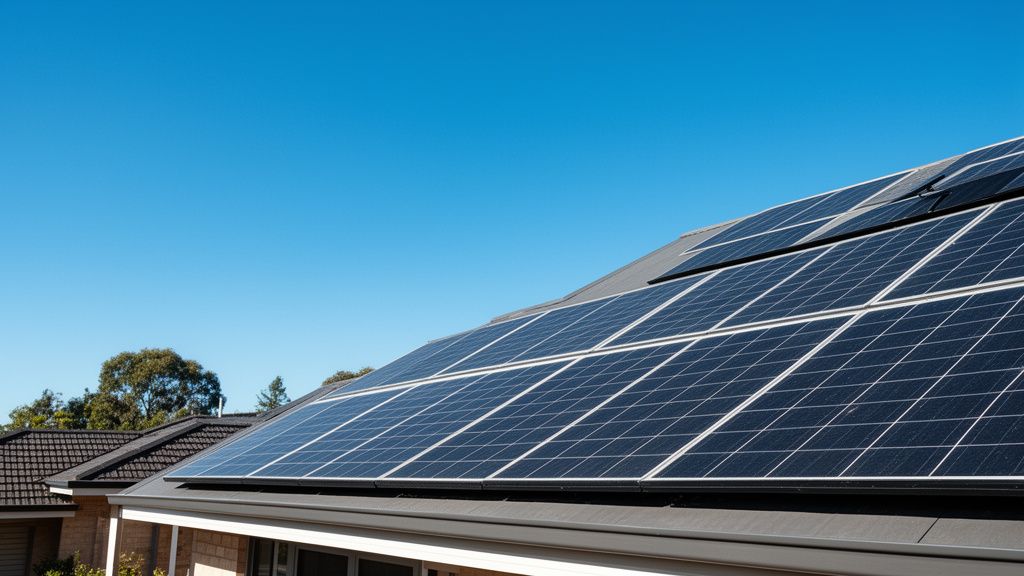
TL;DR: The rapid evolution of more efficient solar panels, while beneficial for energy production, inadvertently accelerates the replacement cycle of older, still-functional systems, thereby increasing the volume of solar e-waste. This trend poses a growing challenge for Australia's waste management infrastructure, necessitating urgent focus on recycling solutions and sustainable design.
What is Driving the Accelerated Obsolescence of Solar Panels?
Rapid advancements in solar panel efficiency are primarily driving their accelerated obsolescence, encouraging homeowners and businesses to upgrade their systems much faster than their operational lifespan. Historically, solar panels were expected to last 20-25 years, but with new technologies emerging every few years, panels are often deemed "outdated" long before they stop producing power. This push isn't just about chasing the absolute cutting edge; it's heavily influenced by the improving cost-benefit ratio of newer, more productive panels, which can significantly boost energy output from the same roof space. For an average Aussie household looking to maximise savings, upgrading a 6.6kW system to a newer 8kW equivalent that fits in the same footprint, especially with falling installation costs, becomes a tempting proposition. This creates a dilemma: embrace greater energy independence and lower power bills, or stick with a perfectly functional, albeit less efficient, system that will eventually become a waste problem.
The Efficiency Arms Race in Solar Technology
The solar industry is in a continuous efficiency arms race, with manufacturers regularly releasing panels boasting higher power output per square metre. Just a few years ago, a typical residential panel might produce 330W; now, 440W or even 500W panels are becoming standard. This means a 6.6kW system, which might have required 20 panels in the past, could now be achieved with just 15, or a much larger system fitted into the same array size. These gains are driven by innovations like PERC, bifacial technology, and N-type cells, which extract more energy from sunlight. While fantastic for consumers and the grid, this relentless innovation shortens the perceived useful life of existing systems, as the economic incentive to upgrade to significantly more powerful technology becomes compelling, even if the older panels are still generating electricity effectively.
The Economics of Upgrading Sooner
The economic calculus for upgrading solar systems has shifted dramatically. With installation costs for a standard 6.6kW system now sitting around $5,000-$8,000 after rebates, and electricity prices continuing to climb, the payback period for a new, more efficient system can be surprisingly short – often less than 3-5 years. If an older system is only generating, say, 70% of its original capacity after 10-12 years, and new panels can offer 20-30% more power from the same roof space, homeowners often find it economically rational to replace them. This decision is further sweetened by generous feed-in tariffs in some states and the desire for greater energy self-sufficiency, reducing reliance on the grid and future-proofing against rising power costs.
How Do Modern Solar Panels Contribute to E-Waste?
Modern solar panels contribute significantly to the growing e-waste problem due to their complex composition and the current lack of robust, widespread recycling infrastructure in Australia. While solar energy is clean during operation, the manufacturing and end-of-life phases present challenges. The sheer volume of panels being installed across the country – we're talking millions – means that even a small percentage of early replacements or natural end-of-life will result in substantial waste. Unlike simple electronics, solar panels are bulky and contain various materials, many of which are hazardous or difficult to separate, making their disposal or reclamation a specialist task that often comes with a hefty price tag, typically around $30-$50 per panel for responsible recycling where facilities exist.
The Complex Composition of PV Modules
Photovoltaic (PV) modules are intricate sandwiches of materials designed for durability and efficiency, but this complexity makes recycling challenging. They typically consist of a glass front (around 70-80% of the panel's weight), an aluminium frame, silicon cells, copper wiring, and various encapsulating plastics like EVA (ethylene vinyl acetate), as well as backsheets made of polymers. Trace amounts of heavier metals like lead, cadmium, and selenium are also present in some cell technologies. Separating these components requires specialised industrial processes – for instance, heating panels to pyrolysis temperatures to separate the EVA and then mechanically separating the glass, silicon, and metals. Without proper recycling, these valuable materials are lost, and potentially toxic elements can leach into the environment if panels end up in general landfill.
Current Recycling Challenges and Costs in Australia
Australia faces significant hurdles in establishing effective solar panel recycling, primarily due to logistical and economic factors. The current number of dedicated recycling facilities is limited, and they are often concentrated in major metropolitan areas, making transport costs prohibitive for regional installations. Hauling a tonne of solar panels (roughly 30-40 panels) hundreds of kilometres can easily add hundreds of dollars to the recycling cost. Furthermore, the processes are energy-intensive and require significant capital investment, meaning the reclaimed materials don't always justify the cost of extraction compared to virgin materials. Currently, there's no national, mandatory Extended Producer Responsibility (EPR) scheme for solar panels, which means the financial burden of end-of-life management often falls to the homeowner or installer, rather than being built into the product's initial cost, hindering the development of a sustainable recycling industry.


What Sustainable Solutions Are Emerging for Solar Panel Waste?
Sustainable solutions for solar panel waste are emerging through a combination of policy development, technological innovation in recycling, and the growth of second-hand markets. Recognising the impending wave of end-of-life panels, governments, industry, and researchers are collaborating to establish comprehensive frameworks to manage this unique waste stream. The focus is shifting from viewing panels as waste to seeing them as a source of valuable resources that can be reintegrated into the circular economy, reducing reliance on virgin materials and mitigating environmental impact. These solutions aim to make solar panel recycling economically viable and accessible, moving beyond the current ad-hoc approaches.
Policy and Industry Initiatives
In Australia, policy development is slowly catching up to the problem. The National Television and Computer Recycling Scheme (NTCRS) has provided a template, and there's growing pressure for a similar national Extended Producer Responsibility (EPR) scheme for solar panels. This would require manufacturers and importers to take financial and physical responsibility for their products' end-of-life management, potentially adding a small recycling levy (e.g., $10-$20) to the upfront cost of a new panel. Industry bodies like the Australian PV Institute (APVI) are actively researching and advocating for such schemes, while pilot programs in states like Victoria are exploring best practices for collection and processing. These initiatives are crucial for standardising recycling processes, funding infrastructure, and ensuring panels don't end up in landfill.
Innovations in Recycling Technology
Technological advancements are making solar panel recycling more efficient and less costly. New pyrolytic and hydrometallurgical processes are being developed that can more effectively separate and recover high-purity silicon, silver, copper, and glass from decommissioned panels. For instance, some advanced techniques can recover up to 95% of the valuable materials, far exceeding the basic shredding and crushing methods. There's also innovation in "design for recyclability," where manufacturers are beginning to consider end-of-life separation during the panel design phase, using materials that are easier to deconstruct. Furthermore, second-life applications are gaining traction, where still-functional panels removed from residential roofs are repurposed for smaller off-grid systems, community projects, or less demanding industrial uses, extending their productive lifespan before true recycling is required.
Key Takeaways
- Rapid technological advancements in solar panel efficiency are accelerating replacement cycles, leading to an increasing volume of solar e-waste.
- Solar panels are complex to recycle due to their multi-material composition and the presence of some hazardous elements, requiring specialised facilities.
- Australia's current recycling infrastructure for solar panels is limited, making disposal costly and often leading to landfilling.
- A national Extended Producer Responsibility (EPR) scheme is crucial to fund and mandate comprehensive solar panel recycling, shifting responsibility to producers.
- Innovations in recycling technology and "design for recyclability" are essential for recovering valuable materials and creating a more circular economy for solar.
Read More
For a comprehensive overview, check out our master guide: Read the Full Guide Here.


