TL;DR: EV charger incentives are crucial for accelerating Australia's transition to electric vehicles by making charging infrastructure more affordable and accessible. By reducing upfront costs for homeowners and businesses, these incentives drive EV adoption, integrate renewable energy more effectively, and deliver significant economic and environmental benefits across the nation.
Why are EV charger incentives vital for accelerating EV adoption in Australia?
EV charger incentives are vital for accelerating EV adoption in Australia because they directly address the key barriers of upfront cost and range anxiety, which often deter potential buyers. While EV sales are steadily increasing, the pace needs to quicken to meet ambitious emissions targets. Subsidies or rebates for home and public charging stations significantly lower the financial hurdle for individuals and businesses, making the switch to electric vehicles a more attractive and viable option. This financial support not only makes the initial investment more manageable but also signals strong governmental commitment, building consumer confidence in the long-term future of EVs down under. Without robust incentives, many Australians might delay their EV purchase, hindering the nation's progress towards a cleaner transport future.
The Upfront Cost Hurdle
The initial outlay for a home EV charger can range from $1,000 to $2,500, including installation, depending on the charger's speed and wiring requirements. This cost, on top of the EV purchase itself, can be a significant deterrent for many households. Incentives that provide rebates, for example, a $500 or $1,000 discount on a charger, directly reduce this financial burden, making smart, efficient home charging far more accessible. For businesses looking to install multiple chargers, even larger incentives become game-changers, enabling them to support their fleets or offer amenities to customers without prohibitive capital expenditure.
Overcoming Range Anxiety
While modern EVs offer considerable range, the perceived lack of charging infrastructure, often called "range anxiety," remains a barrier. Incentives aimed at deploying more public and workplace chargers help to rapidly build out a comprehensive and visible charging network. This includes support for fast DC chargers at key travel corridors and destination chargers in urban centres. By ensuring that convenient charging options are readily available, whether at home, work, or on the road, incentives boost driver confidence and alleviate concerns about running out of power, making longer journeys in an EV a stress-free reality.
How do EV charger incentives directly benefit Australian homeowners and businesses?
EV charger incentives directly benefit Australian homeowners and businesses by significantly reducing the financial burden of transitioning to electric vehicles and fostering greater energy independence. For homeowners, a subsidised home charger means cheaper, more convenient charging, often leveraging their existing solar panels to charge their car with free, renewable energy. This not only cuts down on petrol expenses but also integrates their home energy system more effectively. Businesses, from small cafes to large corporations, benefit from reduced fleet operating costs, enhanced public image, and the ability to attract and retain staff or customers by offering charging facilities, all while enjoying reduced installation expenses thanks to incentives.
Lowering Installation Barriers
For many Australian households and small businesses, the cost of installing an EV charger is a considerable expense, often requiring an electrician to upgrade switchboards or run new wiring. A well-structured incentive program, offering rebates up to, for instance, $2,000 for a three-phase charger installation or $1,000 for a standard single-phase unit, directly offsets these costs. This makes the decision to install a dedicated charger much easier, accelerating the move away from reliance on public charging stations and ensuring that new EV owners can conveniently charge their vehicles overnight, ready for the next day's commute or errands.
Driving Renewable Energy Integration
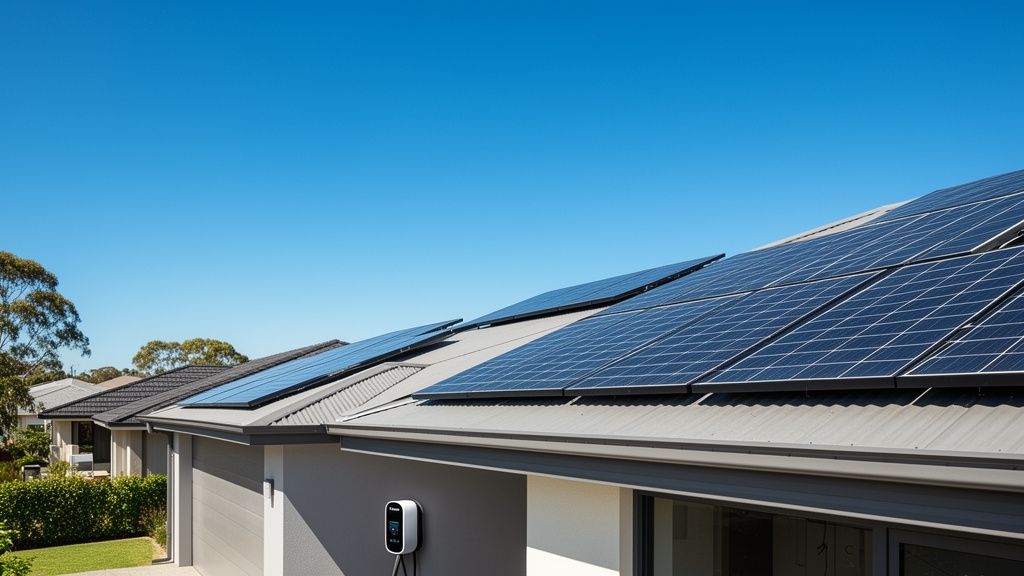
Incentives for EV chargers are particularly impactful when paired with Australia's abundant solar resources. By encouraging the installation of home chargers, especially those with smart charging capabilities, more EV owners can utilise their rooftop solar power to charge their vehicles during the day. This reduces demand on the grid during peak hours, increases the self-consumption of solar energy, and further enhances the financial benefits of owning both solar and an EV. Businesses can also leverage solar-powered chargers, creating green energy ecosystems that reduce operational costs and contribute to a more sustainable energy future, bolstering Australia's renewable energy targets.
What economic and environmental benefits will Australia gain from widespread EV charger deployment?
Widespread EV charger deployment offers significant economic and environmental benefits for Australia, fostering a more sustainable future while boosting local industries. Economically, it stimulates demand for electrical services, manufacturing of charging components, and creates new jobs in installation, maintenance, and related technologies. Environmentally, a robust charging network supports a massive shift to electric transport, drastically reducing fossil fuel consumption and cutting greenhouse gas emissions, particularly in urban areas. This leads to cleaner air, reduced public health costs, and a substantial contribution to Australia's climate change commitments, while also enhancing the nation's energy security by decreasing reliance on imported fuels.
Boosting Local Economies and Job Creation
The rapid rollout of EV charging infrastructure across Australia will generate substantial economic activity. It creates direct jobs for electricians, civil engineers, and construction workers involved in the installation and upgrading of charging points. Furthermore, it stimulates demand for Australian businesses involved in the manufacturing of charging stations and related components, fostering innovation and local industry growth. Consider a hypothetical government program that installs 10,000 chargers; this could easily translate into hundreds, if not thousands, of full-time equivalent jobs and millions of dollars injected into local economies through procurement and services, from regional towns to major capital cities.
Reducing Emissions and Improving Air Quality
The primary environmental benefit of widespread EV charger deployment is the accelerating reduction of carbon emissions from the transport sector, Australia's third-largest source of greenhouse gases. Each EV replacing a petrol or diesel car contributes to cleaner air, especially in densely populated urban centres where vehicle emissions are concentrated. Reduced exhaust fumes mean lower levels of particulate matter and nitrogen oxides, leading to fewer respiratory illnesses and improved public health outcomes. This cleaner air quality has tangible benefits, reducing healthcare costs and improving the overall liveability of Australian cities and towns, directly aligning with Australia's net-zero targets.


What types of EV charger incentives have proven effective globally and locally?
Various types of EV charger incentives have proven effective globally and locally in accelerating the uptake of electric vehicles and their supporting infrastructure. These typically fall into categories such as direct financial rebates or grants for purchase and installation, tax credits, and favourable tariffs for charging. For instance, some states or territories in Australia have offered subsidies for residential smart chargers, while others have funded the expansion of public charging networks. Globally, countries like Norway and the UK have implemented a mix of purchase grants, tax benefits, and significant investment in public charging, which has led to high EV adoption rates and robust infrastructure.
Rebates and Grants for Residential Charging
Many Australian states have, at various times, offered rebates specifically for home EV charger installations. For example, some programs have provided a fixed rebate of $400 or $500 for eligible smart chargers, helping homeowners manage the initial setup costs. Other initiatives have bundled charger incentives with EV purchase rebates, offering a more comprehensive package. These direct financial incentives significantly lower the barrier to entry, making it easier for new EV owners to establish convenient home charging, which is often cited as the most preferred method of charging for daily use. Such programs are easily understandable and directly impact the consumer's wallet, driving quick uptake.
Commercial and Public Charging Support
Incentives aimed at businesses and local councils for commercial and public charging installations are critical for building out the broader network. These can include grants covering a percentage of the total project cost for fast chargers at commercial premises, tourist destinations, or public carparks. For instance, a grant program might cover 50% of the cost of installing a new 50kW DC fast charger, potentially saving a business tens of thousands of dollars. Tax depreciation incentives, allowing businesses to claim accelerated depreciation on charging infrastructure, also make these investments more attractive. These initiatives are essential for creating the ubiquitous charging landscape needed to support widespread EV adoption across Australia's vast distances.
Key Takeaways
- EV charger incentives directly reduce the upfront cost burden for Australian homeowners and businesses, accelerating EV adoption.
- Subsidised chargers help integrate renewable energy, enabling EV owners to charge with solar power, reducing grid reliance and energy bills.
- Widespread EV charging infrastructure boosts local economies, creating jobs and stimulating growth in related industries.
- Increased EV uptake, supported by charging incentives, significantly reduces Australia's transport emissions and improves air quality.
- Effective incentive programs include direct rebates for residential chargers and substantial grants or tax benefits for commercial and public charging deployment.
Read More
For a comprehensive overview, check out our master guide: Read the Full Guide Here.