Australia's Energy Future: Why Geopolitical Shocks Haven't Ended LNG Reliance
TL;DR: The war in Ukraine dramatically exposed global energy vulnerabilities, yet Australia remains significantly reliant on LNG. This dependence stems from deeply embedded export infrastructure, long-term contracts, and gas's critical role in maintaining grid stability. While renewables offer a viable path to energy independence, the transition requires substantial investment and strategic policy to overcome existing fossil fuel dependencies and accelerate grid-scale changes.
Why did the war in Ukraine initially highlight the fragility of global energy supply chains? The war in Ukraine dramatically exposed the inherent risks of global energy supply chain dependencies, particularly Europe's heavy reliance on Russian natural gas. When Russia curtailed gas supplies in response to sanctions, European nations faced an immediate energy crisis, sending global LNG prices soaring to unprecedented levels. This crisis underscored how geopolitical events far from our shores can instantly ripple through international energy markets, impacting everything from industrial production to household heating. Australia, as one of the world's largest LNG exporters, found itself in a unique position, with strong demand from a desperate Europe pushing export values significantly higher, but also intensifying questions about domestic gas availability and pricing.
The Immediate Price Shock and Australian Exports
The immediate aftermath of the Russian invasion saw European gas prices spike by over 400% in late 2022, directly impacting global LNG spot prices. Australian LNG exporters, with facilities mostly on the west and east coasts, benefited immensely from this surge in demand and pricing. While a boon for export revenues, it simultaneously intensified debates about Australia's own gas supply and domestic pricing, with some advocating for "gas reservation" policies to protect local consumers and industries from export-driven price hikes.
Europe's Scramble for Alternative Sources
In a desperate bid to replace Russian pipeline gas, European countries turned en masse to the global LNG market, signing new long-term contracts and commissioning floating storage and regasification units (FSRUs). This intense competition for LNG cargoes meant that gas intended for other markets was diverted to Europe, driving up prices worldwide. While this secured Europe's immediate energy needs, it also locked in further LNG dependence for several years, demonstrating the difficulty of swift, large-scale energy system shifts in a crisis.
Why hasn't this geopolitical shock led to an immediate end to Australia's own LNG dependence? Despite the clear lessons from Europe, Australia has not seen an immediate or dramatic reduction in its own reliance on natural gas, primarily due to deeply embedded infrastructure, long-standing export commitments, and the crucial role gas currently plays in grid stability. Our national energy market, particularly on the east coast, has become increasingly reliant on gas-fired power generation to back up intermittent renewables and meet peak demand. This makes any rapid decoupling from gas a complex challenge, requiring significant investment in alternative firming capacity and grid upgrades. Furthermore, decades of investment in LNG export terminals mean a substantial portion of Australia's gas production is already tied into lucrative international contracts.
Embedded Infrastructure and Long-Term Contracts
Australia boasts a vast network of gas pipelines, processing facilities, and mega-scale LNG export terminals that represent billions of dollars in sunk capital. This existing infrastructure makes it economically challenging to pivot away from gas overnight, as it continues to generate significant export revenue for the nation. Many of our largest gas projects operate under long-term supply agreements with Asian buyers, often spanning decades. These contracts dictate production volumes and destinations, reinforcing our export-oriented gas economy.
Gas as a 'Transition Fuel' for Australian Grids
For many years, natural gas has been touted as a "transition fuel" – a lower-emissions alternative to coal that can provide dispatchable power as renewable energy sources like solar and wind expand. While its role in firming up grids is undeniable, this designation has also slowed the pace of investment in truly renewable alternatives for grid stability, such as large-scale battery storage or pumped hydro. Gas-fired generators can be switched on quickly to fill gaps when solar isn't shining or wind isn't blowing, making them a default choice for maintaining grid reliability.


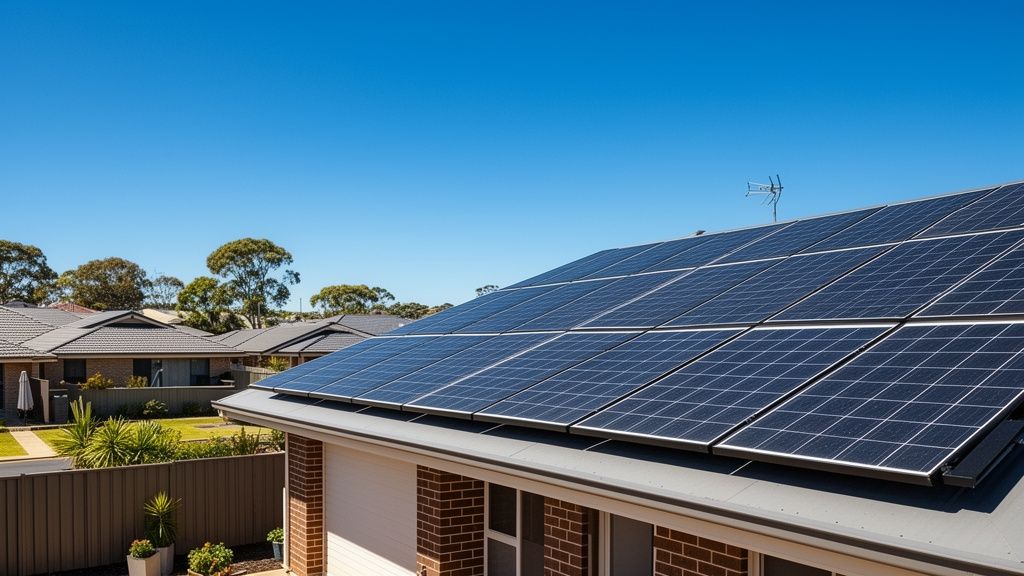
What role does solar and renewable energy play in reducing Australia's reliance on gas? Solar and other renewable energy sources are absolutely critical to reducing Australia's reliance on gas, offering a clear path to energy independence and lower electricity costs for consumers. Every kilowatt-hour generated by rooftop solar or a large-scale solar farm means one less kilowatt-hour that needs to come from gas or coal, directly reducing demand for fossil fuels. With Australia's abundant sunshine, solar power is not just environmentally friendly; it's increasingly the cheapest form of new electricity generation available. Widespread adoption of solar, combined with battery storage, empowers households and businesses to generate and store their own power, significantly shielding them from volatile energy market prices.
Solar's Economic Edge for Homes and Businesses
For the average Australian household, installing a 6.6kW solar system can cost anywhere from $6,000 to $10,000 after government rebates, depending on the state and specific components. This investment typically pays itself off within 3-5 years through reduced electricity bills, saving homeowners hundreds, if not thousands, of dollars annually. Businesses, too, are reaping huge rewards, often installing larger systems to offset significant operational costs. This economic incentive is a powerful driver for the uptake of solar, directly chipping away at the demand for grid-supplied electricity, much of which is still gas-fired.
The Grid-Scale Challenge for Renewables
While rooftop solar is booming, integrating massive amounts of intermittent renewable energy into our existing grid infrastructure presents significant challenges. Large-scale solar and wind farms need substantial transmission line upgrades to connect to demand centres, and they require reliable "firming" capacity to ensure consistent power supply. This is where battery storage, pumped hydro, and improved grid management systems come in. Investing in these technologies, rather than relying solely on gas for backup, is crucial for building a truly resilient and renewable-powered national energy market.
What are the practical steps Australian homeowners can take towards energy independence? Australian homeowners can significantly increase their energy independence and reduce reliance on volatile fossil fuel markets by implementing a combination of solar power, battery storage, and energy efficiency measures. These practical steps not only insulate households from geopolitical energy shocks but also provide substantial long-term financial savings and contribute to a cleaner energy future for the nation. Starting with an energy audit can identify the most impactful changes, but installing solar PV is often the foundational step towards taking control of your power bills.
Investing in a Home Solar System and Battery
Installing a well-sized solar system is the most effective way to produce your own electricity. A typical 6.6kW system, suitable for many family homes, can produce around 25-30 kWh per day, often covering most of a household's daytime energy use. Adding a home battery, such as a 10kWh unit which might cost an additional $8,000-$15,000 (after rebates in some states), allows you to store excess solar generation for use after dark, dramatically reducing reliance on grid power and maximising your solar investment.
Maximising Energy Efficiency to Cut Bills
Beyond generation and storage, improving household energy efficiency is a fundamental step towards energy independence. Simple measures like upgrading to LED lighting, insulating ceilings and walls, sealing draughts around windows and doors, and opting for energy-efficient appliances (look for high star ratings) can dramatically lower your overall energy consumption. For example, replacing an old, inefficient fridge might save you $100-$200 a year on your power bill. By reducing the amount of energy you need in the first place, you shrink your reliance on external energy sources.
Key Takeaways
- Geopolitical events like the Ukraine war underscore the volatility of fossil fuel markets and the importance of energy independence.
- Australia's deep integration into global LNG export markets and reliance on gas for grid stability makes a rapid transition challenging.
- Rooftop solar and battery storage offer significant pathways for Australian households and businesses to achieve energy independence and save money.
- Strategic investment in grid-scale renewables, transmission, and energy storage is crucial to move Australia away from gas reliance.
- Homeowners can actively contribute by installing solar, adding batteries, and prioritising energy efficiency to reduce their individual fossil fuel consumption.
Read More
For a comprehensive overview, check out our master guide: Read the Full Guide Here.