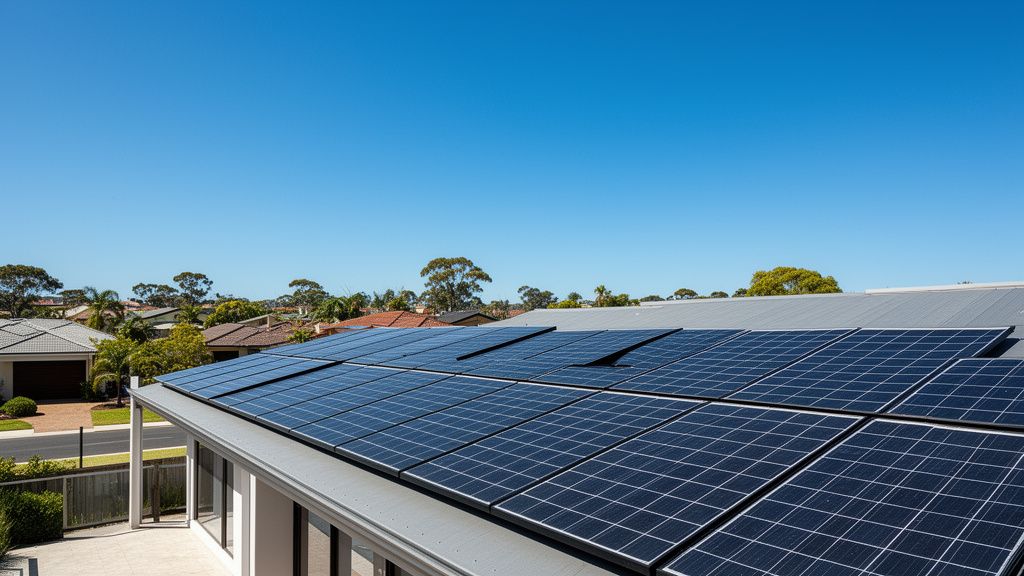
TL;DR: Getting a solar battery in Australia by 2026 makes increasing financial sense for many households, driven by dropping battery prices and consistently low solar feed-in tariffs. While the upfront cost remains substantial, the ability to store and use your own power significantly reduces reliance on grid electricity and offers valuable energy independence.
How Have Solar Battery Costs Changed for 2026?
Solar battery costs have steadily dropped, making them a more financially attractive option for Australian homeowners in 2026. Just a few years ago, a 10-13.5kWh battery system, like a Tesla Powerwall 2 or an LG Chem RESU, often cost $14,000 to $18,000 fully installed. By late 2025 and into 2026, we see similar capacity batteries, particularly those using Lithium Ferro Phosphate (LFP) chemistry from brands like BYD or Sungrow, available for $8,000 to $12,000 installed, sometimes less if a state rebate applies. This price reduction stems from manufacturing scale, improved technology, and increased market competition. The shift towards LFP is important because these batteries typically offer longer lifespans and better thermal stability compared to older chemistries, contributing to their improved value proposition.
The Shift in Australian Feed-in Tariffs
Australian solar feed-in tariffs (FiTs) remain low, which directly influences the value of a solar battery. Most retailers across states like NSW, Queensland, and SA now offer FiTs between 4-7 cents per kilowatt-hour (kWh). This contrasts sharply with peak electricity prices, which can hit 35-55 cents/kWh in many areas during evening hours. When you export solar power for 5c/kWh, but then buy back grid power for 40c/kWh, it creates a massive incentive to store your own generation rather than selling it cheap and buying it dear. This economic disparity means every kWh you divert from export into your battery effectively saves you the high retail rate you would otherwise pay, not just the low FiT you would receive.
What Are the Financial Benefits of a Solar Battery in 2026?
A solar battery significantly boosts your financial returns by enabling self-consumption and avoiding high peak-rate electricity. Instead of sending excess solar power back to the grid for a minimal feed-in tariff, a battery stores that energy for you to use later. This means you power your home with your own free solar energy during the evening peak, when grid electricity prices are at their highest. For a typical Australian household with a 6.6kW solar system, installing a 10-13.5kWh battery can often increase their solar self-consumption from around 30-40% to 70-90%. This drastically reduces the amount of electricity you need to buy from your retailer, leading to substantial savings on your quarterly power bill.
Calculating Your Potential Savings
Calculating your potential savings involves comparing your current electricity usage patterns with the battery’s capacity and your solar generation. Imagine you have a 6.6kW system that generates 25 kWh a day. Without a battery, you might use 8 kWh during the day and export 17 kWh for 5c/kWh ($0.85). Then you buy 15 kWh from the grid in the evening for an average of 40c/kWh ($6.00). With a 10kWh battery, you could store much of that 17 kWh export. You might still export 2 kWh, earning 10c, but then you’d use 10 kWh from your battery at night, reducing your grid purchase to 5 kWh ($2.00). In this scenario, your daily cost drops from $5.15 to $1.90, saving you $3.25 per day, or over $1,180 annually. Actual savings depend on specific tariffs, usage, and solar generation.
Payback Periods for a Standard Household
Payback periods for solar batteries in 2026 have shortened considerably, particularly in states with good rebates. For a household in NSW or Queensland without a rebate, a 10kWh battery costing $10,000 might achieve a payback period of 8-12 years based on annual savings of $1,000-$1,200. In Victoria, where the State Government offered a $2,900 rebate for eligible battery installations in 2024 (expected to continue or be adjusted in 2026), the effective installed cost might drop to $7,100-$9,100. This brings the payback period down to an attractive 6-9 years, depending on your energy usage and local tariffs. As electricity prices continue their upward trend, these payback periods will likely shorten further.

Beyond Savings: Energy Independence and Grid Stability
Solar batteries offer more than just financial returns; they provide energy security and contribute to a more resilient grid. In Australia, where extreme weather events and grid instability can lead to blackouts, having a battery gives you peace of mind. If your system is set up correctly with a backup gateway or inverter, it can power essential circuits in your home when the grid goes down, providing continuous electricity for lights, refrigeration, and internet. This self-reliance reduces your dependence on external energy suppliers and supports a cleaner energy future by maximising the use of renewable power.
Blackout Protection and Reliability
Blackout protection is a key non-financial benefit of a solar battery. Most modern battery systems, when installed with the correct backup switch or hybrid inverter, automatically disconnect from the grid during an outage. They then use the stored energy (and any new solar generation, if it's a hybrid system) to power selected loads in your home. This means your fridge stays cold, your lights stay on, and you retain access to important communications during power cuts, which can last hours or even days in some regional areas. This level of reliability offers significant practical value that goes beyond simple dollar savings.
Future Grid Opportunities: VPPs
Virtual Power Plants (VPPs) represent a growing opportunity for battery owners. VPPs aggregate household batteries to act as a single, larger power source for the grid. When demand for electricity is high, or grid stability needs a boost, your battery can discharge a small amount of power back into the network, earning you credits or payments from the VPP operator. Several retailers and energy companies, such as Origin and AGL, run VPP programs in various states. While the income from VPPs might not be massive, it provides an additional revenue stream and helps offset the battery's cost, further improving its overall value proposition and integration into the broader energy system.
Key Takeaways
- Solar battery prices have significantly dropped, making them more affordable in 2026, especially with LFP technology becoming standard.
- Low feed-in tariffs across Australia increase the financial incentive to store and self-consume your solar power, avoiding high peak grid electricity rates.
- A typical 10-13.5kWh battery can reduce your grid electricity purchases by 30-50%, leading to substantial annual savings and a payback period of 6-12 years.
- Beyond finances, batteries offer valuable energy independence, providing blackout protection for essential home circuits during grid outages.
- Participation in Virtual Power Plants (VPPs) offers potential future income streams, further enhancing the financial viability of battery ownership.