TL;DR: I used to think feed-in tariffs (FiTs) were my ticket to solar savings on the Gold Coast, but with declining rates, they weren't cutting it. Joining a Virtual Power Plant (VPP) with a home battery completely changed my game, allowing me to earn more by optimising my energy usage and selling excess power when the grid needed it most, far surpassing any FiT income.
What Are Feed-in Tariffs and Why Did I Rely on Them So Much?
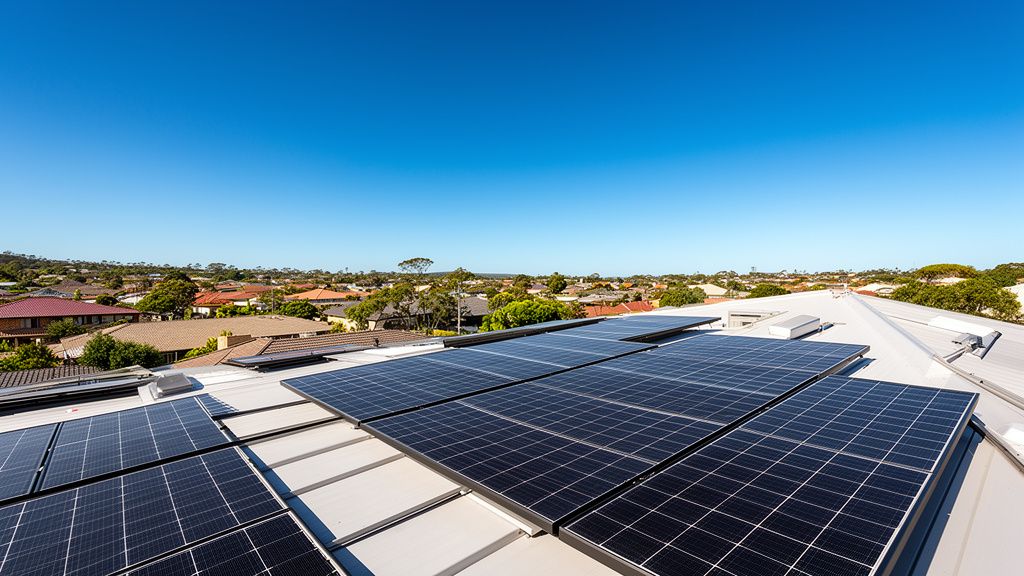
Feed-in tariffs (FiTs) are payments you receive from your energy retailer for any surplus electricity your solar panels export back to the grid. For years, I, like many Gold Coast homeowners, saw them as a primary driver for solar savings. My initial 6.6kW system, installed over five years ago in Broadbeach Waters, was partly justified by the expectation of decent FiT payments, helping offset the upfront cost. Back then, I remember FiTs being around 8-10c/kWh, making the concept of ‘selling’ my excess power sound quite appealing. I imagined those credits stacking up, significantly reducing my quarterly bill from Origin Energy. The idea was simple: generate more than you use, get paid, and watch your electricity costs plummet. It felt like a solid investment for my relatively compact suburban home near the CBD, especially with the Gold Coast’s abundant sunshine.
How Did Queensland's FiT Landscape Change?
The reality, however, slowly shifted. Queensland's FiT rates, especially for new solar installations and even for existing ones transitioning to new contracts, have steadily declined. What was once a relatively generous rate began to dwindle, eventually dropping to around 5-7c/kWh, and sometimes even lower depending on the retailer and plan. This decline made my strategy of simply exporting everything I didn’t immediately use far less effective. My initial calculations for payback periods, heavily reliant on higher FiTs, started to look less optimistic. It became clear that exporting cheap power to then buy back expensive power during the evenings was a losing game. The Gold Coast's urban density, often leading to smaller roof spaces and potential shading from neighbouring high-rises or large gum trees, meant maximising every kWh I generated was critical, and low FiTs weren't helping that cause.
Why FiTs Are Less Effective for Modern Solar Owners
For today’s solar owner, particularly in metropolitan areas like the Gold Coast, relying solely on FiTs is an outdated approach. The true value of solar now lies in self-consumption – using the power you generate directly, rather than exporting it for a small credit. Grid electricity prices, especially during peak evening hours, are significantly higher than the FiT rates you receive. For example, if you're buying power at 30c/kWh and selling it for 7c/kWh, every unit you export and then repurchase represents a substantial net loss. This disparity highlights why a change in strategy was essential for my Gold Coast home; I needed a way to store and use my own power, or at least sell it at a much better rate, to truly make my solar investment pay off.
What Exactly Is a Virtual Power Plant (VPP) and How Does it Work for Gold Coast Homes?
A Virtual Power Plant (VPP) is a network of decentralised energy resources, like solar-plus-battery systems in homes and businesses, that are remotely controlled and coordinated to act as a single power plant. For a Gold Coast home like mine, it means my rooftop solar and, crucially, my new battery storage system, are connected to a larger network. This network is managed by an aggregator that can draw energy from or send energy to my battery, optimising its use to support the grid during periods of high demand or low supply. Instead of just exporting passively for a low FiT, my battery can be directed to store power when generation is high and demand is low, and then discharge it when the grid needs it most, often during peak evening hours when electricity prices are at their highest. This is a game-changer for urban properties on the Gold Coast, where maximising every bit of generated energy and stored capacity is vital due to limited roof space and shading challenges.
The Role of a Home Battery in a Gold Coast VPP
The home battery is the central component enabling participation in a VPP. For my Gold Coast property, adding a 10kWh battery meant I could store the excess energy my solar panels produced during the day instead of exporting it for a measly FiT. This stored energy primarily powers my home during the evening and night, significantly reducing my reliance on expensive grid electricity. When I joined the VPP, this battery gained a second, more lucrative role: a controllable asset for the grid. The VPP operator can tap into my battery's stored energy, drawing small amounts for short periods to stabilise the local network or alleviate strain, especially during Gold Coast summer evenings when air conditioning loads peak. This not only benefits the wider community, potentially reducing blackouts or price spikes, but also earns me financial incentives from the VPP.
How VPPs Generate Greater Savings than FiTs
VPPs offer a far more dynamic and profitable way to manage solar energy than relying on static feed-in tariffs. While FiTs offer a fixed, low payment for exports, VPPs typically provide incentives based on the value your battery provides to the grid. This can include direct payments for participating in grid events, a higher rate for exported energy during peak demand periods, or even access to wholesale energy markets. For me, this translated to far greater savings and earnings. Instead of exporting at 7c/kWh, my VPP participation effectively allowed me to "sell" my stored energy at a much higher value, either by avoiding peak purchases (e.g., saving 30c/kWh) or by receiving specific VPP payments for grid support, often valuing that energy much higher than a standard FiT. This strategy is much more aligned with the energy needs of the City of Gold Coast, contributing to a more resilient and sustainable power network for everyone.
How Did Joining a Gold Coast VPP Transform My Electricity Bills?
Joining a Gold Coast VPP dramatically transformed my electricity bills, shifting them from a source of frustration to a consistent, manageable expense. Before the VPP, despite having solar, I was still paying around $250-$300 a quarter during peak summer months, largely due to high evening usage and low FiT credits. After installing the battery and joining the VPP, my last few quarterly bills have averaged closer to $50-$80, sometimes even less. The biggest change was my ability to virtually eliminate evening grid imports. My battery easily covers my usage from dusk till dawn, and when the VPP calls on my battery to assist the grid, I receive immediate credits or payments that further offset any remaining charges. This shift has been profound, making my solar investment truly pay off in a way FiTs never could.
Comparing My Savings: FiT vs. VPP on the Gold Coast
Let's put some numbers to it. In my FiT-only era, with a 6.6kW system, I might export an average of 10-15 kWh per day during sunny periods. At a typical Gold Coast FiT of 7c/kWh, that’s about $0.70 to $1.05 per day in credits. Over a quarter (90 days), that's roughly $63 to $94. While helpful, it barely scratched the surface of my $250-$300 bill.
With the VPP and a 10kWh battery, the game changed. I now self-consume almost all my daytime generation. The 10-15 kWh I used to export now goes into my battery, displacing grid purchases that would have cost me 28-32c/kWh. That’s a saving of $2.80 to $4.80 per day from self-consumption alone! On top of that, the VPP pays me for participating in grid events – these can range from small daily payments for being connected, to significant credits for specific discharge events during peak demand, especially during Gold Coast heatwaves. Over a quarter, these VPP payments often add an extra $50-$100 directly to my account or as bill credits, making my net energy cost significantly lower than with FiTs.
Supporting the Local Grid: The City of Gold Coast's Energy Future
Beyond personal savings, participating in a VPP feels like I’m genuinely contributing to the City of Gold Coast's energy resilience. With a growing population and increasing energy demands, especially during our hot summers, the local electricity grid faces significant strain. By allowing my battery to feed power back during peak times, I’m helping to balance supply and demand, reduce the need for expensive, fossil-fuel-generated peaker plants, and ultimately support a more stable and sustainable energy future for the entire region. The City of Gold Coast encourages sustainable living, and VPPs align perfectly with this vision, moving us towards a more distributed, cleaner energy network. It’s a win-win: my wallet benefits, and so does the wider Gold Coast community's push for a greener, more reliable power supply. For more information on local sustainability initiatives, residents can always check the City of Gold Coast website at https://www.goldcoast.qld.gov.au.
Key Takeaways
- Feed-in tariffs (FiTs) offer diminishing returns for modern solar owners due to low rates (typically 5-7c/kWh on the Gold Coast) compared to high peak grid prices (28-32c/kWh).
- Self-consumption is paramount: Using your generated solar power directly, or storing it in a battery, provides significantly greater savings than exporting it for a FiT.
- Virtual Power Plants (VPPs) unlock greater value for solar-plus-battery systems: VPPs leverage your home battery to support the grid, earning you higher payments or credits than traditional FiTs, especially during peak demand.
- Gold Coast homeowners with batteries are ideal VPP candidates: Urban density and high energy demand make VPP participation beneficial for both personal savings and local grid stability in the City of Gold Coast.
- Investigate VPP options when considering a battery: If you're looking at adding a battery to your Gold Coast solar system, research available VPP programs to maximise your return on investment and contribute to a more sustainable energy future.