How to Compare Electricity Plans in Sydney: Your 'Apples with Apples' Guide
TL;DR: Comparing Sydney electricity plans requires looking beyond headline rates, focusing on your actual usage patterns, supply charges, usage rates (including time-of-use), feed-in tariffs for solar, and the overall value of any discounts. Utilise the Basic Plan Information Document (BPID) and government comparison websites like EnergyMadeEasy.gov.au to ensure a true 'apples with apples' comparison.
Why is an "Apples with Apples" Comparison Essential for Sydney Electricity Plans?
An "apples with apples" comparison is essential because electricity plans are complex, involving multiple components beyond just a simple cents per kilowatt-hour (c/kWh) rate, meaning a seemingly cheap advertised rate can be misleading without understanding all the underlying charges and benefits. Unlike simply comparing the price of a banana at two different fruit stalls, an electricity plan has various 'parts' to it that need to be evaluated in context of your own household's unique consumption habits. Without a thorough, like-for-like evaluation, you could easily end up on a plan that costs you more, even if its advertised rates look attractive on the surface. Understanding these nuances is crucial for any Sydney household aiming to genuinely save money on their power bills.
The Hidden Components of Your Bill
Your electricity bill isn't just about how much power you use. It's a combination of fixed and variable charges. The daily supply charge, for instance, is a non-negotiable fee (often around $0.80 - $1.20 per day in Sydney) that covers the cost of maintaining the poles, wires, and other infrastructure to deliver electricity to your home, regardless of how much power you consume. Then there are the usage charges, which can vary significantly depending on the time of day if you're on a time-of-use (TOU) tariff, or be a flat rate if you're on a single rate tariff. These different components mean that a plan with a low usage rate might have a high daily supply charge, or vice-versa, making direct comparison tricky without considering your total consumption.
The Impact of Usage Patterns
Your household's unique electricity usage pattern plays a massive role in determining which plan is best for you. If you primarily use electricity during off-peak hours (e.g., running your washing machine at night, charging an EV overnight), a time-of-use plan with low off-peak rates (e.g., 18-22c/kWh) might save you a bundle, even if its peak rates are higher (e.g., 40-50c/kWh). Conversely, a household with high daytime consumption might be better off on a flat rate plan (e.g., 28-32c/kWh) to avoid expensive peak charges. For solar homeowners, understanding when you consume power versus when you export it becomes even more critical, as it directly impacts the value of your feed-in tariff.
What Key Elements Should You Scrutinise on a Sydney Electricity Bill?
When scrutinising a Sydney electricity bill, you must focus on the daily supply charge, peak and off-peak usage rates (if applicable), controlled load rates, and for solar owners, the feed-in tariff offered. These are the fundamental building blocks of your bill, and ignoring any one of them can lead to an inaccurate comparison. A quick glance at the highest discount or the lowest c/kWh figure is simply not enough to determine true value. You need to pull out your recent bills and understand exactly what you're paying for each component to make an informed decision.
Understanding Supply and Usage Charges
The daily supply charge is the fixed component, a non-negotiable cost from your retailer (e.g., $1.05/day). While seemingly small, over a year, this can add up to around $383, so comparing this charge across plans is important. Usage charges, on the other hand, are the variable costs based on how much electricity you consume (measured in kWh). These can be simple flat rates or more complex time-of-use (TOU) tariffs. For example, a retailer might offer a single rate of 28c/kWh, or a TOU plan with peak (7am-11pm) at 38c/kWh and off-peak (11pm-7am) at 19c/kWh. If you have appliances on a controlled load (like hot water systems), check those specific rates too, as they are often much lower (e.g., 15-20c/kWh) and can vary between retailers.
The Role of Discounts and Conditional Offers
Many retailers entice customers with seemingly generous discounts. However, these often come with strings attached. Common conditions include pay-on-time discounts (e.g., 10% off usage charges), direct debit discounts, or even discounts that only apply for the first 12 or 24 months before reverting to a higher base rate. It's crucial to understand exactly what the discount applies to – is it just usage charges, or the entire bill? What happens when the discount period ends? A plan with a lower base rate and no discount might actually be cheaper in the long run than one with a hefty but conditional discount that expires quickly or has tricky terms. Always look at the post-discount rates and the long-term cost.
How Can You Effectively Use Comparison Tools and Resources in NSW?

To effectively use comparison tools in NSW, start with the government-backed EnergyMadeEasy.gov.au website, leverage the Basic Plan Information Document (BPID) provided by retailers, and gather your actual usage data from past bills. These resources are designed to cut through the marketing fluff and provide you with clear, comparative data tailored to your specific energy consumption. Without these tools, you'd be sifting through countless individual retailer websites, trying to manually match up different pricing structures, which is a recipe for a headache and potential financial missteps.
Navigating EnergyMadeEasy.gov.au
EnergyMadeEasy.gov.au is the federal government's free and independent energy price comparison service for Australian households and small businesses. To use it effectively, you'll need a recent electricity bill handy. Input your postcode, current retailer, and importantly, your actual annual or quarterly usage data (kWh). The site then provides a personalised list of plans available in your area, showing estimated annual costs based on your inputted usage. It's a fantastic starting point for an "apples with apples" comparison, allowing you to filter by plan type, solar feed-in tariff, and other features. This tool is impartial and strips away the aggressive marketing from individual retailers, giving you a clear financial comparison.
Deciphering the Basic Plan Information Document (BPID)
Every electricity retailer in NSW is required to provide a Basic Plan Information Document (BPID) for each of their plans. Think of it as the plan's nutritional label – it breaks down all the key charges in a standardised format. This document clearly outlines the daily supply charge, all usage rates (including peak/off-peak/shoulder), controlled load rates, solar feed-in tariffs, and any conditional discounts or exit fees. The beauty of the BPID is its consistency across all retailers, allowing you to easily line up two or three BPIDs side-by-side and truly compare the nitty-gritty details. Always download and review the BPID for any plan you're seriously considering; it's your best friend for an accurate comparison.
How Do Solar Feed-in Tariffs Influence Your Best Plan Choice in Sydney?
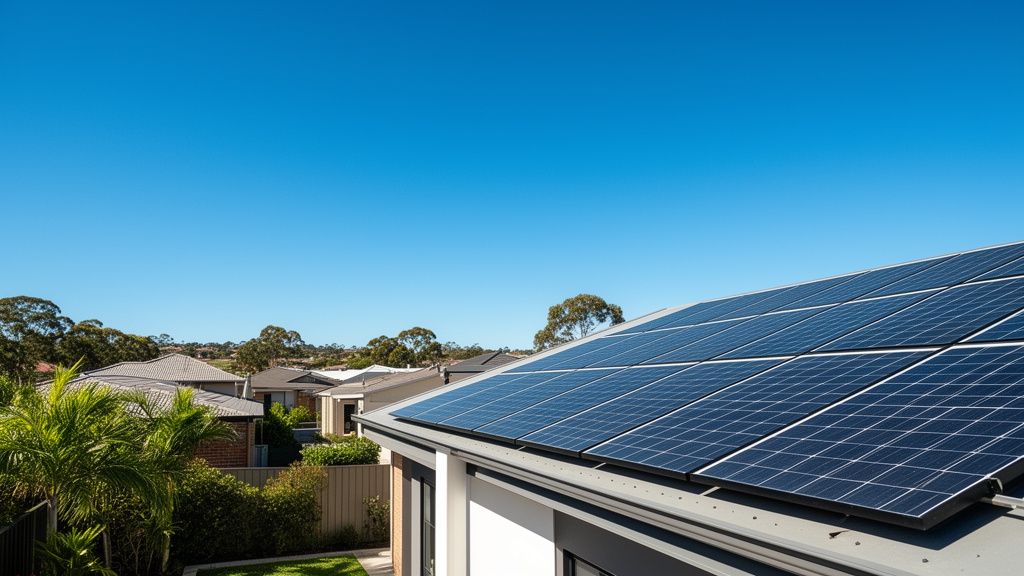
Solar feed-in tariffs (FiTs) significantly influence your best plan choice in Sydney by directly offsetting your electricity costs with credits for excess solar energy exported to the grid, meaning a higher FiT can outweigh a slightly higher usage rate for solar households. For homeowners with solar PV systems, the financial benefit of their installation isn't just about self-consuming their generated power; it's also about the value they get for sending their surplus energy back into the grid. Ignoring the FiT when comparing plans is like leaving money on the table, especially if your system exports a significant amount of electricity.
Maximising Your Solar Export Credits
For a solar household, the feed-in tariff becomes a critical component of the overall plan's value. While traditional households focus purely on consumption rates, solar owners also generate income from their system. If your 6.6kW system exports an average of 10 kWh per day, a FiT of 8c/kWh earns you 80c per day, or around $292 per year. If another plan offers a FiT of only 5c/kWh, that's $182 per year – a difference of over $100 just from the FiT alone. Therefore, when comparing, factor in how much you export and what each retailer offers. Sometimes, a plan with a slightly higher consumption rate but a much better FiT (e.g., 10c/kWh vs. 5c/kWh) might be more financially beneficial overall for high exporters.
Balancing FiT with Consumption Rates
The trick for solar homeowners is to balance the FiT with the usage rates. A plan might offer a fantastic FiT (e.g., 10c/kWh), but its consumption rates could be significantly higher (e.g., 35c/kWh peak). Conversely, another plan might have a lower FiT (e.g., 5c/kWh) but more competitive consumption rates (e.g., 28c/kWh peak). The optimal choice depends on your export-to-consumption ratio. If you're largely self-consuming your solar and exporting minimal amounts, lower consumption rates will be more impactful. If you're a heavy exporter, a higher FiT could swing the balance. Always calculate your estimated total annual cost by factoring in both your expected exports and imports to determine the true 'apples with apples' winner.
Key Takeaways
- Always compare the total estimated annual cost, not just individual c/kWh rates or headline discounts.
- Gather your actual electricity usage data from past bills to ensure personalised comparisons.
- Focus on the Basic Plan Information Document (BPID) for a clear, standardised breakdown of all charges and conditions.
- Utilise government comparison tools like EnergyMadeEasy.gov.au for independent and comprehensive plan comparisons.
- For solar homeowners, carefully weigh the impact of feed-in tariffs alongside consumption and supply charges.
Read More
For a comprehensive overview, check out our master guide: Read the Full Guide Here.