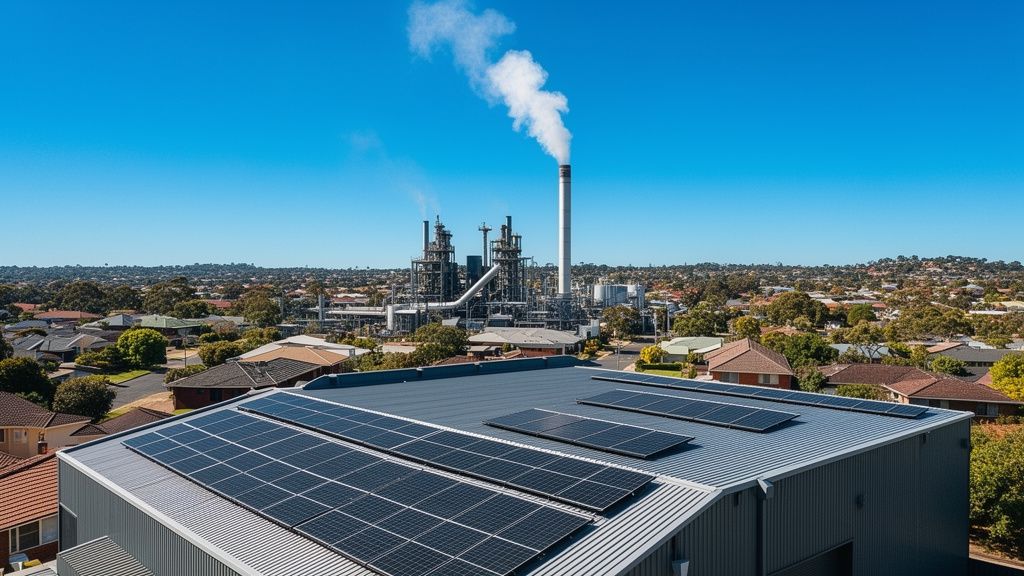
TL;DR: Rio Tinto's high-energy smelters, particularly aluminium operations, are driving massive renewable energy projects in Australia. By committing to green power for their industrial loads, they signal demand for utility-scale solar and wind farms, accelerating the grid's decarbonisation and attracting significant investment.
What makes industrial smelters central to Australia's green energy transition?
Industrial smelters, especially for aluminium, are Australia's largest and most consistent energy users, offering a significant opportunity to absorb and stabilise gigawatts of renewable power. These facilities operate 24 hours a day, seven days a week, consuming enormous amounts of electricity. For instance, an aluminium smelter can use more power than an entire regional city. This constant, high-volume demand acts as a powerful anchor for new renewable energy projects. Connecting a large solar or wind farm to a stable industrial load like a smelter helps balance the grid, making the business case for new clean energy infrastructure much stronger. Without such large base loads, grid operators face more challenges integrating variable renewable generation.
The Enormous Appetite of Smelters
An aluminium smelter’s power consumption is truly staggering. Rio Tinto’s Boyne Island Aluminium Smelter near Gladstone, Queensland, is one of the largest in Australia, drawing hundreds of megawatts continuously. For perspective, a typical Australian household might use around 15-20 kilowatt-hours (kWh) per day. A smelter can consume more than a million kWh in the same timeframe. This immense energy appetite means that transitioning even one smelter to green energy requires a renewable power station of substantial scale, often in the gigawatt range. These are not small rooftop solar arrays; we are talking about multi-billion dollar solar and wind farms.
A Stable Demand for Variable Renewables
Renewable energy sources like solar and wind are by nature intermittent; the sun does not always shine, and the wind does not always blow. This variability presents a challenge for grid stability. However, an industrial smelter offers a steady, predictable demand for electricity. Pairing a large renewable energy project with a stable industrial load like a smelter helps absorb surplus power during high generation periods and provides a consistent revenue stream for the renewable developer. This commercial certainty lowers investment risk, making it easier to finance and build these essential projects, which in turn benefits the entire grid by adding more clean energy capacity.
Which specific Rio Tinto projects are pushing this shift?
Rio Tinto is actively pursuing large-scale renewable power contracts for its Queensland aluminium smelters and its Tasmanian operations, transitioning away from fossil fuels. The company publicly aims to reduce its Scope 1 and 2 emissions by 50% by 2030, which largely involves decarbonising its energy-intensive operations. Their strategy focuses on securing long-term power purchase agreements (PPAs) with developers of new, large-scale wind and solar farms. These commitments are not just about meeting environmental targets; they are about securing competitive, long-term power prices for operations, as renewable energy costs often sit below new fossil fuel generation.
Queensland's Aluminium Giants Go Green
In Queensland, Rio Tinto operates the Boyne Island aluminium smelter, the Queensland Alumina Limited refinery, and the Yarwun alumina refinery, all major energy consumers in the Gladstone region. To power these operations, Rio Tinto is working towards securing up to 5 GW of renewable energy. For instance, they have expressed interest in the Upper Calliope Solar Farm, a proposed 1 GW project near Gladstone. Securing such a large volume of renewable energy for these facilities means building new wind and solar farms at an unprecedented scale for industrial supply. This also provides an opportunity for new energy infrastructure to support the state's broader renewable energy targets.
Powering Tasmanian Production with Clean Energy
Rio Tinto's Bell Bay aluminium smelter in Tasmania already benefits from a significant portion of renewable hydropower. However, the company explores further options to fully decarbonise this facility. Bell Bay uses around 280 MW of power, making it a critical load for Tasmania's energy system. While Tasmania's grid has a high penetration of hydro, securing additional long-term renewable supply, potentially from new wind farms, helps ensure the smelter's green credentials moving forward. This commitment secures the future of local jobs and manufacturing in a world increasingly demanding low-carbon products.
How do these industrial shifts influence Australia's broader energy market?
Rio Tinto's commitment to green energy for its smelters creates a powerful demand signal, driving new utility-scale renewable investment and accelerating grid transformation across the country. When a multinational industrial player like Rio Tinto commits to buying gigawatts of clean power, it sends a clear message to energy developers, investors, and governments: there is significant market demand for large-scale renewable projects. This certainty encourages billions of dollars in new investment, which might otherwise be hesitant due to the upfront capital costs of large solar and wind farms. These projects, once built, add clean energy to the entire grid, not just to the smelters.


Stimulating Investment in New Renewables
Imagine a developer planning a multi-billion dollar wind farm. Securing a long-term PPA with a major customer like Rio Tinto de-risks the project significantly. It guarantees revenue for decades, making it easier to attract financing from banks and investors. This commercial certainty translates directly into faster project approvals and construction times for new renewable energy assets. Without this industrial demand, many of these gigawatt-scale projects might not even get off the drawing board. For example, the proposed 1 GW Upper Calliope Solar Farm, if it secures a PPA with Rio Tinto, could represent an investment of over $1.5 billion, creating hundreds of construction jobs and dozens of ongoing operational roles.
Decarbonising the Supply Chain from the Top Down
When smelters switch to green energy, it does more than just reduce their direct emissions; it cleans up the entire supply chain. Aluminium produced with renewable electricity has a much lower carbon footprint. This is increasingly important as global markets demand 'green aluminium' for everything from electric vehicles to sustainable packaging. Companies buying aluminium from Rio Tinto can then claim lower Scope 3 emissions (emissions from their supply chain), helping them meet their own sustainability targets. This creates a ripple effect, encouraging other parts of the industrial sector to follow suit and accelerating Australia's transition to a net-zero economy.
Key Takeaways
- Industrial smelters, especially for aluminium, are Australia's largest constant power users, making them key to absorbing utility-scale renewable energy.
- Rio Tinto is actively pursuing multi-gigawatt renewable energy contracts for its Queensland and Tasmanian smelters to meet ambitious decarbonisation targets.
- These large industrial commitments provide crucial financial certainty for new solar and wind farm developers, accelerating billions in investment into clean energy infrastructure.
- The shift to green energy in smelters decarbonises the entire aluminium supply chain, meeting global demand for low-carbon materials and encouraging broader industry change.
- Australia's grid benefits from the added clean energy capacity and the stable demand provided by these operations.
Read More
For a comprehensive overview, check out our master guide: Read the Full Guide Here.