Sun's Up, Savings Up: How Much Roof Do You Need for an 8kW Solar System?
Thinking of making the switch to solar and harnessing that glorious Aussie sunshine? An 8kW solar system is a popular choice for many households, offering a sweet spot between energy production and cost. But before you get too excited, a crucial question needs answering: do you actually have enough roof space?
This blog post will break down the roof space requirements for an 8kW solar system, helping you determine if it's the right fit for your home. We'll cover everything from panel numbers to orientation, ensuring you're well-informed before taking the plunge. For a deeper dive, check out our Complete Guide to 8kW solar systems in Australia.
Understanding the Size of an 8kW Solar System
An 8kW solar system is capable of generating a significant amount of electricity, generally between 28 and 35 kilowatt-hours (kWh) per day. This figure, of course, depends on several factors, including your location and the amount of sunlight your roof receives. For example, if you live in sunny Queensland or Western Australia, you can expect higher energy generation compared to Victoria or Tasmania.
This level of power is generally sufficient to comfortably run a medium-sized household, powering appliances like your fridge, air conditioner, washing machine, lights, and TV. If someone is home during the day, utilising power as it's being generated, you'll maximise the value of your solar investment.
The Roof Space Calculation: Panels and Area
So, how much roof space are we talking about?
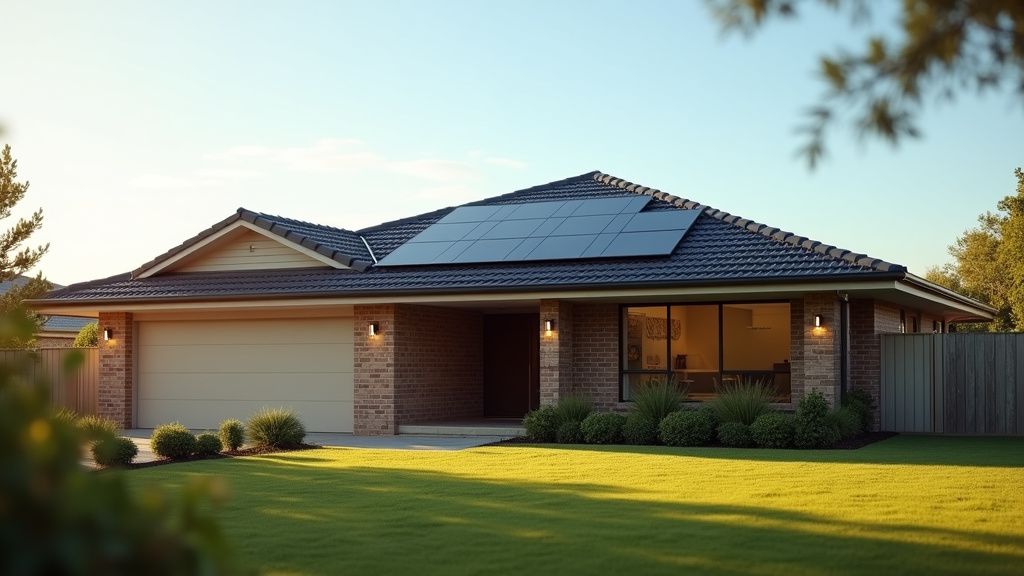
An 8kW solar system typically consists of 20 to 24 solar panels. The exact number depends on the wattage of the individual panels; higher wattage panels (around 400W) mean you'll need fewer panels overall.
Each panel usually requires around 2 square meters of space. Consequently, an 8kW system will require approximately 40 to 50 square meters of roof space. It’s always best to get professional advice for your own circumstances.
Factors Affecting Roof Space Requirements
While 40-50 square meters is a good rule of thumb, keep in mind that certain factors can influence the final amount of roof space required:


- Panel Efficiency: More efficient panels generate more power per square meter, potentially reducing the number of panels needed.
- Roof Obstructions: Chimneys, skylights, or other obstructions can limit the available space and impact panel placement.
- System Design: The specific layout of your solar panel array can influence how efficiently space is utilized.
- Safety Regulations: Installers must adhere to safety regulations which can dictate minimum clearances around the edges of the roof.
Roof Orientation: Maximising Sunlight Capture
The direction your roof faces plays a crucial role in how much energy your solar system generates. North-facing roofs generally receive the most sunlight throughout the day, making them ideal for solar panel installation. However, east- or west-facing roofs can still be effective, especially if your household consumes more energy in the morning or evening.
A professional solar installer can assess your roof's orientation and angle, recommending the optimal panel placement to maximise energy production. Shading from trees or nearby buildings is another consideration.
Roof Type and Condition
While the type of roof (tiled, metal, etc.) is not usually a major factor in determining roof space requirements, the condition of your roof is crucial. A structurally sound roof is essential to support the weight of the solar panels. If your roof is old or damaged, it may need to be repaired or replaced before installing a solar system.
Installation Considerations and Costs
Installing an 8kW solar system is typically a one-day job for a qualified installation team. The process involves mounting the panels, connecting them to an inverter, and integrating the system with your home's electrical grid.
The cost of an 8kW solar system in Australia varies depending on the quality of the components and the complexity of the installation. Avoid incredibly cheap deals as the quality of parts may be sub-par.
Remember to factor in the Small-scale Technology Certificate (STC) rebate, which can significantly reduce the upfront cost. The sooner you invest in solar, the better, as this rebate is phasing out. Also, check with your state for any potential feed-in tariffs, which provide payments for excess energy you send back to the grid.
With current electricity prices, many Australian households find that their solar system pays for itself within 3 to 6 years. After that, it's practically free energy!
Next Steps: Getting a Professional Assessment
Determining the exact roof space you need for an 8kW solar system requires a professional assessment. A qualified solar installer can evaluate your roof's size, orientation, condition, and shading, recommending the best system design for your specific needs. They can also provide you with an accurate quote and help you navigate the available rebates and incentives.