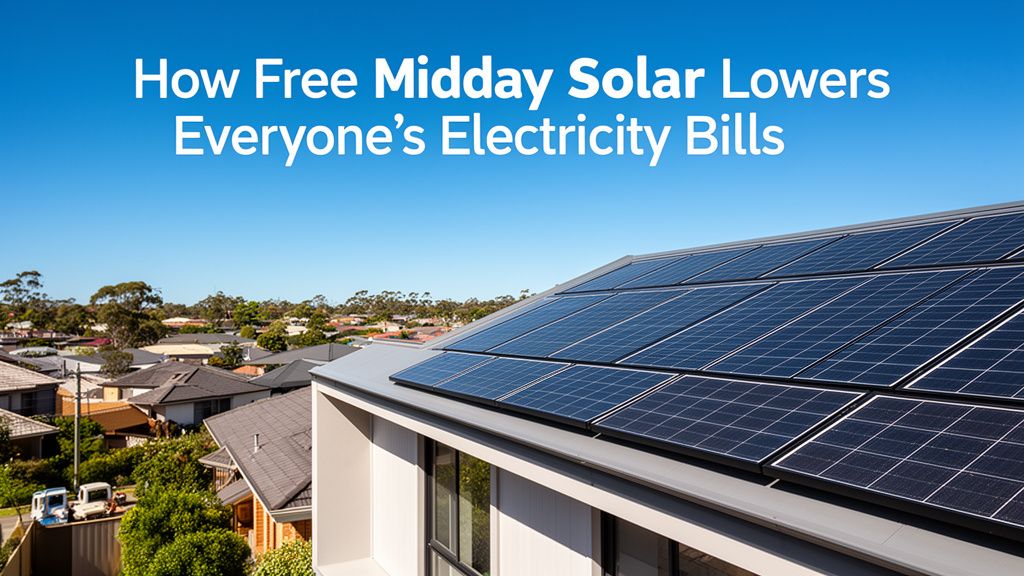
How Free Midday Solar Power Reduces Everyone's Electricity Bills in Australia
TL;DR: The surge of cheap solar energy during the day significantly lowers wholesale electricity prices, prompting retailers to offer more competitive tariffs that benefit all consumers. This widespread rooftop solar also reduces strain on the grid, potentially deferring costly network upgrades, leading to lower overall electricity costs even for households without solar panels.
How Does Abundant Midday Solar Power Impact Wholesale Electricity Prices?
Abundant midday solar power significantly drives down wholesale electricity prices during the day across Australia's National Electricity Market (NEM). This phenomenon is a direct result of the basic economic principle of supply and demand; as solar panels across millions of Australian rooftops pump electricity into the grid, the supply of available power surges. This increased supply, combined with relatively stable demand during daylight hours (before evening peaks), pushes the wholesale price of electricity – the price retailers pay – downwards. We've seen instances where wholesale spot prices have dipped close to zero or even into negative territory in states like South Australia and Queensland during periods of high solar generation, making it cheaper for retailers to buy power at these times. This price suppression during the middle of the day is a clear and measurable effect of Australia's leading rate of solar adoption.
The "Duck Curve" and Price Volatility
The influx of midday solar has profoundly shaped the daily electricity demand profile, famously creating the "duck curve" effect. This curve illustrates how net demand from the grid (total demand minus solar generation) plunges during the day due to solar input, only to sharply ramp up in the late afternoon and evening as solar generation declines and household demand for lighting, cooking, and heating increases. This creates periods of extreme price volatility, with very low or negative prices midday and potentially very high prices during the evening peak. While this volatility presents challenges for grid operators, the persistent midday price suppression remains a huge benefit for retailers, allowing them to procure electricity cheaply for a significant portion of the day.
Why Do Reduced Wholesale Prices Translate to Lower Bills for All Consumers?
Retailers pass on lower wholesale costs to all customers, regardless of solar ownership, through competitive pricing and various tariff structures. While the wholesale market is dynamic, retailers must ultimately recover their costs and turn a profit, and the cost of purchasing electricity on the wholesale market is a primary expense. When they can consistently buy power more cheaply during the day due to solar oversupply, they gain flexibility in how they structure their retail offers. This intensified competition means that even if you don't have solar panels yourself, electricity providers are pressured to offer more attractive rates, including cheaper off-peak or shoulder rates during solar-rich periods, to win and retain customers. Everyone benefits from the downward pressure on energy prices created by increased solar availability.
The Role of Tariff Structures and Market Competition
Australia's competitive electricity market ensures that the benefits of lower wholesale prices are distributed. Retailers continually adjust their pricing strategies to attract customers, often introducing time-of-use tariffs that reflect the actual cost of electricity at different times of the day. For example, many plans now offer significantly cheaper rates during the day (shoulder or off-peak) when solar generation is high, compared to the evening peak. Even consumers on flat-rate tariffs indirectly benefit, as the overall lower cost of energy procurement for retailers allows them to maintain more competitive base rates across the board. The simple fact that retailers have access to cheaper energy inputs during the day ultimately influences the entire pricing landscape.


How Does Distributed Solar Reduce Grid Infrastructure Costs?
Widespread rooftop solar reduces the need for costly grid upgrades and new power generation, ultimately lowering network charges for everyone. The electricity grid, operated by distribution network service providers (DNSPs), is designed to meet peak demand – the highest point of electricity consumption. Historically, these peaks often occurred during hot summer afternoons when air conditioners ran flat out. However, with millions of rooftop solar systems now generating power, particularly during these sunny, hot periods, solar effectively shaves off these demand peaks. This reduction in peak demand means the existing infrastructure is less stressed and can accommodate growth without needing immediate, expensive expansions or new transmission lines, which are costs typically passed on to all consumers through network charges on their bills.
Easing Peak Demand and Deferring Network Investments
By reducing the overall strain on the grid during critical peak times, rooftop solar defers or even avoids the need for significant capital investments in poles, wires, and transformers. For example, if a suburb's peak demand would otherwise necessitate a multi-million-dollar substation upgrade in five years, substantial rooftop solar uptake might push that requirement back by ten or fifteen years, or even indefinitely. These avoided costs are substantial. Given that network charges typically make up 30-50% of an average Australian electricity bill, any measure that reduces network investment directly contributes to lower bills for all users, whether they have solar or not. It's a collective benefit that underpins the stability and affordability of our electricity supply.
Is This Benefit Sustainable and What Are the Future Implications?
The benefits of midday solar are set to grow as Australia transitions further into renewable energy, but smart grid management and energy storage solutions are essential to maximise these advantages. As more households and businesses install solar, the "free" energy during the day will continue to suppress wholesale prices, providing ongoing relief. However, managing the "duck curve" – the sharp drop in solar generation and corresponding spike in demand in the evenings – becomes increasingly critical. To maintain grid stability and fully leverage solar's potential, investment in large-scale and distributed battery storage, as well as more flexible demand management, is paramount. This ensures that the cheap midday power can be stored and used when the sun isn't shining, extending its benefits into the evening peak and smoothing out price volatility.
The Growing Role of Batteries and Virtual Power Plants
The proliferation of home batteries and the development of Virtual Power Plants (VPPs) are key to making midday solar benefits even more sustainable and widespread. Batteries allow individual households to store their excess solar power for evening use, reducing their reliance on the grid during peak times. When these batteries are aggregated into VPPs, they can collectively act as a major energy resource, dispatching stored solar power back to the grid during high-demand periods. This not only helps stabilise the grid but also further suppresses evening peak prices, extending the "free power" effect beyond daylight hours and benefiting all consumers by reducing overall grid operating costs and increasing energy security.
Key Takeaways
- Widespread rooftop solar significantly lowers wholesale electricity prices during the day due to increased supply.
- Lower wholesale costs translate into more competitive retail electricity tariffs, benefiting all consumers regardless of solar ownership.
- Distributed solar reduces peak demand on the grid, deferring costly network infrastructure upgrades that would otherwise be passed onto all bill payers.
- The "duck curve" effect of solar demands better grid management and increased energy storage to maximise benefits.
- Future investments in batteries and Virtual Power Plants will further extend the advantages of midday solar into evening peak periods, enhancing grid stability and affordability for everyone.
Read More
For a comprehensive overview, check out our master guide: Read the Full Guide Here.


