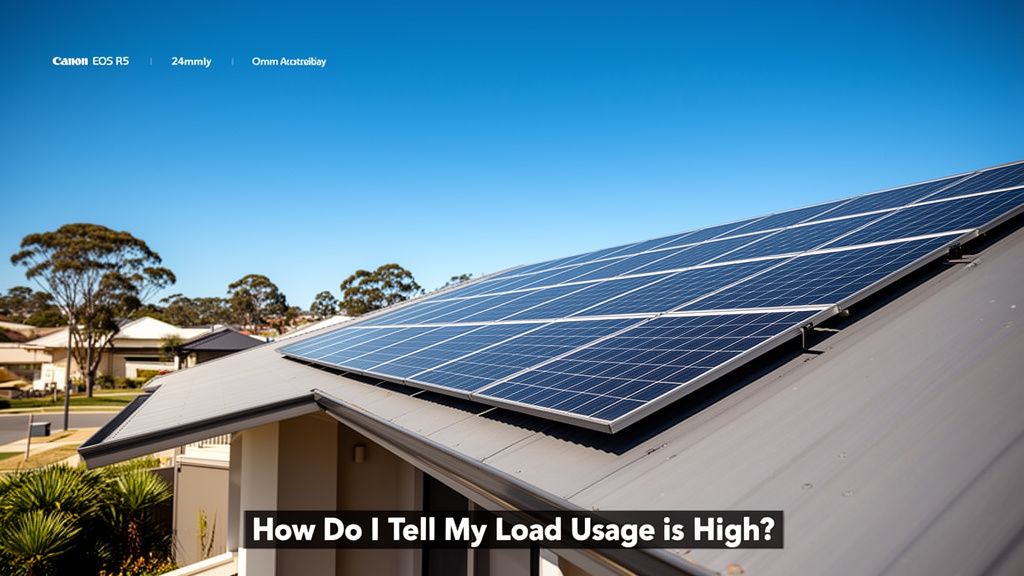
Even if you’re soaking up the glorious Aussie sun with a top-notch solar system on your roof, it’s a fair dinkum shocker for many homeowners when the electricity bill still lands with a thud, bigger than a backyard barbie feast. You’ve gone solar, done your bit for the planet and your wallet, so why are you still forking out a small fortune? The answer, mate, often comes down to your load usage – how much electricity your home is actually consuming.
Understanding your home’s energy appetite is crucial, not just for saving a few bucks, but for truly maximising your solar investment. It's not always about more solar panels; sometimes, it’s about being savvier with the power you’ve already got. So, how do you tell if your load usage is higher than a kookaburra’s laugh? Let’s dive in.
The Blatant Red Flags: Your Bill & Inverter
The Bill Doesn't Lie (Usually)
This is probably the most obvious indicator. If your quarterly or monthly electricity bill still looks like it’s for a small factory rather than a family home, then your usage is likely high. Take a look at the "Import" section of your bill. This is the electricity you're drawing from the grid, over and above what your solar panels are generating. If this figure is substantial – say, regularly exceeding a couple of hundred dollars even with a good solar feed-in tariff – it’s a big hint.
Also, check your daily usage figures. Many retailers now provide a graph showing your consumption patterns. Are there huge spikes, especially outside of daylight hours? This is a dead giveaway you’re relying heavily on grid power when your solar system is either asleep or producing less.
Your Solar Inverter is Talking to You
Your solar inverter isn't just a fancy box; it's the brains of your solar system and a fantastic source of real-time data. Most modern inverters come with a display or can connect to a monitoring app on your phone. Keep an eye on it.
During the day, when the sun is shining, you should ideally see your solar production (in kW) exceeding your home’s consumption. If you’re regularly seeing your consumption bar higher than your production bar, particularly during the middle of the day, that means you're importing power from the grid even when your panels are working flat out. If your inverter shows you’re consistently importing 2-3kW or more during peak daylight hours, you’ve definitely got some energy guzzlers running.
Digging Deeper with Smart Tech and Your Habits
Smart Meters and Retailer Apps
A huge chunk of Aussie homes now have smart meters, which remotely send detailed energy usage data to your retailer. This is a goldmine of information! Log into your energy retailer’s online portal or app. Most provide granular data, often down to 30-minute intervals.
What you’re looking for here are patterns:
- High baseline load: Even when you think everything is off, does your home still register a constant draw of 0.5kW or more? This "always-on" load is your baseline, and a high one indicates hungry appliances constantly sucking power.
- Consistent night-time usage: If your usage remains high after the sun goes down, you’re definitely importing from the grid. This is particularly true if you’re using electric heating, older fridges, or running a pool pump overnight.
- Morning and evening peaks: These are common. Everyone wakes up, showers, makes brekky, then comes home, cooks dinner, watches TV. But how high are those peaks? Are they hitting 5kW, 8kW, or even 10kW regularly? These are massive draws.
The Appliance Audit: Unmasking the Culprits
Sometimes, it’s not a mystery at all; it’s just the usual suspects. Certain appliances are notorious energy hogs:
- Air Conditioning: Running multiple units or one large unit can easily chew through 3-5kW per hour. If it's on for hours, especially when the sun isn't at its peak, your usage will skyrocket.
- Electric Hot Water Systems: Often one of the biggest users. If yours heats water continuously or overnight, it's a huge drain. A typical system can use 3-4kW when heating.
- Pool Pumps: These can run for 6-8 hours a day, consuming 1-2kW an hour. If not timed for solar production, they’re costing you a packet.
- Tumble Dryers: A 4kW appliance running for an hour or two is a significant hit to your daily usage.
- Old Fridges and Freezers: An ancient fridge might be costing you hundreds of dollars a year more than a modern, efficient one, constantly cycling.
- Standby Power (Phantom Loads): All those little lights on your TV, gaming console, computer, modems, phone chargers – they add up. While individually small, collectively they can account for 10-15% of your total energy consumption.
To check for these, try a "power-down" experiment. Turn off as many non-essential appliances as possible, then check your inverter or smart meter app. See what your baseline drops to. Then, one by one, turn things back on and note the jump in consumption. This helps pinpoint the biggest guzzlers.
When Do You Use Power? Timing is Everything
It’s not just how much power you use, but when you use it that matters most for solar homes.
- Day vs. Night: Solar produces during the day. If your highest consumption is happening after sundown, you're importing from the grid at full retail prices (often 25-35 cents/kWh), while your solar feed-in tariff for exporting power is likely much lower (e.g., 5-10 cents/kWh). This imbalance is a classic sign of high, poorly timed usage.
- Weekend Warrior Syndrome: Are your weekends seeing huge spikes compared to weekdays? More people home, more cooking, more entertainment, more clothes washing and drying – it all adds up.
Putting It All Together
So, how do you tell if your load usage is high?
- Your Bill: Look for high "Import" figures.
- Your Inverter: See if your consumption often exceeds production during daylight hours.
- Your Smart Meter/App: Analyse your daily graphs for high baselines, significant night-time usage, and massive morning/evening peaks.
- Your Appliances: Identify the big energy hogs and consider their age and usage patterns.
Once you’ve identified that your load usage is indeed high, the next step is to figure out what to do about it. But that’s a yarn for another day! For now, take a squiz at your bills and your inverter, have a yarn with your energy retailer, and start becoming a bit of a detective in your own home. Understanding your consumption is the first crucial step to taking control of your energy future and truly getting the most out of that fantastic Aussie sunshine.