TL;DR: Electrifying your Australian home by replacing gas appliances with efficient electric alternatives, especially when paired with solar PV, can significantly reduce your energy bills by hundreds or even thousands of dollars annually. This strategy leverages cheaper, cleaner electricity and smart technology to achieve substantial long-term cost savings and a lower carbon footprint.
How Does Electrifying Your Home Significantly Reduce Energy Bills?
Electrifying your home significantly reduces energy bills by switching from more expensive, often fossil-fuel-dependent, energy sources like natural gas and traditional electricity grids to highly efficient electric appliances primarily powered by rooftop solar PV. This shift means you’re generating a substantial portion of your own energy, greatly diminishing reliance on grid electricity and eliminating gas bills entirely. Modern electric appliances, such as heat pump hot water systems and reverse cycle air conditioners, are far more energy-efficient than their gas or resistive electric counterparts. For instance, a heat pump can be three to four times more efficient at heating water than an electric immersion heater, meaning it uses a fraction of the power to achieve the same result. By integrating these efficiencies with your own solar power, you move towards energy self-sufficiency and insulation from volatile grid electricity and gas prices, transforming your home into a low-cost energy hub.
The Efficiency Advantage of Electric Appliances
Modern electric appliances offer a clear efficiency advantage over their older or gas-powered counterparts. For example, a gas ducted heating system might operate at 80-90% efficiency, whereas a reverse cycle air conditioner (which uses heat pump technology) can achieve efficiencies well over 300% (a Coefficient of Performance, or COP, of 3 or more). This means for every unit of electricity consumed, it moves three or more units of heat. Similarly, induction cooktops are about 85-90% efficient, compared to gas cooktops which are typically 30-55% efficient, losing a lot of heat to the surroundings. These substantial efficiency gains directly translate to lower energy consumption and, consequently, lower bills, making the most of every dollar you spend on energy.
Leveraging Solar PV for True Bill Reduction
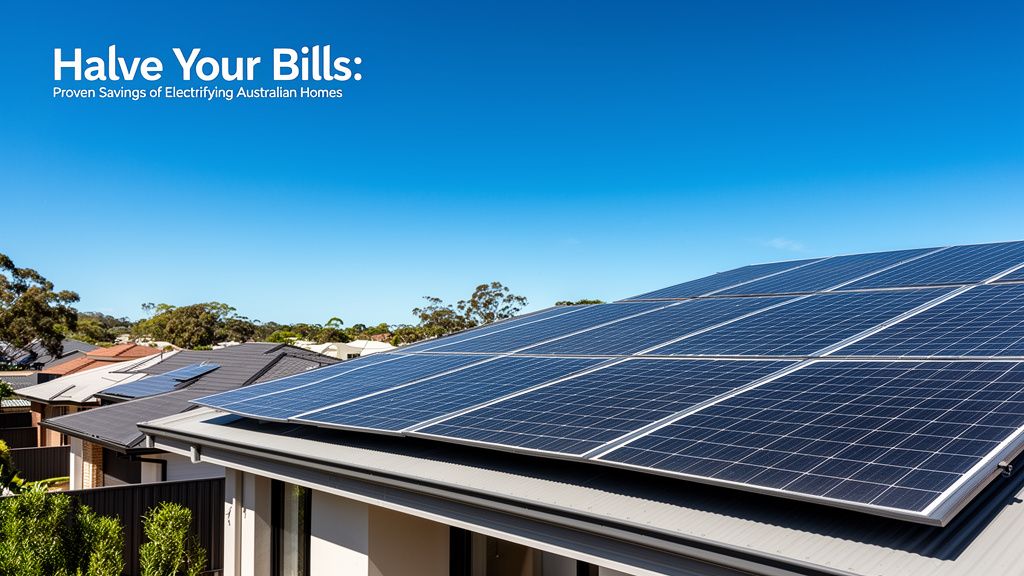
Pairing electrification with a robust solar PV system is the cornerstone of halving your energy bills. A typical Australian home can install a 6.6kW solar system for around $6,000-$9,000 after rebates, which can generate enough electricity to cover a significant portion of the home's daily needs, especially when timed with appliance use. By running your heat pump, charging your EV, or doing your laundry during the day when your solar panels are producing, you are effectively using 'free' energy. Any excess solar power can be exported to the grid for a feed-in tariff (e.g., 5-10c/kWh), further offsetting costs. A properly sized solar system, combined with strategic appliance usage, turns your roof into a personal power station, drastically reducing your dependence on the grid and its fluctuating prices.
What Are the Essential Components for a Fully Electrified Australian Home?
The essential components for a fully electrified Australian home include a high-capacity solar PV system, an efficient heat pump for hot water and/or space conditioning, and modern electric cooking appliances. These core technologies allow a household to generate its own clean energy and replace all major gas-consuming appliances with highly efficient electric alternatives. While not strictly essential for immediate electrification, a home battery storage system is a highly recommended addition, enabling homeowners to store excess solar power generated during the day for use at night, further increasing self-sufficiency and bill savings, particularly given the lower evening grid electricity rates often offered by retailers. Investing in these key systems ensures comprehensive coverage for a home's energy needs, from heating and cooling to hot water and cooking.
Heat Pumps: Your All-in-One Climate and Hot Water Solution
Heat pumps are versatile heroes of home electrification, providing both efficient hot water and climate control. For hot water, an electric heat pump hot water system extracts heat from the ambient air to warm water, costing significantly less to run than traditional electric resistance or gas systems. A typical family of four might save $500-$1000 per year on hot water alone by switching from gas to a heat pump, with systems costing between $3,000 and $6,000 fully installed after rebates. Similarly, reverse cycle air conditioners (which are air-source heat pumps) efficiently provide both heating and cooling, eliminating the need for separate gas heaters and making them the most cost-effective and environmentally friendly option for climate control in Australia.
Induction Cooking and Beyond: Modern Electric Upgrades
Switching to an induction cooktop is another crucial step in electrifying your kitchen and improving energy efficiency. Induction cooktops offer precise temperature control, faster heating times than gas, and are safer as they only heat the pan directly, reducing ambient heat in the kitchen. They typically range from $1,000 to $3,000 for installation, depending on the model and any electrical upgrades needed. Beyond cooking, other upgrades include replacing gas heating with efficient electric panel heaters or reverse cycle air conditioning in rooms not already covered by central systems. These modern electric appliances contribute to a healthier indoor environment by eliminating combustion by-products from gas, alongside their substantial energy savings.
Can Australian Households Really Halve Their Energy Bills Through Electrification?
Yes, Australian households can genuinely halve, or even significantly reduce, their energy bills through strategic electrification, especially when paired with solar PV and smart energy management. This proven outcome results from the combined effect of eliminating costly gas bills, drastically reducing grid electricity consumption thanks to self-generated solar power, and leveraging the superior energy efficiency of modern electric appliances. For example, a home paying $1,000 per quarter on electricity and gas combined could realistically see those costs drop to $300-$500 per quarter once fully electrified with solar, after an initial investment that often pays itself back within 3-7 years, particularly with current government rebates and incentives. The precise savings depend on the starting point (e.g., existing gas usage), the size of the solar system, and usage patterns, but the direction of travel is always towards substantial financial gains.

Illustrative Savings for a Typical Aussie Family
Consider a typical Australian family of four in a medium-sized home currently using gas for hot water and heating, and grid electricity for other needs, with quarterly bills averaging $500 for electricity and $250 for gas (total $750/quarter or $3,000/year). By installing a 6.6kW solar system, a heat pump hot water system, and switching to an induction cooktop, their gas bill would drop to zero. Their electricity consumption from the grid would plummet due to solar generation and the efficiency of heat pumps. If their solar system offsets 80% of their electricity needs and they switch to a better time-of-use tariff, their remaining electricity bill could drop to as low as $150-$250 per quarter. This represents a total annual energy cost of $600-$1,000, achieving a saving of $2,000-$2,400 per year – well over half their original bills.
Government Rebates and Financial Incentives for Electrification
Australian federal and state governments offer various rebates and incentives to encourage home electrification and solar adoption, making the upfront investment more manageable and accelerating payback periods. These often include STCs (Small-scale Technology Certificates) for solar installations, which act as an upfront discount reducing the cost of a 6.6kW system by $2,000-$3,000. State-specific programs, such as the Victorian Solar Homes Program or NSW's Energy Savings Scheme, offer rebates for heat pump hot water systems (e.g., up to $1,000-$2,000) and sometimes interest-free loans for solar batteries. These incentives significantly reduce the initial outlay, making the transition to an all-electric, solar-powered home an increasingly financially attractive and accessible option for many Australian homeowners.
Key Takeaways
- Electrifying your home by replacing gas appliances with efficient electric alternatives directly eliminates gas bills and significantly reduces grid electricity consumption.
- Installing a solar PV system is crucial for maximising savings, allowing you to generate your own power and insulate yourself from rising energy costs.
- Key electric upgrades include heat pump hot water systems, reverse cycle air conditioners, and induction cooktops, which offer substantial efficiency gains over traditional options.
- Australian households can realistically halve their total energy bills, with annual savings often exceeding $2,000-$2,400 after an initial investment.
- Take advantage of federal STCs and state-specific rebates and incentives for solar, batteries, and heat pumps to reduce upfront costs and accelerate payback.
Read More
For a comprehensive overview, check out our master guide: Read the Full Guide Here.