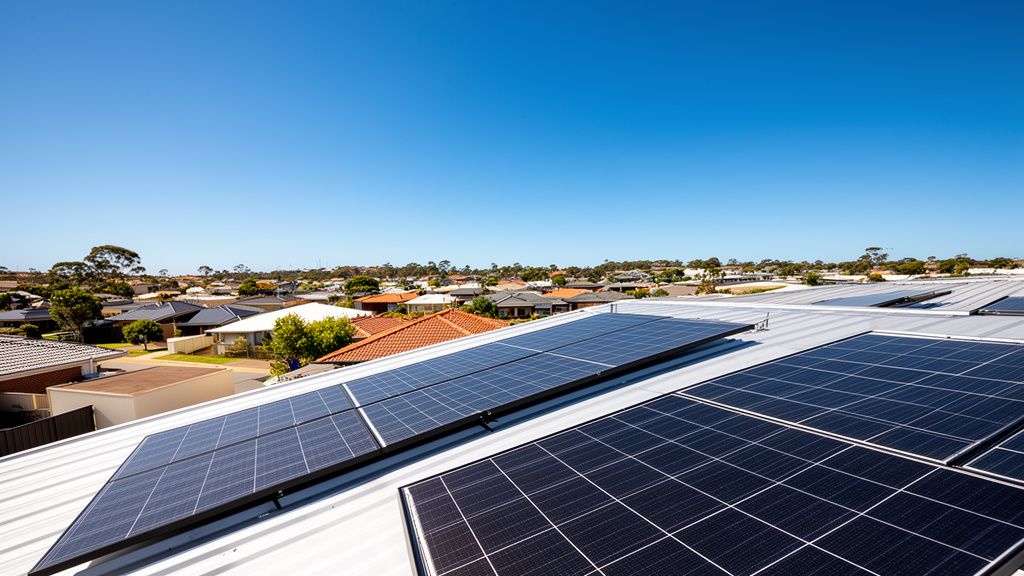
TL;DR: Australia holds world-class high-purity quartz deposits and has established mining expertise. Strategic investment in polysilicon manufacturing, powered by our abundant renewable energy, allows Australia to become a significant, non-Chinese supplier by 2030, diversifying global supply chains and capitalising on growing demand.
What is Driving the Global Demand for Non-Chinese Polysilicon?
The global solar industry faces a critical need for diversified polysilicon supply. Polysilicon, the primary material in most solar cells, sees demand rise with the massive expansion of solar PV installations worldwide. The International Energy Agency (IEA) reports that solar PV added over 400 GW globally in 2023, requiring substantial volumes of this key ingredient. Currently, China produces over 80% of the world's solar-grade polysilicon. This heavy reliance on a single region raises concerns about supply chain resilience, geopolitical stability, and ethical sourcing for many international markets. Companies and governments in Europe, North America, and India actively seek alternative, reliable suppliers to mitigate these risks. This creates a significant market opportunity for nations like Australia, which possess the necessary raw materials and a stable investment environment. Meeting this demand means establishing manufacturing capacity outside of the dominant player, ensuring security and sustainability for the global solar energy transition.
Why Diversified Polysilicon Supply Matters
Solar manufacturers outside of China require non-Chinese polysilicon to meet increasing consumer and regulatory preferences. Many large-scale solar projects, especially in the US and Europe, now mandate ethically sourced components to qualify for incentives or bypass import restrictions. The US Inflation Reduction Act (IRA), for example, encourages domestic manufacturing and sourcing of clean energy components. Similarly, European regulations increasingly scrutinise supply chains. This pressure translates into a willingness to pay a premium for polysilicon produced under different conditions. The lack of supply options outside China also exposes the global solar sector to potential price volatility and disruptions. Developing new, diverse supply lines strengthens the entire industry, making it more robust against future economic or political shifts.
Does Australia Have the Resources to Produce High-Purity Polysilicon?
Australia possesses abundant, high-quality quartz deposits, a fundamental raw material for polysilicon production. Queensland, in particular, contains some of the world's highest purity quartz, exceeding 99.9% silicon dioxide. These deposits rival those found in regions currently supplying the global semiconductor and solar industries. Converting this raw quartz into solar-grade polysilicon requires significant energy, a resource Australia increasingly produces from renewable sources. Western Australia also has substantial quartz resources, often located near existing mining infrastructure and potential green energy hubs. Our established mining sector and expertise in processing bulk materials position us well to extract and refine quartz efficiently. Developing a polysilicon industry here also leverages Australia's strong research capabilities in materials science and renewable energy integration.
Powering Polysilicon Production with Renewables
Polysilicon manufacturing is an energy-intensive process, demanding significant electricity for refining raw quartz into silicon metal and then further purifying it into polysilicon. Historically, this meant a large carbon footprint. However, Australia's burgeoning renewable energy sector offers a unique advantage. Developing polysilicon plants in regions with access to large-scale wind and solar farms, such as parts of Queensland or Western Australia, could power these facilities with clean energy. This not only reduces operational costs in the long term but also provides a significant marketing advantage. "Green polysilicon" commands greater interest from international buyers committed to reducing their carbon footprint, potentially attracting a price premium on the global market. A facility powered by renewables would align with the broader goals of the solar industry itself.
What Investment is Needed for Australian Polysilicon Manufacturing?
Establishing a new solar-grade polysilicon manufacturing facility in Australia requires a substantial capital investment, likely in the range of AU$2 billion to AU$5 billion for a commercial-scale plant. This figure includes land acquisition, construction of the chemical processing plant, installation of highly specialised purification equipment, and associated infrastructure for utilities and logistics. Government incentives will play a critical role in de-risking these large investments. This could include grants for initial setup, production tax credits, or streamlined environmental approvals. Locating these facilities close to both high-purity quartz mines and renewable energy sources, such as Gladstone in Queensland or industrial zones in Western Australia, optimises logistics and operational costs. These investments also create thousands of direct and indirect jobs, from construction and engineering to ongoing operations and maintenance.
Technology and Market Readiness
Most current polysilicon production uses the Siemens process, which requires high temperatures and produces by-products. While efficient, it is energy-intensive. Newer technologies, such as fluidised bed reactor (FBR) processes, offer potentially lower energy consumption and continuous production. An Australian polysilicon venture might consider a hybrid approach or invest in the latest FBR technology to ensure competitiveness and environmental credentials. Attracting global technology partners with experience in designing and operating such complex chemical plants is essential. Additionally, securing long-term supply contracts with major overseas solar cell and module manufacturers prior to or during construction mitigates market risk, ensuring a buyer for the high-purity polysilicon once production commences. This forward planning confirms market readiness and justifies the significant upfront capital.


What are the Market Opportunities for Australian Polysilicon?
Australian-produced polysilicon would find strong demand in major solar manufacturing regions actively seeking to reduce their dependence on Chinese supply. Markets in North America, Europe, and India represent the primary targets for Australian exports. These regions have aggressive solar deployment targets and explicit policies promoting diversified supply chains. Buyers in these markets are often willing to pay a premium, potentially 10-20% above the commodity price, for polysilicon with verifiable non-Chinese origin, ethical production standards, and lower carbon footprints. This premium helps offset the higher initial capital and operating costs often associated with new, high-quality manufacturing facilities in developed economies. Establishing Australia as a reliable, high-quality supplier could also open doors for future collaboration in other parts of the solar value chain.
Securing Offtake Agreements and Strategic Partnerships
Success for an Australian polysilicon producer relies heavily on securing robust, long-term offtake agreements. These contracts guarantee a buyer for a significant portion of the plant's output for many years. Potential partners include major US or European solar manufacturers, or even governments looking to bolster their energy security. For example, a partnership with a large American solar module company could provide the certainty needed to finance a multi-billion-dollar Australian plant. These agreements often involve direct equity investment or pre-payment commitments, further de-risking the project. Developing these strategic alliances early helps Australia integrate into global solar supply chains, ensuring our polysilicon directly feeds the burgeoning demand for diversified, high-quality solar inputs.
Key Takeaways
- Australia can meet global demand for non-Chinese polysilicon by leveraging its high-purity quartz resources.
- Strategic investment of AU$2-5 billion is required for commercial-scale polysilicon manufacturing facilities in Australia.
- Powering these plants with Australia's abundant renewable energy offers a significant competitive advantage and market premium.
- Securing long-term offtake agreements with manufacturers in North America, Europe, and India is crucial for project viability.
- Developing an Australian polysilicon industry creates jobs, strengthens global supply chains, and diversifies our export economy.
Read More
For a comprehensive overview, check out our master guide: Read the Full Guide Here.