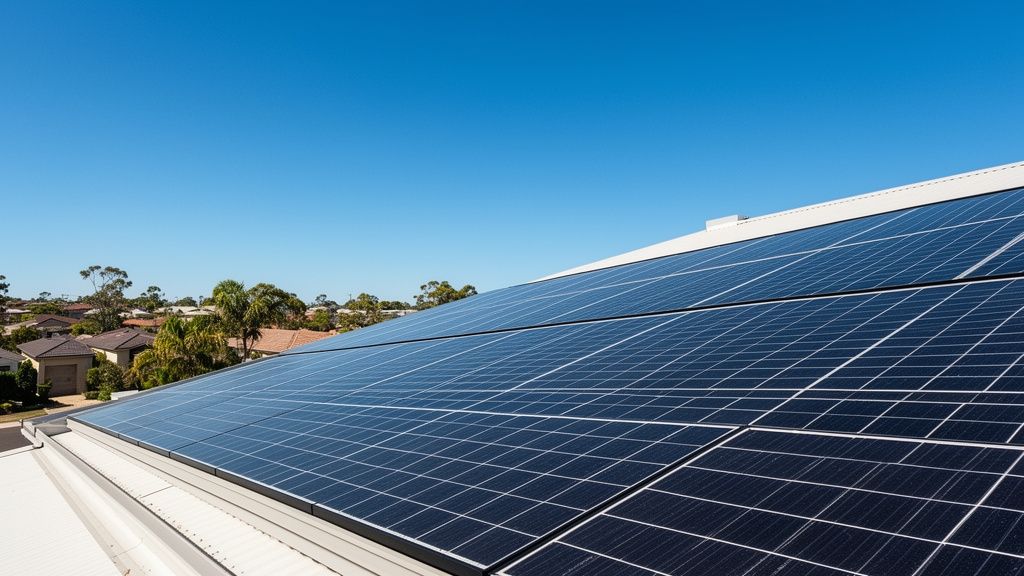
TL;DR: Launching Australia's polysilicon industry requires immediate, coordinated action from government and private sectors. Key steps include establishing dedicated funding mechanisms, developing a skilled workforce through targeted training, and streamlining regulatory processes to secure competitive energy and raw material access.
What financial commitments are essential for polysilicon plant construction?
Building a large-scale polysilicon plant demands significant upfront capital, necessitating a blend of government backing and private investment to get off the ground. A facility capable of producing 20,000 tonnes of solar-grade polysilicon annually, for example, could easily cost over $2 billion. This isn't a small shed; it's a massive chemical processing complex with specialised equipment and high-purity requirements. Without clear pathways for funding, these projects remain concepts on paper. The federal government, through bodies like the Clean Energy Finance Corporation (CEFC) or the Northern Australia Infrastructure Facility (NAIF), needs to commit substantial funds early. This commitment signals stability to private investors and helps de-risk initial stages.
Government-backed investment funds
The federal and state governments need to establish specific funds or expand existing mandates to directly support polysilicon manufacturing. This isn't about handouts; it's strategic investment in a new industry. For example, a dedicated "Polysilicon Industry Growth Fund" of, say, $500 million could provide low-interest loans, equity stakes, or production incentives. This money could cover initial engineering studies, site preparation, or even a portion of the long-lead time equipment procurement. Similar models exist for other strategic industries, and this approach would accelerate project timelines by years. It also makes Australian projects more attractive against international competition which often benefits from state-subsidised development.
Private sector partnerships and capital raising
Attracting private capital means presenting a clear business case and demonstrating government support. Australian superannuation funds, with their enormous capital bases, represent a largely untapped source for these industrial projects. Creating investment vehicles that offer long-term, stable returns—perhaps with government guarantees on initial production off-take—could entice these large institutional investors. Furthermore, partnerships with established global polysilicon manufacturers bring not just capital but also technical expertise and market connections. Companies like Hanwha Solutions, Wacker Chemie, or GCL Technology already operate at scale and could be joint venture partners, sharing the financial load and accelerating technology transfer.
How can Australia secure the necessary talent and expertise?
Developing a skilled workforce for a complex chemical manufacturing process like polysilicon production demands targeted training and strategic recruitment, as Australia lacks a pre-existing industry. You can't just open a factory and expect people to know how to operate high-temperature reactors or manage ultra-pure chemical streams. This requires foresight in education and migration policy, planning several years in advance of plant commissioning. Vocational education and training (VET) providers and universities need clear direction on the skills required, from chemical engineers to process technicians and maintenance specialists.
Targeted vocational training programs
TAFE colleges and other VET providers need to design and implement specialised courses for chemical processing, advanced manufacturing, and industrial automation. This could involve TAFE Queensland partnering with a proposed plant in Gladstone, for instance, to offer apprenticeships and diplomas specifically tailored to polysilicon production. Companies like Rio Tinto and BHP already collaborate with TAFE for mining-related skills; a similar model applies here. These programs should include practical, hands-on training using pilot plant facilities or simulations. Government funding for these courses and student incentives could ensure a steady pipeline of local talent, reducing reliance on overseas recruitment.
Attracting global industry specialists
For initial plant commissioning and operation, Australia will need experienced polysilicon engineers and technicians from established global industries. Immigration pathways must be efficient for these highly specialised roles. This means fast-tracking visas and offering attractive relocation packages to bring in the necessary technical leaders and trainers. These specialists would then mentor and upskill the local workforce, transferring critical operational knowledge. Establishing "centres of excellence" in key locations, potentially tied to existing university chemical engineering departments, could also draw in researchers and engineers interested in contributing to Australia's nascent advanced materials sector.


What regulatory and infrastructure preparations must happen now?
Launching a new heavy industry requires more than just money and people; it needs a stable, predictable regulatory environment and robust infrastructure. The sheer scale of polysilicon production demands consistent, competitively priced energy and efficient processes for environmental approvals. Delays in permitting or unexpected increases in energy costs can make a project commercially unviable before the first brick is laid. Australia's existing approvals processes, while important for environmental protection, often suffer from fragmentation across different levels of government, creating uncertainty for large projects.
Streamlining environmental approvals
Environmental impact assessments for large chemical plants are complex, involving federal and state regulations. A "single-window" or coordinated approvals process, where relevant federal and state agencies collaborate from the outset, would significantly reduce timelines. This means concurrent reviews, shared data, and a clear, predictable pathway for obtaining permits. Projects like the proposed Sun Cable link have experienced this regulatory complexity; a dedicated taskforce focused on polysilicon projects could cut through red tape. Clear guidelines on emissions, waste management, and water usage, established early, provide certainty for investors and ensure high environmental standards are met.
Ensuring competitive energy supply
Polysilicon manufacturing is incredibly energy-intensive. Energy costs represent a significant portion of operational expenditure, often 30-40%. For Australian polysilicon to be globally competitive, the plants need access to abundant, cheap, and preferably renewable electricity. This means guaranteeing connections to existing grid infrastructure, potentially building new high-voltage transmission lines, and securing long-term power purchase agreements (PPAs) with renewable energy generators. Locations with strong solar and wind resources, or access to major renewable energy zones, become prime candidates. Governments could offer energy subsidies or negotiate favourable grid connection terms for early projects to offset initial high costs and ensure competitiveness against facilities in regions with lower power prices.
Key Takeaways
- Establish a dedicated federal investment fund, e.g., $500 million, to de-risk and accelerate initial polysilicon plant development.
- Develop targeted VET programs and university courses now to train chemical engineers and process technicians for the industry.
- Create streamlined visa pathways for experienced global polysilicon specialists to facilitate knowledge transfer.
- Implement a coordinated, "single-window" regulatory approvals process to reduce project delays for environmental permits.
- Guarantee access to competitive, long-term renewable electricity supply for polysilicon plants through PPAs and infrastructure upgrades.
Read More
For a comprehensive overview, check out our master guide: Read the Full Guide Here.


