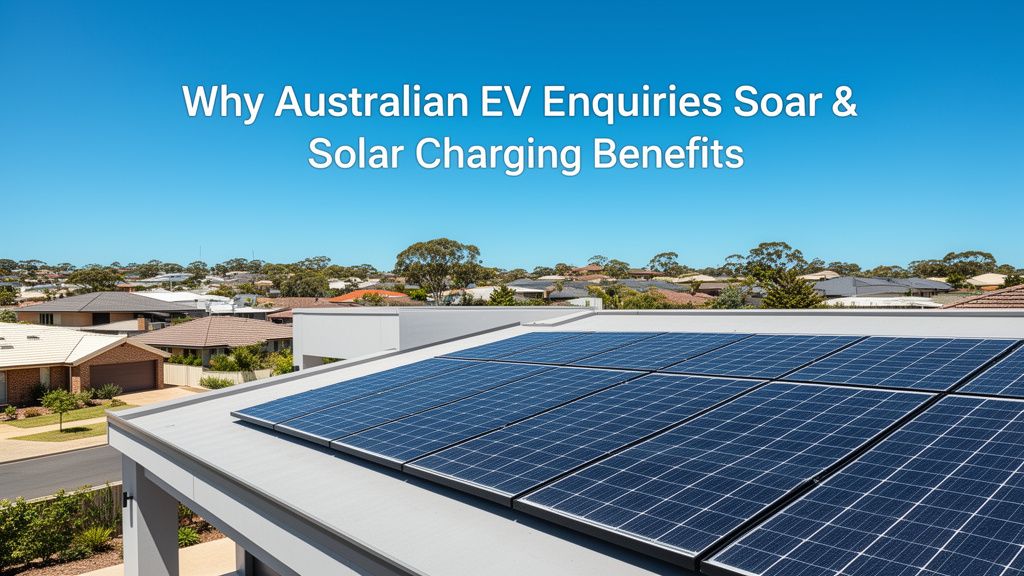
TL;DR: Australian car sales data unequivocally points to a massive surge in electric vehicle enquiries, driven by soaring petrol prices, growing environmental awareness, and a wider range of available EV models. This increasing interest is particularly strong among homeowners with solar panels, keen to leverage their existing renewable energy infrastructure for cost-effective charging.
What is Driving the Unprecedented Surge in Australian EV Enquiries?
Australians are increasingly looking to ditch the petrol pump, with a remarkable surge in electric vehicle (EV) enquiries transforming the automotive landscape. This isn't just a fleeting trend; it's a fundamental shift driven by a convergence of factors. Primarily, the volatile and often exorbitant price of petrol at the bowser has made the running costs of internal combustion engine (ICE) vehicles unsustainable for many households and businesses. When a litre of unleaded can easily tip over $2.00, the economic appeal of a car that costs pennies to charge, especially when powered by rooftop solar, becomes undeniable. Beyond economics, a heightened awareness of climate change and air quality issues is influencing purchasing decisions, with many consumers actively seeking greener alternatives. The growing availability of diverse EV models, from affordable city cars to robust electric utes and family SUVs, has also significantly broadened the appeal, making electric driving a realistic option for more Aussies than ever before. This combination of financial incentive, environmental consciousness, and market choice is rapidly accelerating the EV revolution down under.
Rising Fuel Costs and Environmental Concerns
The hip pocket impact of petrol prices is perhaps the most immediate trigger for the EV enquiry boom. For years, Australians have endured fluctuating but generally rising fuel costs, creating ongoing financial stress for commuters. An EV, particularly when charged at home with solar, virtually eliminates this significant household expense. A typical 60 kWh EV battery, which might cost $15-$20 to charge on off-peak grid power, could cost nothing if fully powered by a domestic solar system. This dramatic saving, estimated to be thousands of dollars annually for average drivers, is a powerful motivator. Concurrently, environmental consciousness is at an all-time high. Many Australians, already embracing rooftop solar to reduce their carbon footprint, are now extending this commitment to their transport choices, seeing EVs as the logical next step in their sustainable lifestyle journey.
Expanding EV Model Availability and Performance
Gone are the days when EVs were a niche luxury or a compromise on range and power. The global automotive industry has poured billions into electric vehicle development, resulting in a proliferation of models that cater to every segment of the market. From compact hatchbacks like the MG ZS EV starting around $40,000, to family-friendly SUVs like the Hyundai Ioniq 5 and Kia EV6, and even the hotly anticipated electric utes, there's an EV for nearly every need and budget. These new models boast impressive range capabilities, often exceeding 400-500 kilometres on a single charge, alleviating range anxiety. Furthermore, the performance of modern EVs, characterised by instant torque and smooth acceleration, often surpasses their ICE counterparts, offering a superior driving experience that is winning over even the most skeptical petrolheads.
How Do Australian Car Sales Data Reflect This Growing EV Interest?
The surge in electric vehicle enquiries isn't just anecdotal; it's strongly supported by hard data from the Australian automotive sector. While new car sales overall experience their ups and downs, the trajectory of EV sales has been consistently upward, often breaking monthly records. Data from organisations like the Federal Chamber of Automotive Industries (FCAI) consistently show year-on-year growth rates for EV sales that far outstrip traditional petrol or diesel vehicles. For instance, in 2023, EV sales more than tripled compared to the previous year, capturing a significant slice of the total market share. This robust growth in sales figures is a direct consequence of the initial wave of enquiries transforming into actual purchases, indicating a powerful and sustained shift in consumer preference. Dealerships across the country report unprecedented levels of interest, with potential buyers specifically asking about electric models, charging options, and integration with home solar. This tangible evidence confirms that the EV revolution is not just on the horizon; it's already here and accelerating.
Shifting Consumer Preferences and Dealership Buzz
Dealerships are on the front lines of this revolution, witnessing firsthand the dramatic shift in consumer interest. Sales staff report that conversations frequently begin with questions about EV range, charging times, and importantly, how an EV integrates with a home solar system. This indicates a well-informed consumer base actively researching sustainable transport solutions. Many buyers are existing solar panel owners, eager to maximise their investment by using their excess solar generation to power their vehicle for free. The 'buzz' around EVs is palpable, with many car buyers prioritising electric options over traditional fuel types, even if it means a longer wait time for delivery. This fundamental change in preference is a strong indicator of future market trends, pointing towards continued growth in EV adoption.
The Role of Online Search Trends
Online search data provides another powerful indicator of surging EV interest. Platforms like Google Trends show a consistent upward trajectory in search terms related to "electric cars Australia," "EV charging," and specific EV models. These searches often spike concurrently with increases in petrol prices or the announcement of new government incentives, underscoring the drivers of interest. Furthermore, many online enquiries stem from consumers researching how to pair an EV with their existing solar setup, looking for information on compatible chargers and the financial benefits of solar-powered driving. This digital footprint of curiosity and research directly correlates with the increased foot traffic and enquiries seen in physical dealerships, providing a comprehensive picture of a market segment poised for explosive growth.
How Does Powering Your EV with Australian Sunshine Make Financial Sense?
For Australian homeowners with rooftop solar, the decision to switch to an electric vehicle makes immense financial sense, fundamentally altering the economics of car ownership. Charging an EV directly from your solar panels transforms a significant ongoing cost – fuel – into a negligible one. Instead of paying upwards of $2.00 per litre for petrol, solar owners can effectively drive for free during daylight hours, or at minimal cost using stored battery power or cheap off-peak grid electricity. This synergy between solar generation and EV consumption allows homeowners to maximise their investment in renewables, increasing their solar self-consumption and reducing their reliance on the grid for both household and transport energy needs. Over a typical year, the savings can easily amount to thousands of dollars, making the upfront cost of an EV considerably more palatable and shortening the overall payback period for both the car and the solar system.
Maximising Your Solar Investment with an EV
An electric vehicle is arguably the best appliance you can add to a home with solar panels. During peak sunshine hours, your solar system often generates more electricity than your household can immediately consume. Without an EV, this excess power is usually exported back to the grid for a modest feed-in tariff, perhaps 5-10 cents per kWh. However, using that same excess power to charge your EV at home means you're effectively 'buying' electricity for your car at a cost of zero. Consider that charging an EV might consume 10-20 kWh for a day's driving. If you were to buy this from the grid, it could cost $3-$8. By using your own solar, you reclaim that value, massively increasing the economic return on your solar panel investment and putting more money back in your pocket rather than giving it to energy retailers.
The Grid vs. Home Solar Charging Debate
While charging an EV from the grid is still significantly cheaper than petrol, home solar charging offers unparalleled financial advantages. Charging from the grid, even during off-peak hours (e.g., 20-25 cents/kWh), can still add up. For a typical EV driver covering 15,000 km per year, this might equate to an annual charging cost of $600-$900. In contrast, if a significant portion of that charging comes from a solar system, the cost plummets, often to zero for daily commutes. This effectively transforms your car into an extension of your solar battery. For those without a home battery, using an EV to soak up excess solar during the day is a smart way to store energy, ensuring that every kilowatt-hour generated is put to its most valuable use, powering your daily travels without sending your energy bill soaring.


What Future Opportunities and Challenges Face the Australian EV-Solar Ecosystem?
The burgeoning Australian EV market, particularly its synergy with solar power, presents both immense opportunities and significant challenges. The opportunity lies in creating a truly sustainable and energy-independent transport system, where vehicles are powered by abundant renewable energy. Imagine a future where most cars are charged directly from rooftop solar, potentially even feeding power back into the grid during peak demand via Vehicle-to-Grid (V2G) technology. This could transform EVs from mere consumers into mobile energy storage units, stabilising our grid and further integrating renewable sources. However, realising this vision requires substantial investment in public charging infrastructure, especially fast chargers along major highways and in regional areas, to alleviate range anxiety for all drivers. Furthermore, supportive government policies and incentives will be crucial to drive the initial uptake and ensure the market continues its rapid expansion.
The Critical Need for Charging Infrastructure
Despite the surge in EV sales and enquiries, Australia's public charging infrastructure, while growing, still lags behind many other developed nations. While most EV charging happens at home, robust public charging networks are essential for long-distance travel and for those without home charging options. This means a rapid rollout of DC fast chargers at service stations, shopping centres, and strategic locations across the country. Addressing this "chicken and egg" scenario – where more EVs are needed to justify more chargers, and more chargers are needed to encourage more EVs – is paramount. Government initiatives, private investment, and collaborative efforts between energy providers and automotive companies will be key to building a comprehensive, reliable, and user-friendly charging network that supports the growing fleet of electric vehicles.
Future Policy and Market Growth
The trajectory of Australia's EV-solar ecosystem will be heavily influenced by future government policies. Clear, long-term federal and state incentives, such as purchase rebates, stamp duty exemptions, and discounted registration, can significantly accelerate EV adoption by reducing the upfront cost barrier. Policies that support V2G technology and smart charging integration will also be vital, allowing EVs to become active participants in the energy grid. As the market matures, the introduction of more affordable EV models and the continued decline in battery costs will naturally drive growth. Furthermore, as the benefits of solar-powered EVs become more widely understood, a virtuous cycle will be created, with more solar homeowners adopting EVs and more EV owners considering solar, cementing a sustainable future for Australian transport and energy.
Key Takeaways
- Rising petrol costs, environmental concerns, and an expanding range of EV models are driving unprecedented electric vehicle enquiries in Australia.
- Car sales data confirms this interest, with EV sales experiencing triple-digit growth and becoming a significant part of the new vehicle market.
- Homeowners with solar panels can drastically cut transport costs by charging their EVs with self-generated renewable energy, maximising their solar investment.
- Integrating an EV with home solar effectively turns your car into a mobile battery, increasing self-consumption and reducing reliance on grid power.
- Future growth hinges on critical investments in public charging infrastructure and consistent, supportive government policies to accelerate EV adoption and V2G integration.
Read More
For a comprehensive overview, check out our master guide: Read the Full Guide Here.


