TL;DR: Australian households can significantly lower energy bills by tailoring solar and battery configurations to their specific requirements. This guide breaks down the differences between residential hybrid systems and Stand-Alone Power Systems (SAPS), illustrating how custom sizing, finance options, and schemes like the Cheaper Home Batteries program support household energy transitions.
Customizing Your Solar Package
Every home has a unique energy profile, determined by factors such as roof orientation, daily electricity consumption patterns, shading, and the specific appliances used throughout the day. Because of these variables, generic, one-size-fits-all solar setups rarely deliver optimal savings.
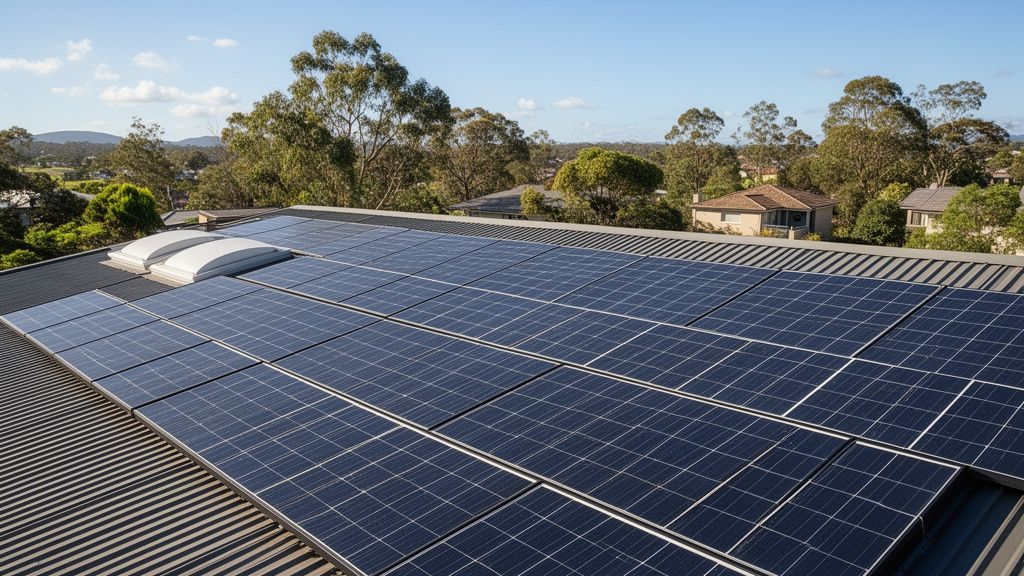
By designing a customized solar package, homeowners can tailor their system size and storage capacity to their exact needs. A custom-tailored system can be configured as a smaller setup designed to supplement an existing energy plan and reduce daily grid reliance, or as a much larger system engineered to establish complete energy independence. Reputable providers offer complimentary home assessments to analyze these factors, ensuring that the selected panels, inverters, and batteries deliver maximum return on investment.
Understanding Off-Grid SAPS vs. Hybrid Systems
When planning a custom solar system, homeowners must choose between a grid-connected hybrid system and an off-grid system, also known as a Stand-Alone Power System (SAPS). Both systems offer distinct operational pathways for managing and storing solar electricity:
- Off-Grid Systems (SAPS): These systems operate entirely independently of the main electrical grid. They generate clean electricity from solar panels, which is then used to charge a dedicated battery bank. The energy is stored as Direct Current (D.C.) electricity within the batteries. To run standard household appliances, an off-grid inverter converts this stored D.C. power into standard Alternating Current (A.C.) electricity for use in regular wall outlets.
- Hybrid Systems: These systems remain physically connected to the utility grid while utilizing on-site battery storage, such as Neovolt or DEYE ESS systems. A hybrid system prioritizes on-site solar consumption and battery storage during the day. If the battery is fully charged, any excess solar power can be exported back to the grid. Conversely, if the battery is depleted during extended periods of poor weather, the system seamlessly draws power from the utility grid to ensure uninterrupted electricity supply.
Overcoming Upfront Costs with Flexible Financing
While installing a custom solar and storage system is a highly effective long-term investment, the upfront capital cost can sometimes be a barrier for households. To make clean energy more accessible, the industry has introduced flexible payment models.
Options like 'Install Now Pay Later' finance plans allow homeowners to start generating free, clean energy immediately with low daily payments starting from $1.99 per day. These payment structures are often lower than a household's average daily grid electricity costs, allowing the system to essentially help pay for itself through ongoing utility savings.
This private financial accessibility is strongly supported by government initiatives. On a federal level, programs such as the Cheaper Home Batteries program have significantly accelerated household battery adoption, supporting more than 490,000 installations since 2025. This scheme helps lower the cost of household energy storage, allowing more families to pair high-capacity batteries with their solar arrays.
Intelligent Energy Control and Long-Term Savings
Modern solar systems do more than simply generate electricity; they also serve as intelligent home energy hubs. Advanced hybrid systems, such as the SAJ HS2 series, feature integrated smart load control and real-time data monitoring. This technology allows homeowners to track their energy generation and consumption in real-time, helping them schedule high-draw appliances—like washing machines, pool pumps, and air conditioners—to run during peak solar generation hours.
By combining high-efficiency solar panels, intelligent energy management, and scalable battery storage, Australian households can dramatically reduce their reliance on the grid, shield themselves from rising electricity prices, and secure a reliable source of clean energy.
Key Takeaways
- Custom System Sizing: Tailoring system capacity ensures that your solar setup perfectly matches your household's physical roof space and daily energy usage.
- Off-Grid SAPS Function: Stand-Alone Power Systems generate solar energy to charge battery storage as D.C. power, which is then converted to A.C. power for household outlets.
- Hybrid System Flexibility: Hybrid systems combine on-site solar generation and battery storage with a grid connection for maximum reliability.
- Accessible Financing: 'Install Now Pay Later' finance options, starting from $1.99 per day, make transitioning to solar highly affordable.
- Cheaper Home Batteries: The federal program has supported over 490,000 battery installations since 2025, helping families secure affordable home storage.
- Smart Load Management: Advanced inverters provide real-time data and smart controls, allowing homeowners to run heavy appliances during peak daytime peaks of-peak loads peak-generation hours.