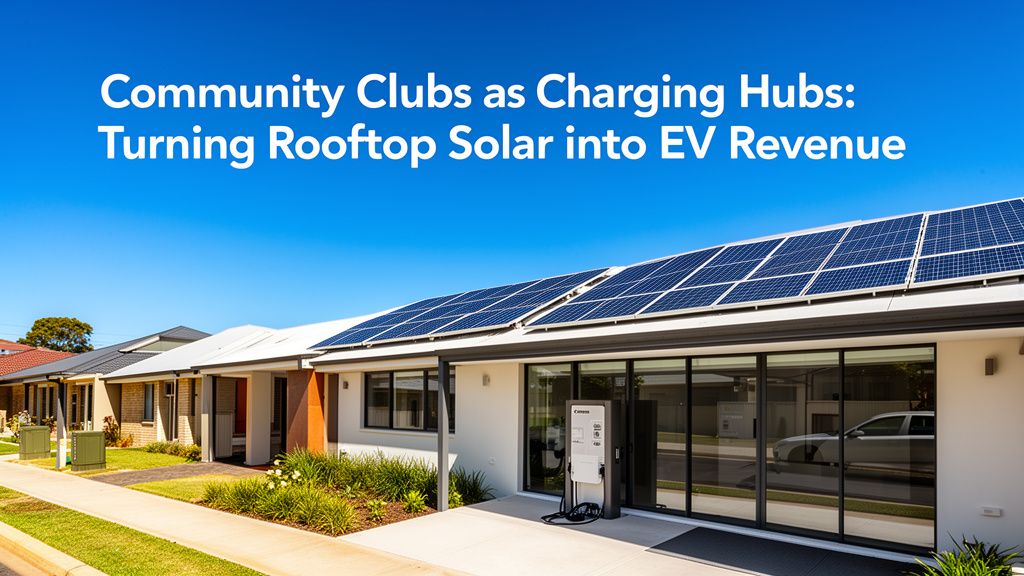
Community Clubs as Charging Hubs: Turning Rooftop Solar into EV Revenue
G’day! The electric vehicle (EV) revolution is in full swing across Australia. As more Aussies make the switch, a key question emerges: where do we charge up on the go?
That’s where our beloved community clubs – from your local footy ground to the friendly bowls club, the RSL to the surf lifesaving club – can step up to the plate. Many of these clubs already boast impressive rooftop solar arrays, often installed years ago to slash their electricity bills and show a bit of green initiative. Imagine those solar panels not just powering the clubrooms, but also generating a brand-new revenue stream by charging electric vehicles. It’s a dead set winner, a brilliant opportunity to leverage existing assets and become a vital hub for the EV revolution.
The Perfect Storm: Solar, EVs, and Our Clubs
Australia’s EV market is booming, with sales nearly doubling in 2023. While EV adoption surges, public charging infrastructure often lags, particularly outside cities. This gap presents a fantastic opportunity for community clubs – strategically located, with ample parking and local ties – to fill a crucial need.
Think about it: most clubs with solar generate surplus power during daylight hours. This excess is currently fed back to the grid for a modest feed-in tariff (FIT), often just $0.05 - $0.10 per kilowatt-hour (kWh). By installing EV chargers, clubs can sell that solar energy for $0.35 - $0.50 per kWh or more – a significant leap in value and a brand-new revenue stream.
How It Works: From Sunshine to Charging Station
The process is surprisingly straightforward, though it requires a bit of planning:
- Assess Your Solar System: Engage a qualified professional to assess your club's existing solar capacity, energy consumption, and consistent surplus power, especially during operating hours.
- Choose Your Chargers: For clubs, AC (7kW or 22kW) chargers are most practical, offering a good charge during a visit. DC fast chargers are quicker but far more expensive and power-intensive.
- Smart Energy Management: A smart energy management system prioritises club operations, then directs surplus solar to chargers. Remaining power can go to the grid (FIT) or battery storage.
- Pricing and Payment: Implement a user-friendly payment system – app-based, tap-and-go, or linked to memberships – with clear pricing (e.g., $0.40/kWh).
A Win-Win-Win for Clubs, Members, and the Planet
This initiative isn’t just about making a quick buck; it's a holistic benefit for everyone involved:
For the Club:


- New Revenue Stream: Directly from charging fees, turning previously low-value solar exports into high-value sales.
- Increased Foot Traffic & Engagement: EV drivers will actively seek charging, leading them into the club for drinks, meals, or socialising – generating additional revenue beyond charging fees.
- Reduced Operating Costs: By using their own solar to charge EVs, clubs optimise their self-consumption, further reducing their reliance on expensive grid electricity.
- Modern Image & Community Service: Positions the club as forward-thinking and environmentally responsible, attracting younger members, families, and potential sponsors.
- Sustainability Credentials: Enhances the club’s environmental profile, making it more attractive for grants and local council funding related to green initiatives.
For EV Owners:
- Convenience & Accessibility: Provides much-needed local charging options, reducing range anxiety.
- Affordable Charging: Club charging rates, especially when solar-powered, can often be more competitive than commercial fast-charging networks.
- Supporting Local: Members and visitors alike will appreciate knowing their charging dollars are directly supporting their cherished local institution.
- Reliable Infrastructure: Adds to the growing network of charging points, making EV ownership even more practical and appealing.
Getting Started: The Practicalities
While benefits are clear, initial investment for chargers (typically $1,500 - $10,000+ per unit, excluding installation) is a consideration. State government or local council grants can often help offset these costs. Clubs must also factor in maintenance, insurance, and local council permitting. Engaging professional advice from electricians and energy consultants is crucial. Once operational, promote your new charging hub via signage, social media, and newsletters to attract EV drivers.
Conclusion: Powering Our Community, One Charge at a Time
This isn't just about financial gain; it’s about future-proofing our essential community institutions. The opportunity for Australian clubs to transform rooftop solar into EV charging revenue is immense. It's a pragmatic, sustainable, and financially savvy move that benefits everyone – the clubs, their members, EV drivers, and the environment. By embracing innovation, our community hubs can remain vibrant and relevant for generations. Let’s encourage our local clubs to look up, see the potential, and plug into a brighter, greener future. It’s time for our community hubs to become our charging hubs. Let's make it happen, mates!
Read More
For a comprehensive overview, check out our master guide: Read the Full Guide Here.


