TL;DR: Skyrocketing diesel prices are compelling Australian households and businesses, especially in regional areas, to abandon their reliance on volatile fossil fuels. The shift towards solar and other renewable energy solutions offers significant long-term cost savings, energy independence, and a stable power supply, making it an increasingly attractive and financially sensible choice for energy security.
The Escalating Diesel Dilemma for Australian Households and Businesses
Rising diesel prices are creating significant financial pressure on Australian households and businesses, particularly those in regional and remote areas. The global energy market's volatility, supply chain disruptions, and geopolitical events have consistently pushed fuel costs upwards, with diesel often trading higher than petrol. For many regional Australians, diesel isn't just about getting to the shops; it's the lifeblood of their operations, powering everything from farm machinery and irrigation pumps to remote generators and commercial fleets. Businesses such as agricultural enterprises, remote tourism operators, and transport companies face substantial hits to their bottom line, translating to higher operational costs that are often passed on to consumers.
Why are Diesel Prices So High Down Under?
Diesel prices in Australia are influenced by a complex interplay of global and local factors. Globally, crude oil prices dictate the base cost, heavily impacted by supply and demand dynamics, OPEC decisions, and international conflicts. Locally, Australia's limited refining capacity means a significant portion of our diesel is imported, exposing us to global shipping costs and currency fluctuations. Government taxes, including excise duties and GST, also contribute to the final price at the pump, which can easily hover around $2.00 to $2.50 per litre in major centres and even higher in remote locations. This persistent upward trend makes budgeting a nightmare for diesel-dependent operations.
Who Feels the Pinch the Most?
The impact of soaring diesel costs is disproportionately felt by regional Australians and specific industries. Farmers rely heavily on diesel for tractors, harvesters, and water pumps, making fuel one of their largest operational expenses. Mining and construction sectors, operating heavy machinery and generators in remote areas, also face massive diesel bills. Transport and logistics companies, the backbone of our supply chain, see their margins squeezed by every price hike. Furthermore, many off-grid or fringe-of-grid households in the Outback use diesel generators as their primary power source, leaving them vulnerable to both price volatility and supply interruptions.
How Solar Energy Offers a Powerful Alternative to Diesel Reliance
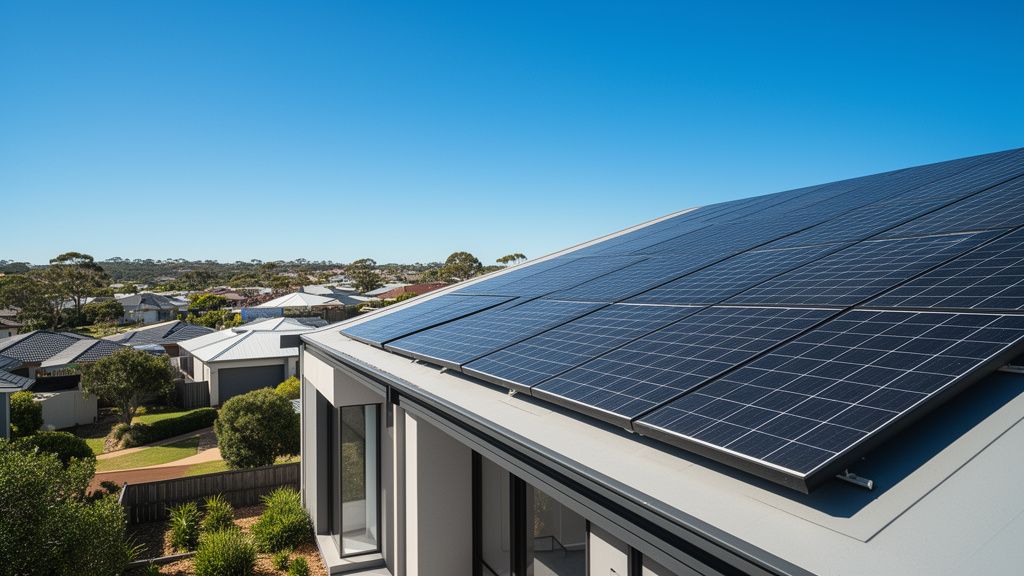
Solar energy provides a robust and cost-effective alternative to diesel, enabling significant long-term savings and energy independence for Australians. By installing rooftop solar panels or ground-mounted arrays, households and businesses can generate their own electricity, drastically reducing or even eliminating their reliance on expensive, volatile diesel fuel. When paired with battery storage, solar systems can offer continuous power, ensuring energy security even when the grid is unavailable or during periods of low sunlight. This transition moves users from unpredictable fuel costs to a fixed, predictable energy generation expense, offering stability and control over their energy future.
The Economics of Switching: Solar vs. Diesel Over Time
The economic case for switching from diesel to solar is becoming increasingly compelling. While a diesel generator requires ongoing fuel purchases that fluctuate with market prices, a solar system has a higher upfront cost but delivers free electricity for decades. For instance, a typical 6.6kW residential solar system might cost between $5,000 and $8,000 in Australia after government rebates (Small-scale Technology Certificates), with a payback period often under 5 years, especially if a household has high daytime electricity consumption. For businesses currently spending thousands monthly on diesel, the payback period for a larger commercial solar-battery system could be even quicker, with the added benefit of predictable energy costs and protection against future fuel hikes.


Beyond the Grid: Solar Solutions for Remote Australians
For Australians living or operating beyond the reach of the main electricity grid, solar-battery hybrid systems are a game-changer. These off-grid setups, comprising solar panels, a battery bank, and an inverter, replace the need for constant diesel generator use. While a diesel generator might still serve as a backup for extended cloudy periods, its run time is dramatically reduced, cutting fuel consumption by 80-90%. This not only saves a fortune on diesel but also slashes maintenance costs and reduces noise pollution. For example, a remote cattle station might spend $10,000-$20,000 annually on diesel for power; a well-designed off-grid solar system can eliminate most of that expense, providing reliable, silent power for decades.
Real-World Impacts: Australian Businesses Thriving with Renewable Transitions
Australian businesses are successfully transitioning from diesel to renewables, achieving significant operational savings and enhancing their sustainability credentials. Across various sectors, forward-thinking enterprises are discovering that investing in solar energy is not just good for the planet, but brilliant for the bottom line. From remote farms reducing their irrigation costs to eco-tourism operators offering a quieter, greener experience, the real-world benefits are tangible and substantial. This shift demonstrates a growing understanding that energy independence, fuelled by renewables, offers a competitive edge in a volatile market.
Agriculture's Green Revolution: From Fuel Tanks to Solar Panels
The agricultural sector is at the forefront of this green revolution, moving from traditional fuel tanks to solar panels. Farmers, particularly those in drought-prone areas, previously relied on diesel pumps to draw water for irrigation, facing exorbitant and unpredictable costs. Now, many are installing solar-powered pump systems, often integrated with battery storage, to provide consistent water supply without the ongoing fuel expense. A large dairy farm might save tens of thousands of dollars annually by using solar to power its milking sheds and water bores, significantly reducing overheads and improving profitability, especially during lean seasons.
Powering Remote Operations: Mining and Tourism's Renewable Shift
Industries like mining and tourism, which frequently operate in remote, off-grid locations, are also making substantial shifts. Traditionally, these operations relied exclusively on large, noisy, and costly diesel generators for all their power needs. However, the high cost of transporting diesel to these isolated sites, coupled with environmental pressures, has spurred a move to hybrid solar-diesel or even fully solar-battery microgrids. A remote eco-resort in the Kimberly, for example, can drastically cut its carbon footprint and reduce its annual fuel bill from potentially hundreds of thousands of dollars to a fraction of that, offering a more sustainable and economically viable business model for the long term.
Key Takeaways
- Diesel price volatility creates significant financial strain, especially for regional Australian households and businesses.
- Solar energy provides a stable, long-term cost solution, reducing or eliminating reliance on expensive diesel fuel.
- Off-grid and fringe-of-grid Australians can achieve energy independence and massive savings with solar-battery hybrid systems.
- Investing in solar offers predictable energy costs, enhanced reliability, and a smaller environmental footprint for all users.
- Consider a solar energy consultation to understand how much your household or business could save by transitioning from diesel.
Read More
For a comprehensive overview, check out our master guide: Read the Full Guide Here.