TL;DR: Australian data facilities are increasingly turning to renewable energy sources like solar to reduce their substantial carbon footprint and stabilise soaring operational costs. This pivotal shift is driven by ambitious corporate sustainability goals, volatile energy prices, and advancements in large-scale battery storage, making green data centres a rapidly growing and commercially viable sector across the nation.
Why Are Australian Data Centres Shifting to Renewable Energy?
Australian data centres are decisively shifting towards renewable energy sources primarily due to intense pressure from sustainability mandates, escalating electricity prices, and a strong commitment to corporate social responsibility. These digital behemoths operate 24/7, consuming vast amounts of power not just for their servers, but also for critical cooling systems and uninterrupted power supply (UPS) infrastructure. This constant demand means they are among the country's most significant commercial energy consumers. With commercial electricity rates in Australia ranging from $0.25 to $0.35 per kilowatt-hour (kWh) and showing upward trends, the financial incentive to generate or procure cheaper, stable renewable energy is immense. Furthermore, as businesses and consumers increasingly demand environmentally responsible practices, data centre operators are compelled to align with both government sustainability targets and their own ambitious net-zero commitments to remain competitive and attract clients.
The Enormous Energy Appetite of Data Centres
Data centres are fundamental to modern digital life, processing everything from streaming services to cloud computing, but their operational footprint is staggering. Each facility requires a continuous, robust power supply to keep servers running, data flowing, and crucial cooling systems functioning to prevent hardware failure. A single large data centre can consume as much electricity as a small town, making them disproportionately high contributors to grid demand and associated carbon emissions. This relentless energy hunger means that conventional grid power not only carries a substantial environmental cost but also represents a massive ongoing operational expense that directly impacts profit margins.
Financial Benefits of Going Green
Transitioning to renewable energy offers significant financial advantages for Australian data centres, moving beyond mere environmental goodwill. By investing in on-site solar power systems or entering into long-term Power Purchase Agreements (PPAs) with large-scale solar or wind farms, operators can secure electricity at predictable, often lower rates for decades. This stability insulates them from the volatile fluctuations of the wholesale electricity market, which has seen significant price spikes in recent years. For large-scale renewable projects, accessing Large-scale Generation Certificates (LGCs) can also provide an additional revenue stream or further reduce the effective cost of electricity, making the business case for green energy compelling.
How Do Renewable Energy Sources Power Data Facilities in Australia?
Renewable energy powers Australian data facilities through a combination of direct on-site solar installations, strategic off-site Power Purchase Agreements (PPAs) with utility-scale solar or wind farms, and integrated grid-scale battery storage solutions. For many facilities, installing substantial solar arrays on their rooftops or adjacent land allows for direct consumption of clean electricity, reducing reliance on the grid and lowering immediate operating costs. Beyond direct generation, corporate PPAs enable data centre operators to commit to purchasing a specific volume of renewable energy from a remote generation site, effectively offsetting their grid consumption with certified green power. The integration of battery energy storage systems, often large-scale units like Tesla Megapacks, is crucial for maintaining grid stability, managing peak demand, and ensuring continuous power supply despite the intermittent nature of solar and wind generation.
On-Site Solar and Microgrids
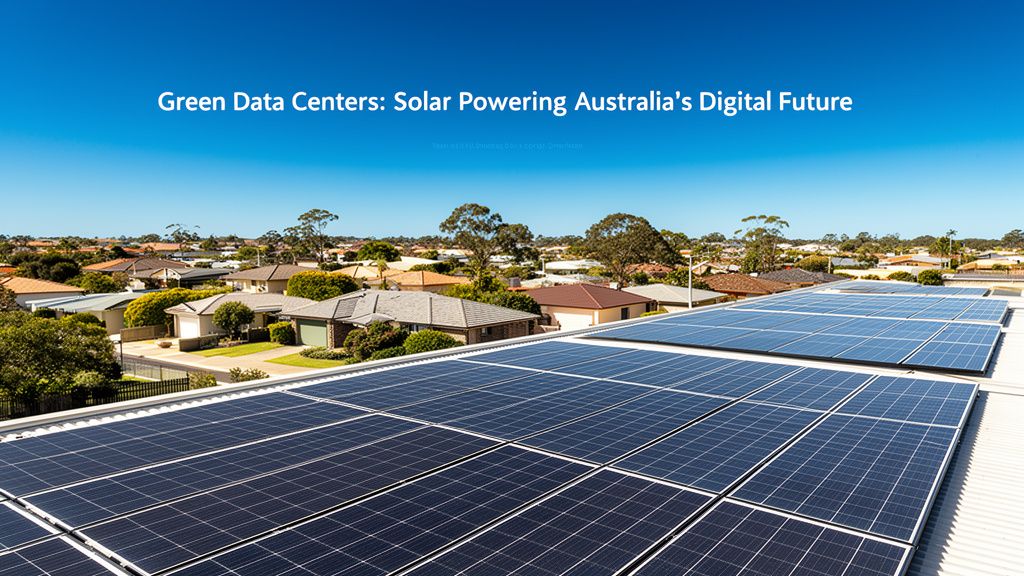
On-site solar installations are a growing trend for Australian data centres, utilising vast rooftop spaces or available land for large photovoltaic (PV) arrays. These systems can range from 100kW to multi-megawatt (MW) capacities, significantly contributing to the facility's power needs. For a commercial solar system of this scale, an indicative cost might be around $1.00 - $1.50 per watt installed, offering a tangible return on investment through reduced electricity bills. Beyond basic solar, some advanced facilities are exploring microgrids, combining solar with battery storage and smart energy management systems. These microgrids enhance energy independence and resilience, providing a more robust power supply that can better withstand grid outages, a critical factor for data centre uptime.
Power Purchase Agreements and Grid Integration
Corporate Power Purchase Agreements (PPAs) are a popular mechanism for Australian data centres to source renewable energy without the capital outlay of owning a generation asset. Under a PPA, a data centre agrees to purchase electricity directly from a renewable energy developer, often for a fixed price over a long term (e.g., 10-20 years). This approach allows the data centre to benefit from the environmental attributes and stable pricing of renewable energy, while the developer finances and operates the large-scale solar or wind farm. Many major tech companies operating in Australia utilise PPAs to meet their global renewable energy targets, effectively 'greening' their electricity consumption even when direct on-site generation isn't feasible or sufficient to cover their massive load.


What Challenges and Opportunities Exist for Green Data Centres in Australia?
Challenges for green data centres in Australia predominantly revolve around the substantial initial capital investment required for large-scale solar and battery infrastructure, alongside the complexities of seamlessly integrating intermittent renewable energy sources into an always-on operation. However, these challenges are outweighed by significant opportunities, including enhanced energy security, meeting increasingly stringent regulatory demands, and attracting a growing segment of environmentally conscious clients who prioritise sustainable service providers. The need for robust backup systems and sophisticated energy management to counter the variability of solar and wind power presents a technical hurdle, but also drives innovation in hybrid power solutions that blend renewables with efficient gas generators or advanced battery storage for complete reliability.
Overcoming Initial Investment Hurdles
The upfront cost of installing multi-megawatt solar arrays and corresponding battery storage systems for a data centre can be considerable, often running into the tens of millions of dollars. However, various financing options are emerging in Australia to mitigate these hurdles, including specialised green loans from banks, private equity investment focused on sustainable infrastructure, and government grants or incentives for specific green technology deployments. Long-term return on investment (ROI) calculations, factoring in avoided electricity costs and potential carbon credits or LGCs, often demonstrate a compelling financial case over the lifespan of the assets. This long-term perspective is crucial for decision-makers looking beyond immediate capital expenditure.
The Future of Sustainable Data Management
The future of sustainable data management in Australia looks bright, driven by continuous innovation and the nation's abundant solar resources. We can expect to see further advancements in demand response capabilities, where data centres intelligently shift power consumption to align with peak renewable generation or off-peak grid pricing. Innovations in cooling technologies, server efficiency, and waste heat recovery will also play a crucial role in reducing overall energy demand. Australia's unique geographic position and strong commitment to renewable energy provide a competitive advantage, positioning the country as an ideal location for the development of truly green, resilient, and energy-independent data facilities that lead the world in sustainable digital infrastructure.
Key Takeaways
- Australian data centres are rapidly adopting renewable energy to meet sustainability targets and combat rising electricity costs.
- On-site solar and off-site Power Purchase Agreements (PPAs) are primary methods for securing green power.
- Large-scale battery storage is critical for ensuring reliability and managing the intermittency of renewables.
- While initial investment is a challenge, long-term financial benefits and enhanced energy security are significant opportunities.
- Australia's strong solar resource positions it as a leader in the development of sustainable data infrastructure.
Read More
For a comprehensive overview, check out our master guide: Read the Full Guide Here.