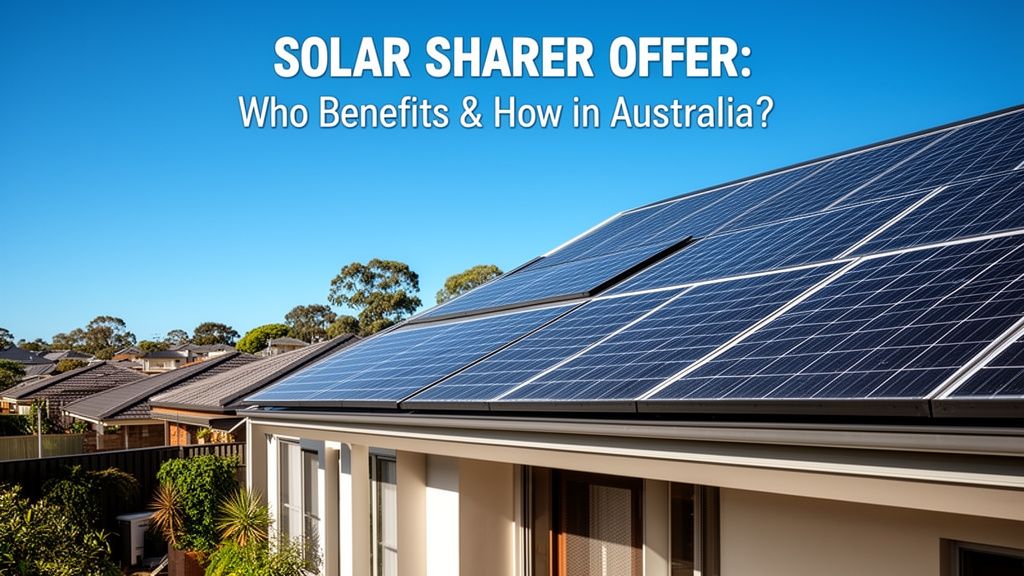
TL;DR: The Solar Sharer Offer primarily benefits individuals and businesses who cannot install traditional rooftop solar, such as tenants, apartment dwellers, and organisations with unsuitable roofs. It allows them to access cheaper, locally-generated solar power without upfront costs or ownership responsibilities, providing significant savings on their electricity bills.
What Exactly Is the Solar Sharer Offer and How Does It Work?
The Solar Sharer Offer is an innovative energy model designed to extend the benefits of solar power beyond traditional rooftop installations, allowing more Aussies to access clean energy. It essentially involves a solar host – usually a building owner or business with ample roof space – installing a large solar system and then selling the generated electricity directly to "sharers" within the same building or local energy network at a discounted rate. Think of it as a mini-power plant on your neighbour's roof, feeding you cheaper, greener electrons. This bypasses the typical grid retail model for a portion of your usage, providing a direct link between local generation and consumption. Participants get a dedicated connection to the solar system, ensuring they're consuming that specific, cheaper solar power whenever it's available.
How Does It Differ from Traditional Rooftop Solar?
Traditional rooftop solar requires you to own your roof and invest a significant amount upfront – often between $5,000 to $10,000 for a typical 6.6kW system – or commit to a long-term financing agreement. You bear all the installation, maintenance, and insurance responsibilities. In contrast, the Solar Sharer Offer requires no upfront investment from the sharer. The solar host owns, maintains, and insures the system, offloading all the hassle. You're simply buying the electricity directly from them, usually at a rate significantly cheaper than what you'd pay your regular energy retailer for grid power, typically saving 10-25 cents per kWh. This means you avoid the financial hurdle and ongoing management of owning panels, making solar accessible to a much broader audience.
Key Features and Mechanisms of a Solar Sharer Program
The core mechanism of a Solar Sharer program is a direct contractual agreement between the solar host and the energy consumer (the sharer). The host installs smart metering that tracks the solar power consumed by each sharer, billing them for their usage at a pre-agreed, discounted rate. Any electricity required when the sun isn't shining, or when solar generation is insufficient, is automatically drawn from the regular grid supply via the sharer's existing energy retailer. This hybrid approach ensures a constant power supply. The host benefits from monetising their unused roof space and contributing to local renewable energy, while sharers enjoy reduced energy bills and a lower carbon footprint without the commitment or cost of owning a system themselves.
Who Are the Primary Beneficiaries of the Solar Sharer Model?
The primary beneficiaries of the Solar Sharer model are individuals and organisations who, for various reasons, are unable to install their own rooftop solar systems. This innovative approach levels the playing field, granting access to clean, affordable energy to those previously excluded from the solar revolution. By removing the barriers of ownership, upfront costs, and suitable roof space, it empowers a significant segment of the Australian population and business community to participate in the renewable energy transition. The model particularly shines for those in multi-dwelling units or rented properties, offering a pathway to savings and sustainability that simply didn't exist before.
Tenants and Renters Gain Significant Advantages
Tenants and renters form a massive segment of the population that traditionally misses out on solar benefits. They don't own the property, so they can't make permanent alterations like installing solar panels. With a Solar Sharer Offer, a landlord or building owner can install the system, and tenants can then buy the solar power directly from them. This means renters can enjoy cheaper electricity bills, often saving around 20-30% on their daytime power usage, without needing their landlord's permission to install anything or making any personal investment. It's a fair dinkum win-win: tenants save money, and landlords might even find their properties more attractive to eco-conscious renters.
Apartment Dwellers and Strata Properties Benefit Greatly
Living in an apartment complex or strata title property often presents a Gordian knot of approvals and shared ownership challenges when it comes to solar installation. Even if there's roof space, getting all owners to agree, fund, and manage a communal system can be a nightmare. The Solar Sharer model cuts through this complexity. A strata body or an external solar provider can install a large system on the common roof, then offer the generated power to individual apartment units. This allows residents to purchase solar energy at a reduced rate – perhaps 15-25 cents per kWh compared to 30 cents per kWh from the grid – without needing individual panel installations or dealing with strata politics regarding personal systems.
Businesses with Rooftop Limitations Can Slash Costs
Many businesses operate from leased premises, have complex roof structures, or simply don't have enough suitable roof space to offset their high energy demands. For example, a cafe in a multi-storey building might have minimal roof access but a significant daytime electricity load. The Solar Sharer Offer allows the building owner to install a substantial solar system on a larger, suitable roof area, then sell that power to the businesses within. This enables them to reduce their operational costs significantly by buying cheaper solar power during business hours, without impacting their lease agreements or needing to invest a single cent in solar infrastructure.
What Are the Potential Cost Savings for Participants?
The potential cost savings for participants in a Solar Sharer Offer can be quite substantial, making a tangible difference to household or business budgets. By accessing solar power directly from a local source rather than the traditional grid, sharers typically pay a lower rate per kilowatt-hour (kWh). This reduction in energy expenditure is the primary financial incentive, directly impacting bills. The exact savings depend on factors like the agreed-upon solar tariff, the amount of solar power consumed, and the prevailing grid electricity prices in your area. Generally, you can expect to see a noticeable reduction in your daytime electricity costs, which for many households and businesses represents a significant portion of their total consumption.
Understanding the Pricing Structure and Savings
The pricing structure in a Solar Sharer Offer is usually straightforward: you pay a set, discounted rate per kWh for the solar power you consume. For instance, if your grid electricity costs you around 30 cents per kWh, a Solar Sharer Offer might provide solar power at 20-25 cents per kWh. This difference, often 5-10 cents per kWh, adds up quickly. A household consuming 10-15 kWh of solar power during the day could save $1.00 to $1.50 daily, translating to $30-$45 per month. For small businesses with higher daytime usage, these savings can be amplified, potentially saving hundreds of dollars monthly, all without any upfront investment.

Comparing Savings to Grid Electricity Rates
When comparing savings, it's crucial to look at your specific grid electricity rates, particularly your peak and shoulder tariffs if you're on a time-of-use plan. Solar Sharer power is generally available during daylight hours, which often coincide with peak or shoulder periods where grid electricity is most expensive. If your grid rate is 35 cents/kWh during these times and your solar sharer rate is 22 cents/kWh, you're saving a whopping 13 cents per kWh for every unit of solar you consume. This direct comparison highlights the immediate and ongoing financial benefit, allowing participants to lock in lower, more predictable energy costs for a portion of their consumption, insulating them from volatile grid price hikes.
Are There Any Downsides or Limitations to Consider?
While the Solar Sharer Offer presents a fantastic opportunity for many, it's not without its potential downsides and limitations that participants should be aware of. Like any energy arrangement, understanding the nuances of the agreement and the specific operational details is crucial before signing up. The primary considerations revolve around the shared nature of the infrastructure and the contractual obligations, which differ significantly from owning your own system. It's important to weigh these potential drawbacks against the clear benefits of accessing solar without ownership hassles or upfront costs to determine if it's the right fit for your circumstances.
Dependency on the Solar Host for Performance and Maintenance
One key limitation is your dependency on the solar host. As the system owner, the host is responsible for its maintenance, repairs, and overall performance. If the host neglects maintenance, or if there are issues with the system, your access to cheaper solar power could be disrupted or reduced. You also have less control over the system's size, panel quality, or inverter type, as these decisions are made by the host. While reputable hosts will ensure optimal performance to maximise their own returns, it's a factor to consider compared to the autonomy of owning your own system where you directly manage these aspects.
Potential for Fluctuating Benefits and Contractual Lock-ins
The benefits, primarily the cost savings, can fluctuate based on the host's pricing structure and changes in grid electricity rates. While your solar sharer rate might be fixed for a period, its relative saving could change if grid prices drop significantly (though this is less common in Australia). Additionally, some Solar Sharer agreements might involve contractual lock-ins or minimum usage clauses. It's essential to scrutinise the terms and conditions, including contract length, termination clauses, and any annual price escalations built into the solar tariff. Understanding these details will help ensure the long-term viability and attractiveness of the offer for your specific energy needs.
Key Takeaways
- The Solar Sharer Offer makes solar accessible for tenants, apartment dwellers, and businesses without suitable roofs or the ability to invest in their own systems.
- Participants pay no upfront costs and have no maintenance responsibilities, as the solar host owns and manages the system.
- Significant savings on electricity bills are possible by buying solar power at a discounted rate, typically 10-25 cents per kWh cheaper than grid electricity.
- It's crucial to review the contractual terms, including pricing, contract length, and the solar host's maintenance responsibilities, to ensure long-term benefits.
- This model offers a flexible pathway to reduce your carbon footprint and energy costs without the complexities of traditional solar ownership.
Read More
For a comprehensive overview, check out our master guide: Read the Full Guide Here.