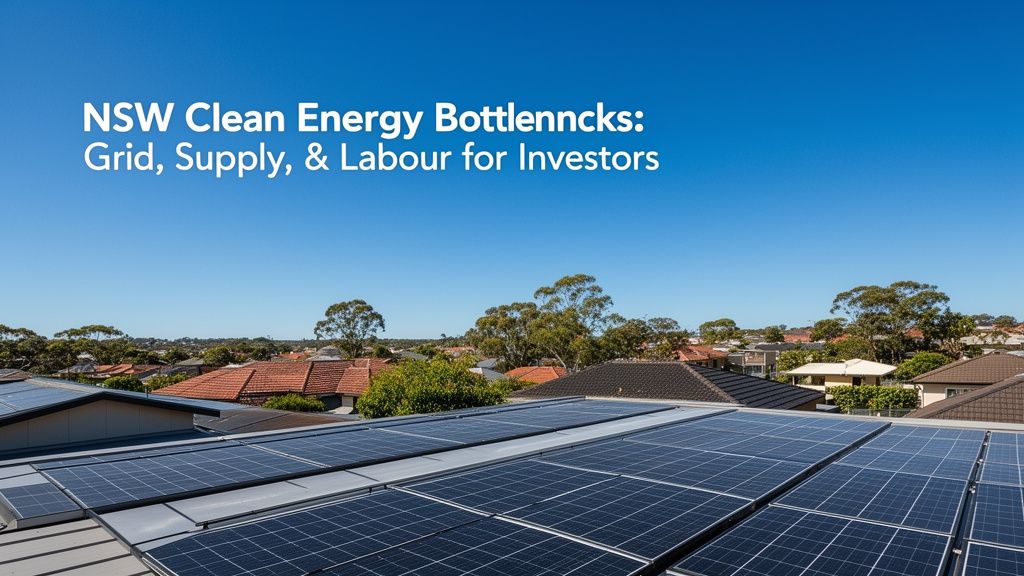
Navigating NSW’s clean energy sector presents unique challenges for investors. Moving past the initial project planning, developers often encounter significant roadblocks that complicate execution and delay timelines. Understanding these post-planning bottlenecks helps investors allocate resources effectively and anticipate potential issues.
TL;DR: NSW clean energy investors face major bottlenecks beyond initial planning, including grid connection delays, complex network upgrade costs, supply chain volatility, and local community resistance. Anticipating these real-world challenges is critical for project success and financial viability.
Why Are Grid Connection Bottlenecks Such a Problem for NSW Solar Farms?
Grid connection bottlenecks frequently slow down solar farm projects in NSW, even after developers secure initial approvals. The state's transmission network requires substantial upgrades to handle the influx of new renewable generation, and these upgrades often fall on the project developer. Australian Energy Market Operator (AEMO) data from late 2023 showed over 10 GW of renewable projects facing connection delays or rejections across the National Electricity Market (NEM), with NSW having a significant share of these. Developers might spend hundreds of thousands of dollars, or even millions, on studies and network analysis only to face extensive wait times or discover that required network augmentation makes their project financially unviable. For example, a 50 MW solar farm in regional NSW could incur network upgrade costs of $10 million or more, pushing out its financial close and commissioning date by years. This uncertainty around connection costs and timelines deters further investment and makes financial modelling difficult.
Capacity Limitations and Upgrade Costs Burden Projects
NSW's existing electricity grid was not designed for the current scale of distributed renewable generation. Many parts of the network, particularly in regional areas suitable for large-scale solar, lack the capacity to accept new power without significant reinforcement. When a new solar farm seeks connection, network service providers (NSPs) like TransGrid or Essential Energy assess the impact. Often, the proposed project triggers a need for new transmission lines, substation upgrades, or advanced control systems. The costs for these necessary upgrades typically become a direct financial burden on the connecting generator, sometimes exceeding the project's construction budget. This makes accurately forecasting project expenditure incredibly difficult. A project might budget $70 million for construction, only to find an additional $15 million required for grid works, fundamentally altering its profitability.
Complex Approval Processes Extend Timelines
The grid connection process for large-scale solar in NSW involves numerous stages and multiple regulatory bodies, extending timelines considerably. After initial planning approval, projects enter detailed technical assessments with the NSPs and AEMO. This includes submitting comprehensive system studies, engaging in detailed design reviews, and obtaining various operational authorisations. Each stage requires extensive documentation and coordination, and delays at one point impact all subsequent steps. A single technical query or a requirement for further modelling can add months to the process. For instance, securing a Facility Licence and Registration from AEMO, a critical step, often takes 6-12 months alone after all technical studies are complete. These long, multi-agency processes create uncertainty and raise project development costs.
How Do Supply Chain Issues and Labour Shortages Impact NSW Clean Energy Projects?
Supply chain disruptions and a scarcity of skilled labour significantly hamper the construction and commissioning of NSW clean energy projects. Global events, like the COVID-19 pandemic or geopolitical tensions, have highlighted the fragility of international supply chains for solar panels, inverters, and battery storage. Investors experienced prolonged lead times and escalating costs for critical components. Concurrently, a shortage of electricians, engineers, and project managers with renewable energy experience slows down construction phases and drives up labour expenses. Projects that once estimated a 12-month construction period might now stretch to 18 months, leading to increased holding costs and delayed revenue. This double impact on both material availability and workforce capacity adds complexity and risk.
Component Availability and Price Volatility Create Uncertainty
The clean energy sector relies heavily on imported components, making NSW projects vulnerable to global supply chain volatility. Solar panels and inverters predominantly come from overseas manufacturers. In 2022-2023, freight costs surged, and manufacturing output faced sporadic interruptions. A 50 MW solar farm requires tens of thousands of panels, and delays in shipping even a fraction of these can halt construction. Furthermore, the price of polysilicon, a key raw material for solar cells, saw significant fluctuations, driving up panel costs by 15-20% at times. These price increases, often communicated with short notice, erode project margins. Developers frequently grapple with balancing fixed price contracts with suppliers against potential cost escalations during the construction phase.
Skilled Labour Scarcity Raises Project Costs
Finding and retaining skilled labour for large-scale renewable projects in NSW has become increasingly difficult. The demand for electricians, high-voltage technicians, civil engineers, and experienced project managers outstrips supply. Many projects compete for the same limited pool of qualified personnel. This competition drives up wages and often necessitates bringing in interstate or even international workers, adding accommodation and travel expenses. A typical 100 MW solar project might need 150-200 workers during peak construction. If a developer cannot staff their site adequately, progress slows, equipment sits idle, and project completion dates slip. The shortage particularly affects specialised roles needed for grid connection and commissioning, which are already bottlenecked processes.


What Regulatory and Social Obstacles Do NSW Clean Energy Projects Face Post-Approval?
Beyond technical and logistical issues, NSW clean energy projects encounter ongoing regulatory complexities and local community opposition even after securing initial development approval. The regulatory landscape around environmental compliance, land use, and grid operation evolves, requiring developers to stay updated and adapt. For example, changes to biodiversity offset requirements or noise limits can emerge mid-project. Simultaneously, gaining and maintaining local community acceptance proves challenging. Rural communities, often the hosts of large-scale solar and wind farms, sometimes resist these projects due to concerns about visual impact, land value, or environmental effects. Active and transparent community engagement is vital but often overlooked in the early stages, leading to backlash and potential delays during construction.
Ongoing Compliance and Shifting Policy Create Headaches
NSW clean energy projects operate within a dynamic regulatory environment where policy frameworks and compliance requirements can shift. Even after obtaining development consent, projects must adhere to various environmental management plans, operational licences, and planning conditions. Regulatory bodies regularly update guidelines on noise, glare, dust, and native vegetation management. A project might commence construction under one set of rules, only to face new compliance demands during its lifecycle. For instance, stricter rules around decommissioning or land rehabilitation can add unexpected costs. Keeping track of these changes and implementing necessary adjustments requires dedicated resources and expertise, placing an ongoing burden on project operators.
Local Community Engagement Challenges Can Stall Development
Securing and maintaining social licence from host communities is a significant, continuous challenge for NSW clean energy projects. While initial consultations occur during the planning approval phase, community concerns can intensify once construction begins or as projects scale up. Residents express worries about property value depreciation, changes to rural landscapes, increased traffic, and impacts on local ecosystems. A vocal opposition group, even if small, can generate negative media attention, lobby local councils, or even initiate legal challenges. This pressure can force project redesigns, alter construction schedules, or mandate additional local benefit schemes. Effective and ongoing dialogue, genuine local job creation, and clear communication about environmental safeguards help build trust and mitigate these risks.
Key Takeaways
- Grid connection timelines and associated upgrade costs form a primary bottleneck for NSW clean energy projects post-planning.
- Global supply chain volatility for solar components and a scarcity of skilled labour directly impact project budgets and schedules.
- NSW clean energy investors must plan for ongoing regulatory compliance changes and active, sustained community engagement to prevent delays.
- Comprehensive risk assessments that go beyond initial planning, focusing on execution challenges, are essential for project viability.
Read More
For a comprehensive overview, check out our master guide: Read the Full Guide Here.