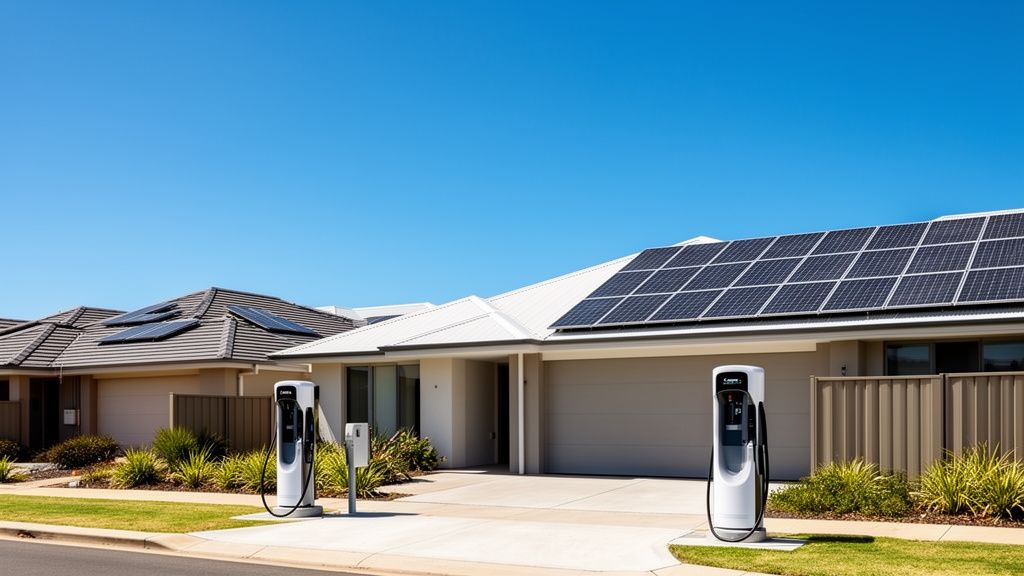
TL;DR: Australia is moving past direct EV purchase rebates, focusing instead on comprehensive strategies to build a robust, accessible, and renewable-powered charging infrastructure. This shift aims to alleviate range anxiety, support grid stability, and ensure sustainable, widespread EV adoption across the nation.
Why is Australia Shifting Beyond Direct EV Purchase Rebates?
Direct EV purchase rebates are becoming less common as government focus shifts to building a sustainable, accessible charging network that supports long-term adoption. While initial rebates effectively spurred early EV uptake, the market is maturing, and the challenges now lie more in infrastructure readiness and equitable access. Governments are recognising that a scattered approach of individual incentives doesn't address the fundamental need for reliable charging, especially for those living in apartments or regional areas, or those needing to travel long distances. The strategy is evolving from simply getting EVs on the road to ensuring they can be conveniently and sustainably charged, creating a more attractive ecosystem for all drivers.
Limitations of Rebate-Centric Strategies
Rebate-centric strategies, though initially effective, have inherent limitations in a maturing market. They often disproportionately benefit higher-income earners who can afford the initial purchase, even with a rebate. Furthermore, these incentives don't solve the "range anxiety" issue for those contemplating longer trips, nor do they provide charging solutions for the significant portion of the population without off-street parking. As the variety and affordability of EVs increase, the market itself is driving demand, making direct rebates less essential for initial sales. The long-term sustainability of the EV transition hinges not on individual car sales, but on the underpinning infrastructure that supports their daily use.
The Growing Need for Public Charging
The imperative for a widespread public charging network is undeniable. For many Australians, especially those in urban apartments or with limited access to home charging, public infrastructure is the primary or sole means of recharging their electric vehicle. Beyond urban centres, a reliable network of fast chargers is crucial to enable inter-city and regional travel, allowing Aussies to confidently take their EVs on road trips without fearing they'll be stranded. The absence of readily available, interoperable charging points remains a significant barrier to broader EV adoption, making public infrastructure investment paramount.
What are the Government's Key Strategies for Expanding Public EV Charging?
Governments are employing a multi-pronged approach, including funding grants, partnerships with private operators, and regulatory frameworks to ensure widespread, reliable public EV charging. Recognising the critical role of charging infrastructure, both federal and state authorities are committing significant funds and resources. These strategies aim to not only increase the number of charging stations but also to improve their accessibility, reliability, and integration with Australia's evolving electricity grid, often leveraging renewable energy sources. This collaborative effort with the private sector is designed to accelerate the rollout and foster innovation across the network.
National EV Strategy and Funding Initiatives
The Australian Government's National EV Strategy outlines a comprehensive vision, moving beyond individual subsidies to focus on systemic improvements. Key funding bodies like the Australian Renewable Energy Agency (ARENA) and the Clean Energy Finance Corporation (CEFC) are channeling hundreds of millions of dollars into projects that deploy public fast-charging infrastructure, particularly in regional and remote areas. These investments often co-fund private sector initiatives, incentivising companies to build out networks where commercial viability might initially be marginal. The goal is to create a seamless national charging backbone, ensuring that all major routes and population centres are well-serviced.
State-Specific Investments and Targets
Individual states and territories are also heavily investing in their own charging networks, often with ambitious targets. For instance, New South Wales has committed to a state-wide fast-charging network, including ultra-rapid chargers, by 2026. Victoria offers grants for public charging and is targeting a massive increase in public charging points by 2030. Queensland is expanding its Electric Super Highway, connecting major towns along the coast and inland. These state-led initiatives complement federal efforts, addressing specific regional needs and accelerating the deployment of chargers through localised grants, planning support, and partnerships with local councils and businesses.
Integrating Renewable Energy is Central to Australia's EV Charging Future.
Australia's EV charging future is intrinsically linked to its abundant renewable energy resources, aiming for a grid-friendly, sustainable charging ecosystem. With an increasing share of solar and wind power in the national energy mix, the ambition is to power EVs with clean, domestically produced electricity. This not only reduces the carbon footprint of transportation but also enhances energy independence and security. Smart integration of charging with renewable generation helps manage grid demand, ensuring that the transition to EVs strengthens, rather than strains, our electricity network.
Solar Power as the Foundation for Home Charging
Solar power is emerging as the ultimate partner for home EV charging, offering significant cost savings and environmental benefits. Many Australian homeowners with rooftop solar already generate more electricity than they consume during daylight hours. Pairing an EV with a solar system allows owners to charge their vehicle with free, clean energy directly from their roof, drastically cutting down on fuel costs (typically saving hundreds, if not thousands, of dollars annually compared to petrol). Technologies like Vehicle-to-Grid (V2G) are also on the horizon, allowing EVs to potentially feed power back into the home or grid, further optimising energy use and supporting grid stability.


Smart Charging and Grid Optimisation
Smart charging technologies are vital for integrating millions of EVs into the grid without causing instability. These systems allow EV owners to program their vehicles to charge during off-peak hours or when renewable energy generation is high, often triggered by cheaper time-of-use tariffs (e.g., overnight rates of around $0.15-$0.25/kWh, compared to peak rates of $0.40-$0.60/kWh). This optimises electricity consumption, reduces stress on the grid, and ensures that EVs are charged using the cleanest, most affordable energy available. As the grid evolves, smart chargers will play an increasingly important role in managing demand, potentially acting as distributed energy storage units.
How Will Emerging Technologies and Private Investment Shape Australia's Charging Network?
Emerging technologies like ultra-rapid chargers, battery storage, and smart grid integration, alongside significant private sector investment, are critical drivers shaping Australia's advanced EV charging network. The rapid pace of innovation in battery and charging technology promises faster, more efficient, and more reliable charging solutions. Simultaneously, the burgeoning commercial opportunity presented by EVs is attracting substantial private capital, accelerating the rollout of infrastructure far beyond what public funding alone could achieve. This synergy between technological advancement and commercial enterprise is crucial for building a world-class charging ecosystem.
Ultra-Rapid Charging Corridors
The development of ultra-rapid charging corridors is transforming interstate and regional travel for EV owners. Chargers capable of delivering 350kW are becoming more common, allowing compatible EVs to gain hundreds of klicks of range in under 15-20 minutes – comparable to a quick stop at a petrol servo. These high-speed charging hubs are strategically placed along major highways and key routes, reducing journey times and eliminating range anxiety for long-distance drivers. Private companies like Evie Networks, Chargefox, and BP Pulse are aggressively building out these networks, making cross-country travel increasingly viable.
Private Sector's Role in Infrastructure Rollout
The private sector is playing an indispensable role in financing, building, and operating Australia's EV charging infrastructure. Major players, including established energy companies, petrol station chains (e.g., Ampol, BP), and dedicated EV charging providers, are investing hundreds of millions of dollars into charging networks. These companies are driven by the commercial imperative to capture market share in a rapidly growing industry. Their investment not only expands the physical footprint of charging stations but also drives competition, leading to better service, improved reliability, and innovative charging solutions for Australian EV drivers.
Key Takeaways
- Australia's EV strategy is shifting from direct purchase rebates to comprehensive charging infrastructure development.
- Governments are investing heavily in public fast-charging networks, especially in regional areas, through grants and partnerships.
- Integrating rooftop solar and smart charging technologies is crucial for sustainable, cost-effective home EV charging.
- Ultra-rapid chargers and significant private sector investment are accelerating the rollout of a robust national charging network.
- The future of Australian EV charging is focused on accessibility, reliability, and renewable energy integration.
Read More
For a comprehensive overview, check out our master guide: Read the Full Guide Here.