TL;DR: Australia's electricity grid will generate 42.7% of its power from renewable sources in 2025, a significant leap driven by massive household solar uptake and large-scale wind and solar farms. This milestone shows the rapid pace of the energy transition, bringing Australia closer to its 82% renewable target by 2030, and offers long-term benefits for energy independence and emissions reduction.
What Does a 42.7% Renewable Share Mean for Australia?
A 42.7% renewable share means nearly half of all electricity consumed across Australia will come from sources like solar, wind, and hydro by 2025. This figure represents a dramatic increase from less than 15% a decade ago, showing how quickly the nation is transforming its energy mix. The Australian Energy Market Operator (AEMO) projects this share based on current and planned generation projects, alongside continued rooftop solar installations. Achieving this percentage positions Australia well ahead of many developed nations in the transition to cleaner energy. It also puts the 82% renewable target by 2030, a key part of the federal government’s climate policy, firmly within reach. This shift reduces the country's reliance on fossil fuels, lowering carbon emissions and helping meet international climate commitments. For consumers, a more diverse and locally generated energy supply can lead to greater price stability over time.
How Did Australia Reach Over 40% Renewable Energy So Quickly?
Australia achieved this rapid growth in renewable energy through a combination of widespread rooftop solar adoption, substantial investment in large-scale solar and wind farms, and supportive government policies. More than 3.7 million Australian homes now have solar panels, making Australia a world leader in household solar uptake. This alone accounts for a significant chunk of the new renewable capacity. Government incentives, like the Small-scale Technology Certificates (STCs), have made rooftop solar an attractive investment for homeowners, often cutting the upfront cost of a 6.6kW system by $3,000 to $4,000 depending on location. Concurrently, dozens of utility-scale solar and wind projects have come online across states like Queensland, New South Wales, and South Australia, adding gigawatts of clean energy to the grid. The declining cost of solar panels and wind turbines globally also made these projects economically viable without heavy subsidies, speeding up their deployment.
The Impact of Rooftop Solar on Grid Transformation
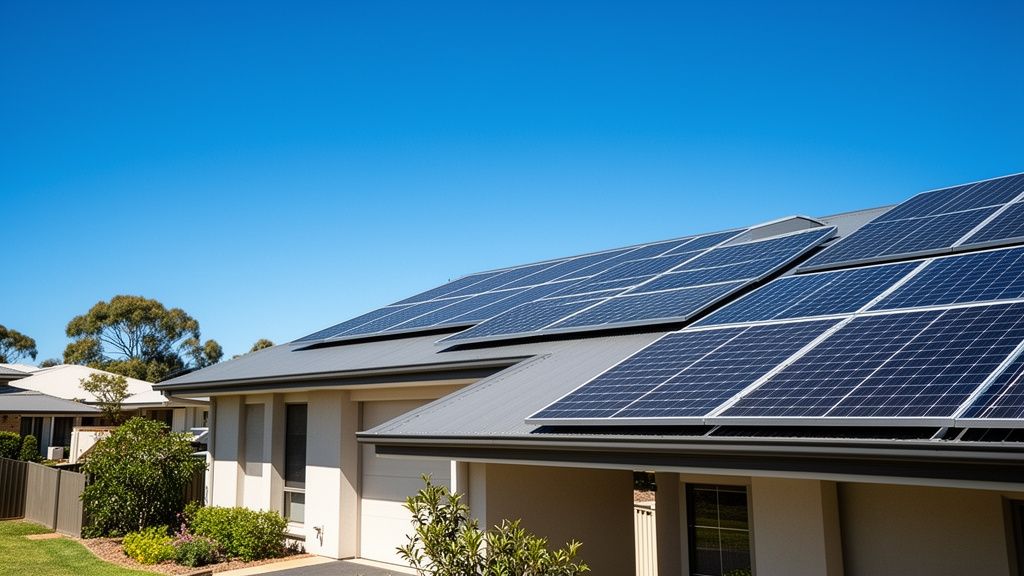
Rooftop solar panels on homes and businesses across the country supply a considerable amount of energy directly to local grids. This decentralised generation helps ease pressure on older, centralised power stations, particularly during peak daytime demand. Each megawatt of solar installed on a residential roof contributes directly to the overall renewable energy percentage. This widespread distributed generation makes the grid more resilient and less prone to large-scale outages. For example, in Queensland, residential solar regularly supplies over 30% of the state's electricity needs during the middle of the day. This reduces the need for electricity to be transmitted long distances, lowering transmission losses and improving energy efficiency across the network.
What Challenges and Opportunities Come With a High Renewable Energy Grid?
Transitioning to a grid heavily reliant on renewables presents both significant challenges and vast opportunities. Managing the intermittency of solar and wind power, which only generate electricity when the sun shines or the wind blows, demands sophisticated grid management and substantial energy storage solutions. Australia needs major investments in new transmission lines to connect remote renewable energy zones to major population centres. The grid infrastructure, designed for a different era, needs modernisation to handle two-way power flows and greater fluctuations. Retailers have also responded to the abundance of solar by reducing feed-in tariffs, meaning homeowners now earn less for exporting excess power.
However, the opportunities are compelling. Greater energy independence for Australia means less exposure to volatile international fossil fuel markets. It can lead to lower, more stable wholesale electricity prices over the long term, benefiting all consumers. The renewable energy sector creates new jobs in manufacturing, installation, maintenance, and research. Innovations in battery storage, such as home batteries like a Tesla Powerwall or Sonnen system, and larger grid-scale solutions like pumped hydro, address the intermittency challenge. Virtual Power Plants (VPPs) connect thousands of household batteries, allowing them to act as a unified power station, further stabilising the grid.
What Does This Milestone Mean for Australian Homeowners Considering Solar?
For Australian homeowners thinking about solar, this 42.7% renewable milestone signals a mature, reliable, and continuously evolving market. The shift means solar is no longer a niche choice; it is becoming the standard. While feed-in tariffs have dropped significantly, often sitting at 5-8 cents per kilowatt-hour, the high cost of grid electricity (typically 25-40 cents per kilowatt-hour) still makes self-consumption of solar power highly economical. A standard 6.6kW solar system can still reduce an average household's electricity bill by 60-80%, paying itself off in three to five years in most capital cities. Investing in solar now future-proofs your home against rising energy costs and reduces your carbon footprint. Adding a home battery further optimises savings by storing excess daytime solar for use at night, reducing reliance on the grid and maximising your return on investment.


Key Takeaways
- Australia's electricity grid is on track to reach 42.7% renewable energy in 2025, largely due to strong household solar uptake and new large-scale projects.
- This milestone indicates a rapid shift towards the federal government's 82% renewable target by 2030 and strengthens energy independence.
- Grid modernisation and energy storage solutions, like home batteries and pumped hydro, are crucial for managing the intermittency of high renewable penetration.
- For homeowners, solar remains a smart investment due to high electricity prices, despite lower feed-in tariffs; self-consumption and battery storage maximise savings.
- Installing a solar system now helps reduce your energy bills, lowers your carbon footprint, and increases your home's value.
Read More
For a comprehensive overview, check out our master guide: Read the Full Guide Here.