TL;DR: Australian electricity prices are forecast to fall significantly due to the increasing volume of cheap renewable energy entering the grid. Solar and wind power are driving down wholesale costs, which will translate into lower retail bills for households and businesses in the coming years, signalling a major shift in the energy market.
How Will Renewable Energy Drive Down Australian Electricity Prices?
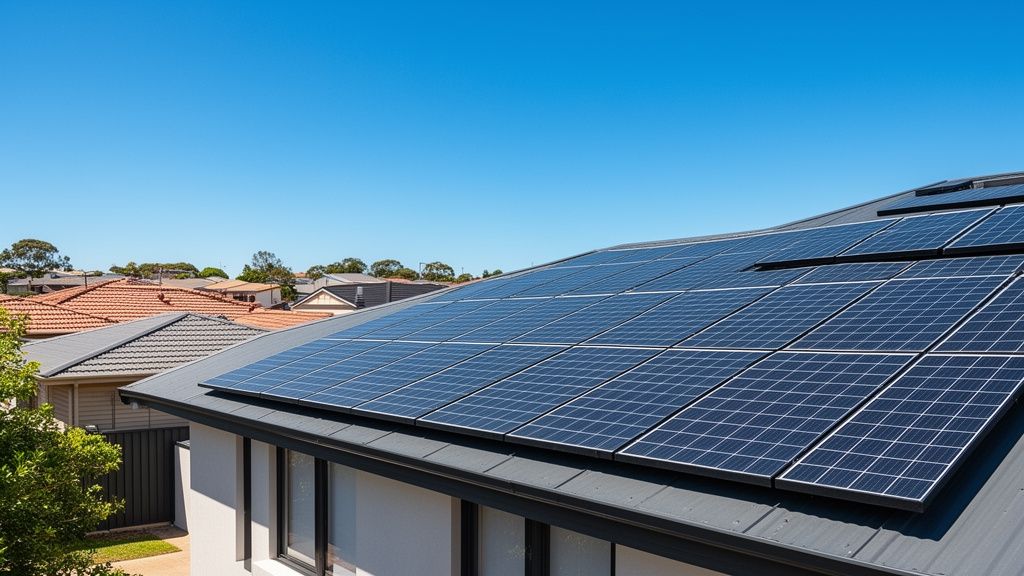
Renewable energy sources, primarily solar and wind, are set to drive down Australian electricity prices by injecting massive amounts of low-cost generation into the National Electricity Market (NEM). The Australian Energy Market Commission (AEMC) in late 2023 projected wholesale prices would drop by 30-40% over the next two years as more utility-scale solar and wind farms connect. This influx of zero-fuel-cost energy means less reliance on expensive gas and coal-fired generators, especially during peak demand periods. When the sun shines or the wind blows, these generators produce electricity at a marginal cost of almost zero, pushing down the overall spot price in the market. This effect is already visible, with many days seeing negative wholesale prices in parts of the NEM when renewable output is particularly high. We are seeing a structural change in the energy market that favours clean, local power generation.
The Impact on Wholesale Market Dynamics
The increasing penetration of renewables directly alters wholesale market dynamics, particularly during daytime hours. Historically, electricity prices peaked in the afternoon as air conditioning loads kicked in and demand surged. Now, large-scale solar farms and millions of rooftop solar systems significantly reduce daytime demand for grid power. This 'duck curve' effect means that the lowest wholesale prices often occur in the middle of the day, when solar output is at its highest. This shifts the economic advantage away from traditional generators, forcing them to compete more fiercely or reduce their operating hours. As more projects come online, the AEMC expects this downward pressure to intensify, influencing the regulated price caps and ultimately filtering through to what consumers pay. The shift means that the cost of generating electricity is no longer tied to volatile fossil fuel prices, creating more stable and predictable downward trends.
What Does Cheaper Electricity Mean for Australian Households and Businesses?
Cheaper electricity from renewables directly translates to lower power bills for Australian households and businesses, fundamentally changing how consumers interact with the grid. As the wholesale cost of electricity falls, retailers can purchase power at a lower rate, passing these savings on to their customers. The Australian Energy Regulator (AER) often considers these market trends when setting default market offers (DMOs) and Victorian default offers (VDOs), which act as price caps for standing offer customers. For instance, the AER's 2024-25 default offer guidance is already factoring in expected reductions in wholesale costs, indicating potential bill decreases for many residential and small business customers. This makes running homes and businesses more affordable, freeing up capital for other investments or household budgets. It also reinforces the value proposition for Australians considering their own solar installation, as they can further insulate themselves from any remaining grid volatility.
Opportunities for Solar Owners and New Adopters
For Australians who have already invested in solar power, plummeting grid prices offer a nuanced set of opportunities. While lower retail prices might slightly reduce the savings generated from avoiding grid imports, the overall economic benefit of generating your own power remains strong. Crucially, the declining wholesale prices are driving innovations in battery storage. As grid power becomes cheaper and more volatile at times, storing your own solar generation for evening use or even participating in virtual power plants (VPPs) becomes increasingly attractive. This allows solar owners to maximise self-consumption, reducing their reliance on the grid when prices are higher. For new adopters, the falling cost of solar PV systems, combined with increasingly affordable battery solutions, means the payback period remains competitive, especially when factoring in the long-term price stability offered by generating your own power. A typical 6.6kW system, costing around $6,000-$8,000 installed after rebates, continues to offer substantial savings over its 25-year lifespan.
What Challenges Must Australia Address in This Energy Transition?
While falling prices are welcome, Australia's rapid energy transition faces critical challenges, primarily in grid infrastructure and energy storage, to ensure reliability and maximise the benefits of cheap renewables. Integrating a high volume of intermittent solar and wind power requires significant upgrades to the transmission network to move electricity from new renewable zones to major demand centres. The Australian Energy Market Operator (AEMO) has outlined major projects in its Integrated System Plan (ISP) that require billions of dollars in investment to build new transmission lines and interconnectors. This infrastructure is essential to prevent curtailment of renewable generation, where cheap power is effectively wasted because it cannot be transported to where it is needed. Without these upgrades, the full potential of price reductions from renewable energy cannot be realised, and system reliability could be impacted during periods of low renewable output or high demand.


The Growing Need for Firming Capacity and Storage
The variability of solar and wind power means that Australia needs substantial "firming capacity" to back up renewables when the sun isn't shining or the wind isn't blowing. This involves large-scale battery storage, pumped hydro projects, and potentially gas-fired generation that can quickly ramp up and down. AEMO projects that the NEM will need to add gigawatts of new firming capacity in the coming decades to replace retiring coal plants and support the increasing share of renewables. For example, projects like Snowy 2.0 and the numerous grid-scale batteries being deployed across the country are crucial components of this firming strategy. These storage solutions allow excess renewable energy generated during periods of high output to be stored and then discharged when demand is high or renewable generation is low, smoothing out supply and helping to maintain stable electricity prices. Investing in these technologies is paramount to a successful and stable transition.
Key Takeaways
- Australian electricity prices are set to fall significantly over the next few years due to the increasing volume of cheap renewable energy.
- Solar and wind power are driving down wholesale electricity costs, which will be passed on to households and businesses.
- Homeowners considering solar and battery storage systems will find enhanced value in self-consumption and energy independence.
- Significant investment in new transmission infrastructure and grid-scale energy storage is crucial to support the influx of renewables and ensure grid stability.
- The shift towards renewables offers more stable and predictable electricity costs compared to volatile fossil fuel markets.
Read More
For a comprehensive overview, check out our master guide: Read the Full Guide Here.