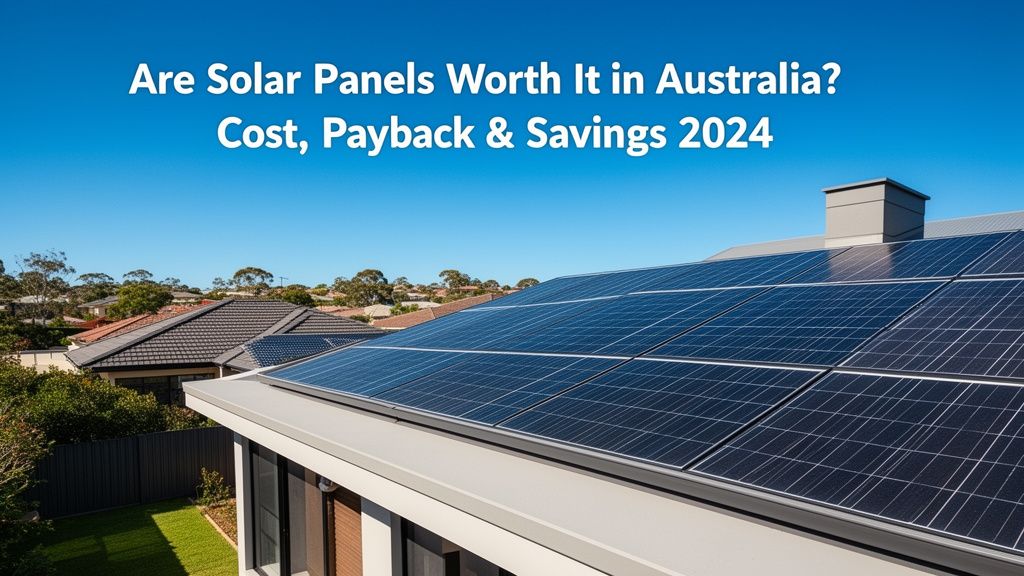
TL;DR: Yes, solar panels are generally a worthwhile investment for most Australian homeowners. High electricity prices, abundant sunshine, and reduced system costs mean typical households can save thousands annually on power bills and often see a return on investment within 3-6 years.
How Much Does a Typical Australian Solar System Cost in 2024?
A standard 6.6kW solar system, suitable for most three to four-person Australian households, costs between $5,500 and $8,500 after government incentives in 2024. This price includes panels, an inverter, installation, and often basic monitoring. Larger 10kW systems, ideal for bigger homes or those with higher energy consumption (like ducted air conditioning or electric vehicle charging), range from $8,500 to $12,000 post-rebate. These figures represent a significant drop from a decade ago, making solar more accessible than ever before. Installation quality and component brands influence final pricing; premium European inverters and tier-one panels will sit at the higher end of the scale.
Government Rebates and Incentives
Australia's Small-scale Renewable Energy Scheme (SRES) provides a significant upfront discount on solar installations. This rebate, known as Small-scale Technology Certificates (STCs), reduces the purchase price of your system directly. The number of STCs depends on your system's size and your postcode, but for a 6.6kW system in Sydney, it typically translates to a saving of around $2,500-$3,500. Victoria also offers additional state-specific Solar Homes Program rebates, which can further reduce costs by up to $1,400 for eligible homeowners and provide interest-free loans. These incentives are a major driver making solar an attractive proposition.
How Long Does Solar Payback Take in Australia?
Solar system payback periods in Australia commonly range from 3 to 6 years, depending on factors like electricity consumption, system size, and feed-in tariffs. A household consuming 20kWh per day in Brisbane, for example, could see a 6.6kW system pay for itself in under 4 years if they use a significant portion of their generated power during the day. Savings come from both reducing purchased electricity and exporting surplus power back to the grid. High electricity retail prices, currently sitting between 30-45 cents per kilowatt-hour (kWh) in many states, directly accelerate this payback.
Factors Influencing Payback
Several variables dictate how quickly your solar investment pays off. Your household's daytime electricity usage is paramount; the more self-consumed solar power, the fewer units you buy from the grid at retail rates. System orientation and shading also play a role, as a north-facing, unshaded roof maximises generation. The initial system cost, including component quality and installation, naturally impacts the starting point for calculating return. Furthermore, future increases in electricity prices will shorten payback periods, making solar an effective hedge against rising energy costs over its 25+ year lifespan.
Feed-in Tariffs Explained
Feed-in tariffs (FiTs) are payments from your electricity retailer for any surplus solar power you export to the grid. These payments typically vary between 3 and 10 cents per kWh across different states and retailers in 2024. While FiTs have decreased significantly from earlier, more generous schemes, they still contribute to overall savings. For instance, a household with a 6.6kW system in Adelaide exporting 10kWh per day at 7c/kWh would earn around $255 annually from FiTs. This income reduces the net cost of electricity and shortens the payback period, even though the primary benefit comes from avoiding grid purchases.
What Are the Long-Term Financial Benefits of Solar Power?
Installing solar panels delivers substantial long-term financial benefits beyond the initial payback period, effectively providing free electricity for decades. After the system has paid for itself, every dollar saved on your electricity bill is pure profit. The average Australian 6.6kW system generates around 8,000-10,000 kWh per year. If a household pays 35c/kWh, this translates to potential annual savings of $2,800 to $3,500, recurring year after year for the life of the system. Considering most quality solar systems come with 25-year performance warranties, these savings compound into tens of thousands of dollars.
Property Value Increase
Solar installations can also add value to your property. Research by organisations like Domain and real estate agents consistently shows that homes with solar panels are more attractive to buyers and can command a higher sale price. A 2023 report by Domain Group indicated that solar could add up to $30,000 to a home's value in some markets, although this varies by location and system size. Buyers recognise the immediate financial relief of lower energy bills, making a solar-equipped home a more desirable asset in a competitive housing market. This acts as another form of return on your initial investment.
Key Takeaways
- Solar panels are a sound financial investment for most Australian homes due to high electricity prices and government incentives.
- Expect a typical 6.6kW system to cost $5,500-$8,500 after rebates, with payback periods often between 3-6 years.
- Maximise savings by using as much solar-generated electricity during the day as possible to avoid buying power from the grid.
- Solar significantly reduces long-term electricity bills, potentially saving thousands of dollars annually for over two decades.
- Installing solar can increase your property's market value, making your home more appealing to future buyers.