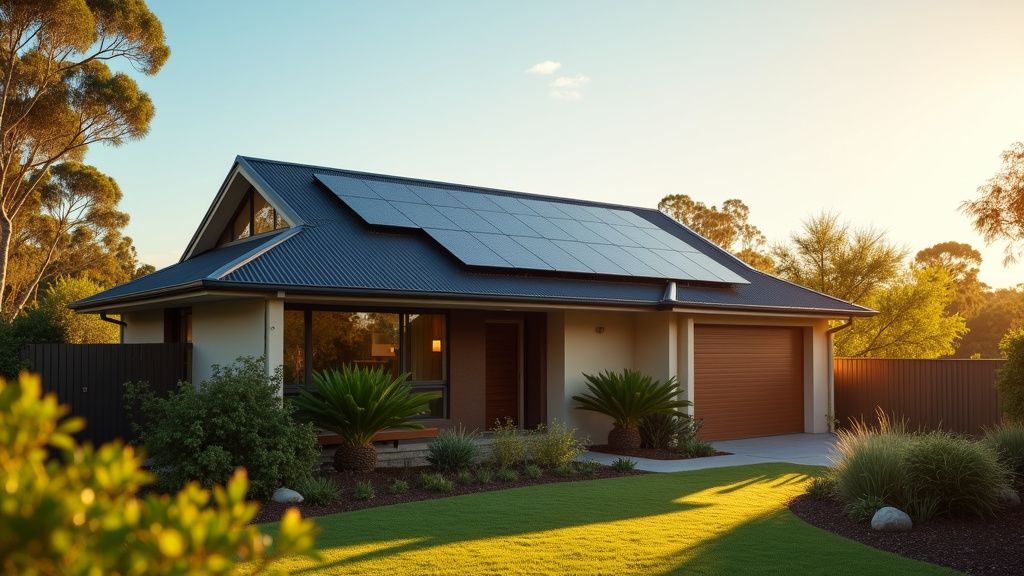
Thinking about going solar? An 8kW solar system could be the perfect fit for your home, offering a sweet spot between energy independence and cost savings. This blog post provides a Complete Guide to understanding 8kW solar systems in Australia, covering everything from installation to potential savings.
Is an 8kW System Right for You?
Rooftop solar has exploded in popularity across Australia, with over 10% of suitable rooftops now sporting solar panels. Different system sizes suit different energy needs. While a 15kW system is generally considered the upper limit for residential properties, and 6.6kW systems remain a common choice, an 8kW system is ideal for households with slightly above-average energy consumption. If you find yourself consistently using a considerable amount of electricity throughout the day, an 8kW system could be a worthwhile investment.
What Does an 8kW System Look Like?
Modern solar panels typically range from 330W to 400W. This means an 8kW system (8,000 watts) will require approximately 20 to 24 solar panels. Luckily, panel efficiency has significantly improved in recent years, meaning fewer panels are needed compared to a decade ago. Each panel generally occupies around 1.7 square meters.
However, you'll need to factor in additional space for maintenance access and safety exclusion zones around the roof's edges. In total, expect an 8kW system to require between 45 and 60 square meters of roof space. So, before diving in, make sure you have adequate, unshaded roof space available.
The Cost Breakdown
Australia benefits from a federal government rebate, known as the STC (Small-scale Technology Certificate) rebate, which significantly reduces the upfront cost of solar installation. This rebate covers roughly 30-35% of the system's price, making Australia one of the most affordable places in the world to install solar.
As of late 2024/early 2025, the average cost of an 8kW solar system in Australia, after the STC rebate and including GST, is around $7,467. Prices can vary slightly from state to state due to different installer costs and logistical factors.
It's important to note that while solar system prices decreased significantly over the past decade, recent increases in solar panel manufacturing costs and gradual reductions in the STC rebate are beginning to push prices up slightly.
Maximising Your Savings
The key to maximising your return on investment with an 8kW system is to consume as much of the generated electricity as possible within your home. Electricity retailers generally offer significantly lower feed-in tariffs (the amount they pay you for excess energy sent back to the grid) than the price you pay for electricity.
Electricity rates in Australia can range from 18¢ to 27¢ or more per kilowatt-hour (kWh), depending on your location, retailer, and tariff structure. Feed-in tariffs, on the other hand, are typically much lower. By using the solar energy yourself, you avoid purchasing electricity from the grid at these higher rates, leading to substantial savings.
Consider shifting your energy consumption to daylight hours to take full advantage of your solar system's output. Run appliances like washing machines, dishwashers, and dryers during the day. If you have an electric vehicle, charging it during the day will also contribute to increased self-consumption.
Power Output and Peak Sun Hours
The actual power output of your 8kW system depends on several factors, most importantly the amount of sunlight your location receives. The solar industry uses a metric called "Peak Sun Hours" (PSH) to measure solar potential. A Peak Sun Hour represents one hour of full sunlight intensity. While the sun's intensity varies throughout the day, PSH calculates the equivalent amount of full sunlight your location receives.
Payback and Return on Investment
Like system output, payback periods and returns on investment depend on factors like system cost, energy consumption patterns, and feed-in tariff rates. Given the comparatively low cost of solar installation and the high cost of electricity in Australia, solar power is generally an excellent investment. However, remember to factor in your own usage habits to ensure that you will reap the benefits of solar. By maximising self-consumption, you'll significantly shorten your payback period and increase your long-term savings.
Making the Switch
Installing an 8kW solar system is a great step towards a more sustainable future. By understanding the key factors involved, you can make an informed decision and enjoy the benefits of clean, affordable energy for years to come.