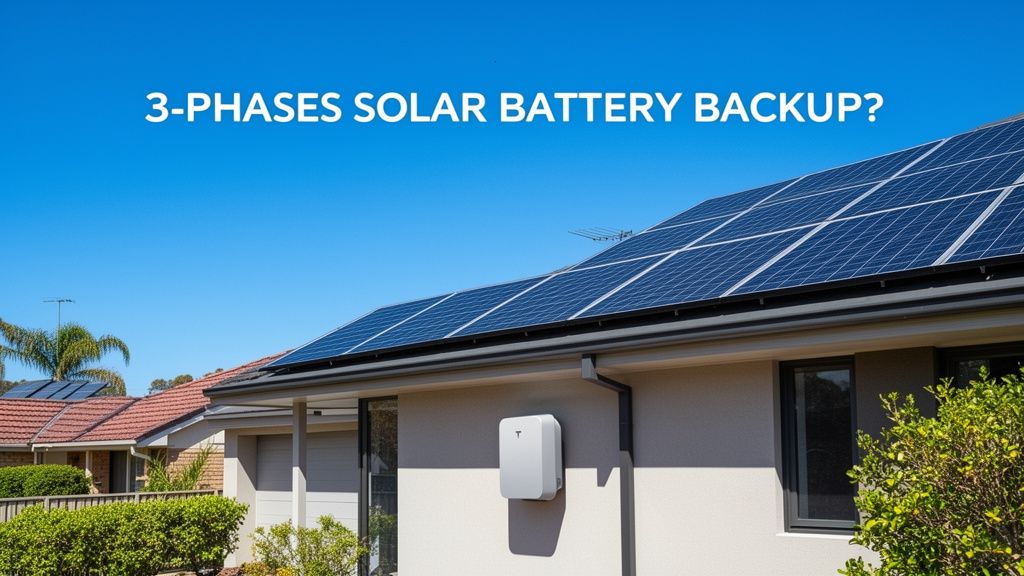
TL;DR: A standard single Tesla Powerwall is designed for single-phase backup and won't power all circuits in a three-phase Australian home during a blackout. Three-phase properties require specific inverter solutions or multiple batteries (e.g., two or three Powerwalls) to achieve complete whole-home backup.
What is a three-phase power supply and why do some Australian homes have it?
A three-phase power supply uses three alternating current (AC) wires, each out of phase, allowing for more efficient power distribution and handling of larger electrical loads compared to a single-phase connection. Many larger Australian homes, properties with high energy demands like multiple powerful air conditioners, or those in rural areas, are equipped with three-phase connections. This setup ensures balanced load distribution, preventing circuit overloads and providing greater stability across the home's electrical system, especially when running multiple high-demand appliances simultaneously. Knowing your home's connection type is the fundamental first step in planning any battery backup, as it directly impacts compatibility and the complexity of achieving complete backup.
Identifying your home's connection type
Check your main switchboard for three distinct main circuit breakers, or look for "3 Phase" on your meter or bill. If uncertain, an electrician can confirm it in minutes. Do this before getting quotes, because it changes the design.
Why a Single Tesla Powerwall May Not Fully Back Up a Three-Phase Home
A single Tesla Powerwall is primarily a single-phase backup solution, meaning it can only supply power to one of the three phases in your home during an outage. In a three-phase Australian home, this typically means only appliances and circuits connected to that specific backed-up phase will operate, leaving the rest of your property without power. For instance, your fridge might stay on, but your oven or pool pump (if on other phases) would remain off. This limitation often leads to unexpected functionality gaps for homeowners expecting complete grid independence from their battery system.
The technical limitation of phase separation
The core challenge for a single Powerwall in a three-phase home stems from the inherent separation of the three electrical phases. The battery system cannot independently energise and balance all three phases simultaneously. While a Powerwall can be connected to one phase to power critical loads, it cannot distribute power across the other two disconnected phases. Achieving full three-phase backup requires multiple battery units or a dedicated three-phase inverter system that can manage all incoming and outgoing phases.
What are the effective solutions for reliable three-phase battery backup?
Achieving reliable, whole-home three-phase battery backup in Australia often requires a more advanced setup. The most common solution involves deploying multiple single-phase batteries, such as two or three Tesla Powerwalls, each connected to a different phase via their respective Tesla Gateways. This approach allows each phase to be independently backed up, ensuring all three remain energised during an outage. For example, two Powerwalls could cover two phases, or three Powerwalls for complete three-phase resilience. Alternatively, dedicated three-phase battery inverters from brands like Sungrow, Fronius, or GoodWe are designed to manage power across all three phases simultaneously, offering a smooth transition to backup.
Cost considerations for complete backup
The investment for complete three-phase battery backup is notably higher than for single-phase systems. A single Tesla Powerwall 2 might cost around $16,000 to $19,000 installed. To achieve full three-phase backup, you could be looking at two Powerwalls (approx. $32,000 to $38,000) or three (approx. $48,000 to $57,000), plus installation. Dedicated three-phase inverter-battery systems also represent a significant outlay due to their complexity. Homeowners must weigh these higher costs against their desire for complete grid independence and blackout protection.
Why a tailored assessment is necessary for three-phase battery installations
A tailored assessment by a qualified Australian solar and battery installer is important for three-phase properties. These installations involve complex load balancing, wiring, and inverter compatibility that demand expert knowledge. An installer will evaluate your home's specific energy use across all phases, identify critical loads, and assess your switchboard capacity. They will then recommend the optimal battery sizing and technology, whether multiple Powerwalls or a dedicated three-phase system, to meet your unique backup requirements. Without professional guidance, an undersized or incompatible system can lead to unexpected outages and wasted investment.
Choosing the right specialist for the job
Selecting an installer with proven experience in three-phase battery systems is a priority. Look for Clean Energy Council (CEC) Approved Retailers with strong local references. A reputable specialist will provide a detailed proposal, clearly outlining system design, expected backup capabilities, and all costs, including necessary electrical upgrades and network approvals. Their expertise ensures your system complies with Australian electrical standards and delivers reliable energy independence. Don't hesitate to ask for case studies or examples of their three-phase projects.
What to Ask Before You Commit
Four questions any competent installer can answer at the quoting stage.
Which phase gets backed up, and which circuits are on it? You need to know before installation which parts of the house stay live. Discovering the fridge is on a different phase afterwards is the common and avoidable outcome.
Can circuits be moved between phases? Often yes, and that switchboard work costs far less than a second battery. Rebalancing so essential loads sit on the backed-up phase gets most households most of what they wanted.
What is the continuous output in kW, not the capacity in kWh? Capacity decides how long; output decides what runs.
What is the largest motor load? A bore pump, pool pump or ducted air conditioner draws several times its running current at startup, and that surge figure decides whether the design works.
Full three-phase backup costs well above what most quotes imply. A well-planned single-phase backup covering the right circuits satisfies most households for a fraction of it.
Key Takeaways
- A standard single Tesla Powerwall is primarily a single-phase backup device.
- Three-phase Australian homes require specific solutions for whole-home backup during an outage.
- Options include installing multiple Powerwalls or a dedicated three-phase battery inverter system.
- Complete three-phase backup is significantly more expensive than single-phase solutions.
- Always consult a qualified Australian solar and battery installer for a tailored assessment of your three-phase property.
