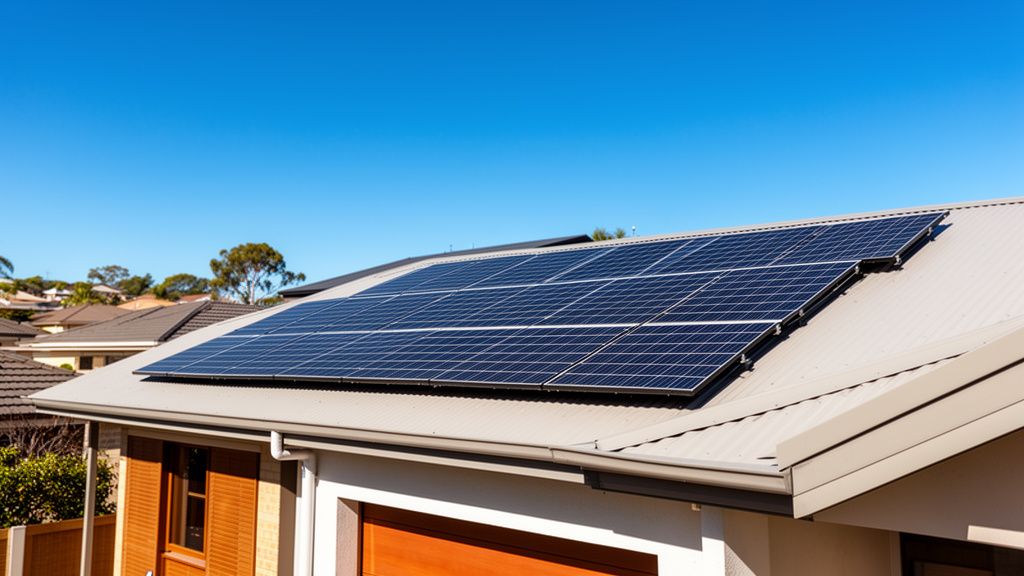
TL;DR: Red Energy's dedicated solar plan is Queensland-only. Everywhere else you take the feed-in rate attached to a standard plan. The draw is Qantas Points, the green credentials are better than most, and the base rates are often higher than competitors. Whether that trade works depends on how much you value the points.
What does Red Energy offer?
An established mid-sized retailer, owned by Snowy Hydro, competing on loyalty rather than on price.
Base electricity and gas rates are frequently higher than the cheapest competitors. What Red Energy sells instead is Qantas Points: 10,000 bonus points for new electricity customers, another 5,000 for gas, and two points per dollar of energy spend on the Qantas Red Saver plan, provided you pay on time.
There is also a rewards app with dining and shopping offers.
Whether that adds up depends entirely on what you value a Qantas Point at. At a common valuation of around 1 to 1.5 cents, two points per dollar is roughly a 2 to 3% return on your energy spend, plus the sign-up bonus. Against a competitor 10% cheaper on rates, the points lose.
Run that comparison rather than assuming either way.
The green credentials
Better than most retailers, and worth understanding accurately.
Red Energy is owned by Snowy Hydro, whose primary business is hydroelectric generation. The 2022 Green Electricity Guide rated Red Energy 6.6 out of 10, placing it tenth out of 39 retailers.
That is a genuinely good result, and it is not a perfect one. Snowy Hydro also operates gas-fired peaking plants, so the parent is not a pure renewable business, and the score reflects that.
Compared with a retailer whose parent owns coal generation and plans to run it into the 2040s, Red Energy is a materially better choice on this basis.
How do the solar plans work?
This is the part that catches people out.
In Queensland, Red Energy offers a dedicated Solar Saver plan built for households with solar. Queensland solar owners should ask for the current feed-in rate and the plan terms specifically, since a solar-designed plan usually structures the supply charge and usage rates differently to a standard one.
Everywhere else, there is no solar-specific plan. You take a standard electricity plan and whatever feed-in tariff is attached to it in your state.
That distinction matters more than it sounds. A solar-designed plan generally accounts for the fact that solar households import less and export more. A standard plan does not, and the feed-in rate bolted onto it is usually unremarkable.
Checking the rate
Red Energy does not publish a single national feed-in figure, and rates change. Confirm the current rate for your postcode and plan directly, or through Energy Made Easy.
Set expectations accordingly. Market-wide, most retailers cut feed-in tariffs below 5c/kWh through 2024 and they have not recovered. A 6.6kW system exports a substantial amount on a sunny day, and at a few cents a kilowatt-hour that export is worth much less than it used to be.
Which leads to the more useful point: for almost every solar household the import rate and the daily supply charge decide the bill, not the feed-in tariff. Compare on total annual cost using your own usage figures.
Is Red Energy right for your solar home?
Consider it if you are in Queensland and the Solar Saver plan's numbers work, or you fly enough for Qantas Points to have real value to you, or the ownership question matters and you want a retailer whose parent generates renewably.
Look elsewhere if you are outside Queensland, you do not collect Qantas Points, and you are comparing on cost. Red Energy's base rates are frequently beaten, and a points return of 2 to 3% does not cover a larger gap in rates.
Be careful about the pay-on-time condition on points earning. Miss a payment and you lose that period's points, the same way conditional discounts work elsewhere.
How to decide
Pull your last four bills and note total imported kilowatt-hours, total exported kilowatt-hours, and your peak, shoulder and off-peak split if you are on time-of-use.
Run those through Energy Made Easy for your postcode, or Victorian Energy Compare in Victoria. Compare Red Energy's total estimated annual cost against everything else that appears.
Then add the points value if you would actually use them, and take the answer. If Red Energy costs $150 more a year and the points are worth $80 to you, that is a $70 decision rather than a loyalty one.
Recheck annually. Rates move, sign-up bonuses do not repeat, and the plan that was competitive when you joined usually is not two years later.
Key Takeaways
- The dedicated Solar Saver plan is Queensland-only. Everywhere else you take a standard plan's feed-in rate.
- Qantas Points are the main draw: 10,000 on sign-up plus two points per dollar, worth roughly 2 to 3% of your energy spend if you use them.
- Base rates are often higher than the cheapest competitors, so the points have to cover that gap.
- Green credentials are good at 6.6 out of 10 and tenth of 39, helped by Snowy Hydro ownership, though the parent also runs gas peaking plants.
- Feed-in rates market-wide sit below 5c/kWh, so compare on total annual cost rather than export rate.