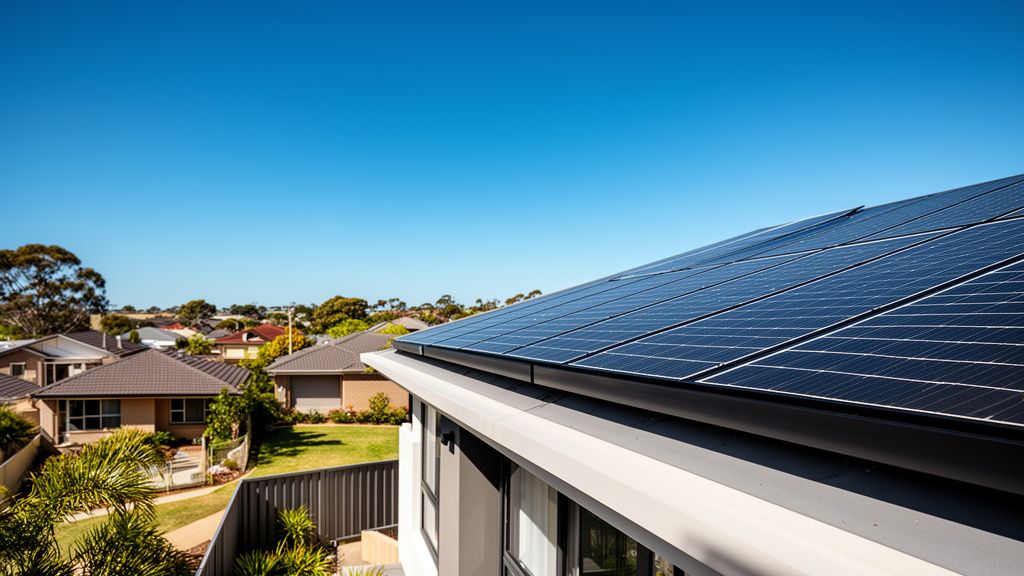
Australia, the sunburnt country, has embraced rooftop solar like few other nations. From the bustling suburbs of Sydney to the vast stretches of regional Queensland, solar panels are now an iconic part of our skyline. They represent a commitment to cleaner energy and a savvy financial decision for millions of Aussie households looking to slash their high electricity bills.
Against this backdrop, the political landscape around renewable energy has often been contentious. For years, Pauline Hanson's One Nation party has been a vocal critic of renewable energy, particularly large-scale projects and government subsidies, arguing they destabilise the grid and burden taxpayers. Their traditional stance has leaned towards supporting Australia's fossil fuel industries, including coal, gas, and a push for nuclear power. Yet, a closer look reveals an evolution in their position regarding rooftop solar. They now find themselves tacitly supporting, and even advocating for, the very residential solar solutions they once seemed to dismiss, albeit with a particular spin.
The Traditional One Nation Playbook: Skepticism and Subsidies
Historically, One Nation's criticisms of renewable energy have been loud and clear. Their arguments typically revolve around several points: the intermittent nature of solar and wind power, concerns about grid reliability, the high cost of transitioning away from traditional energy sources, and the waste of taxpayer money on subsidies.
They have often argued that subsidies distort the market, unfairly benefiting specific industries while driving up the cost of electricity for ordinary Australians. You would hear rhetoric about picking winners, unreliable renewables, and the importance of Australia's vast coal and gas reserves for energy security and jobs. For many years, the idea of One Nation actively supporting any form of solar power seemed unlikely.
The Subtle Pivot: Supporting the Individual Homeowner
So, what has changed? The pivot is not a wholesale embrace of green energy, but rather a shift that aligns with One Nation's core populist appeal: supporting the individual and reducing their reliance on big institutions. Regarding rooftop solar, their support appears to stem from a different angle entirely, one focused on personal financial benefit and self-sufficiency, rather than environmental altruism.
Their recent rhetoric acknowledges the financial relief rooftop solar offers to families struggling with cost of living pressures. Instead of seeing solar as a green scheme, they have reframed it as a practical, common-sense solution for homeowners to take control of their own power bills. This resonates deeply with their voter base, many of whom are in regional and outer suburban areas where the sting of high electricity prices is felt. For One Nation, advocating for rooftop solar becomes less about climate change and more about household economics and individual agency.
Furthermore, they often highlight that residential solar installations are a private investment by homeowners. While initial government rebates kickstarted the market, many of these incentives have matured or been phased out. Today, installing an average 6.6kW solar system might cost an Aussie household between $6,000 and $10,000, but the rapid payback periods, often 3 to 5 years due to significant savings, make it an attractive proposition without relying on heavy subsidies. From One Nation's perspective, this individual investment in personal energy independence is a very different beast from government investments in large-scale solar farms or wind projects.
The Nuance: Distinguishing Subsidies
This brings us to the main nuance: One Nation's continued criticism of subsidies largely targets large-scale, utility-owned renewable projects, or broad government schemes that they believe distort market forces. They draw a distinction between these and the individual homeowner installing panels on their roof.
While feed-in tariffs, where solar owners are paid for excess power exported to the grid, could be viewed as a form of subsidy, One Nation seems less concerned with these market-based mechanisms for individual households. They appear to accept that if a homeowner makes a private investment to generate their own power and reduce their reliance on the grid, then any benefit they receive from selling surplus energy back is a fair return on their investment, rather than an egregious government handout. The focus has shifted from the source of the energy to the benefit for the individual Australian household.
This stance allows them to maintain their hardline position against large-scale renewable projects, which they continue to criticise for unreliability and cost, while simultaneously appealing to the common Australian who wants a lower power bill. It is a pragmatic political move that acknowledges the success and popularity of rooftop solar without compromising their core ideology.
What This Means for Australian Households
This shifting stance, however nuanced, is significant. It signals a political acknowledgement of rooftop solar's benefits across the political spectrum. When parties traditionally critical of renewables find common ground in supporting homeowners' ability to generate their own power, it reinforces the technology's mainstream acceptance.
For the millions of Australians who have already invested in solar, and the many more considering it, One Nation's pragmatic approach offers a degree of bipartisan validation. It suggests that despite ideological differences on grand energy policy, the tangible, immediate benefits of rooftop solar for individual families are now too evident to ignore or dismiss. It means that the conversation about solar is moving beyond mere environmentalism to a practical discussion about cost of living, energy independence, and household resilience.
In conclusion, One Nation's evolving position on rooftop solar is a case study in political pragmatism. By reframing solar from an environmental imperative to a personal financial saviour, they have found a way to support a popular technology while staying true to their anti-subsidy roots. The future of rooftop solar in Australia looks bright, with a broad chorus of voices acknowledging its part in powering our homes and easing the pressure on our wallets.
