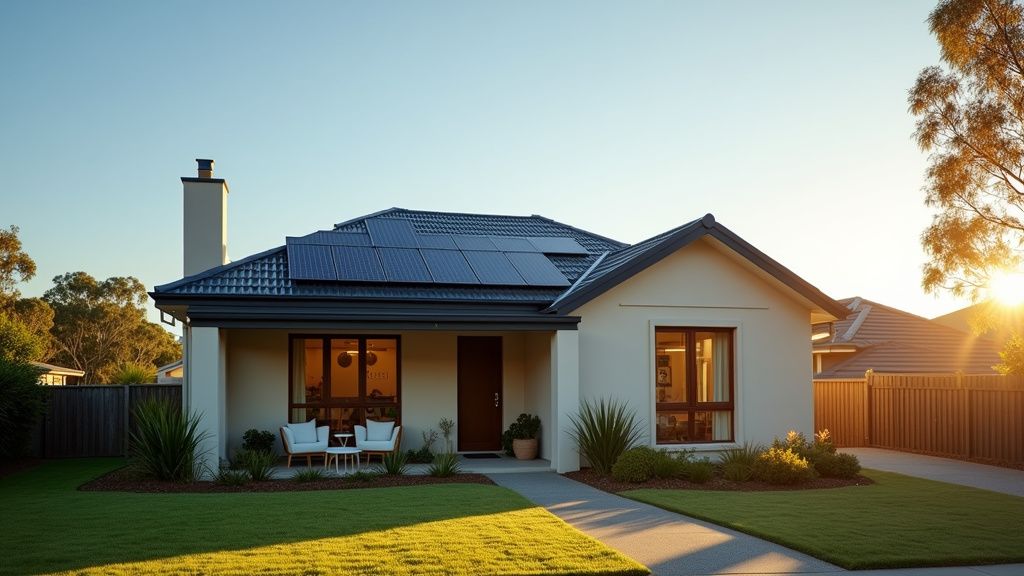
Ah, the Aussie sun - abundant, powerful, and perfect for powering our homes with solar. But even in the land of endless sunshine, shade can be a sneaky saboteur for your solar system. You might think a little shadow is no big deal, but a single patch of shade on a single panel can drastically reduce the output of an entire section of your solar array, impacting your energy savings and the return on your investment.
Fear not, fellow Aussies! Managing shade effectively is key to maximising your solar system's performance. And lucky for you, there are smart strategies to keep your panels pumping out clean energy, even when things get a bit dim. Want to dive deeper into portable solar solutions? Check out our Complete Guide.
So, let's shed some light on how shade impacts your solar and the clever ways we can work around it.
The Shady Truth: How Shade Cripples Your Solar Output
Most residential solar systems in Australia consist of multiple solar panels, often referred to as an array, which convert sunlight into DC electricity. This DC electricity is then fed into an inverter, which transforms it into AC power suitable for your home and the grid.
These panels aren't just one big unit; they're usually connected in groups called strings. Think of a string of panels like a series of connected pipes carrying water. If one pipe in the series gets blocked, the flow of water, or electricity in this case, through the entire series slows to a trickle or stops altogether. That's precisely what happens with traditional solar panel strings: if even one panel, or sometimes just a section of one cell on a panel, is shaded, the output of the entire string can plummet.
This can be a significant drop, potentially rendering that string almost useless for as long as the shadow persists. While modern panels often come with bypass diodes - clever little devices that allow electricity to flow around a shaded cell or section - their ability to completely mitigate the problem is limited. The goal, then, is to minimise the impact of shade wherever possible.
Strategy 1: Prevention is Better Than Cure (Smart Design & Placement)
The most obvious and impactful step in managing shade is to avoid it from the outset. This requires a detailed, professional assessment.
- Site Analysis: A reputable solar installer should conduct a thorough shade analysis using specialized mapping tools. This involves tracking the sun's path across your property throughout the day, in every season. What might be perfectly clear in summer could be heavily shaded by a neighbour's roof or a chimney in winter when the sun is lower in the sky.
- Anticipate Growth: Solar systems are built to last 25 years or more. Think about those beautiful gum trees in your backyard or your neighbour's growing jacaranda. Over a quarter-century, saplings can become towering shade-casters. A good installer will factor in potential tree growth and advise on panel placement that anticipates these changes. Sometimes, a bit of strategic pruning or considering a different roof section can make all the difference.
- Optimise Panel Layout: Even on a challenging roof, creative panel layout can help. If shade is unavoidable in one area, panels can sometimes be strategically placed in different orientations or on different parts of the roof to maximise unshaded exposure.
Strategy 2: Smart Inverters for Smarter Energy (MPPT)
If some level of partial shading is unavoidable, modern inverter technology offers a significant helping hand. Most quality inverters today come equipped with Maximum Power Point Tracking (MPPT) capability.
An MPPT inverter is like a smart brain for your solar system. It constantly monitors the output of your solar panels and adjusts the electrical load to extract the maximum possible power. When shade falls on a string of panels, the MPPT tracker works to optimise the voltage and current, essentially squeezing every last drop of usable energy out of the partially shaded string. While it can't magically create power where there is none, it significantly minimises the losses that would occur with older, non-MPPT inverters. For a system with multiple strings, MPPT allows each string to be optimised independently, meaning a shaded string won't drag down the performance of an unshaded one.
Strategy 3: Individual Brilliance (Microinverters & Power Optimisers)
For properties with significant, unavoidable shade - perhaps due to complex rooflines, nearby tall buildings, or persistent tree cover - microinverters or power optimisers are options. These technologies take a fundamentally different approach to managing panel output:
- Microinverters: Instead of one central inverter for your entire system, a microinverter is installed directly behind each individual solar panel. This means each panel operates independently. If one panel is shaded, only that panel's output is affected; all other unshaded panels continue to produce at their maximum potential. This eliminates the bottleneck effect of strings entirely.
- Power Optimisers: Similar to microinverters, power optimisers are also installed at each panel. However, instead of converting DC to AC at the panel level, they condition the DC power from each panel, optimising its output before sending it to a central string inverter. This offers many of the benefits of microinverters in terms of individual panel optimisation, while still utilising a central inverter.
Both microinverters and power optimisers offer enhanced monitoring capabilities, allowing you to see the performance of each individual panel. This can be useful for identifying specific shading issues or performance anomalies. While these solutions typically involve a higher upfront cost compared to a single string inverter, the long-term gains in energy production and savings, especially in challenging shade environments, can make them a worthwhile investment.
What About Clouds?
Some forms of shading are simply unavoidable. Clouds, for instance, are a natural part of our weather and will always cause temporary fluctuations in your system's output. These are uncontrollable factors, and while they affect production, they don't pose the same persistent problem as a fixed shadow from a tree or chimney. Your system is designed to handle these natural variations.
Finding the Right Approach for Your Home
Choosing the best strategy for managing shade on your solar panels depends heavily on your unique property, the specific shade challenges you face, and your budget.
For many Australian homes, a combination of smart planning, careful panel placement, and a quality inverter with MPPT technology will provide excellent results. For those with more complex or unavoidable shade issues, microinverters or power optimisers can provide additional performance.
The key takeaway is this: don't let shade deter you from going solar. With the right advice and the right technology, you can ensure your solar system delivers maximum sunshine savings for decades to come. Ready to find the perfect shade-busting solution for your home? Contact your local SolarInsights expert today for a thorough, no-obligation assessment!
