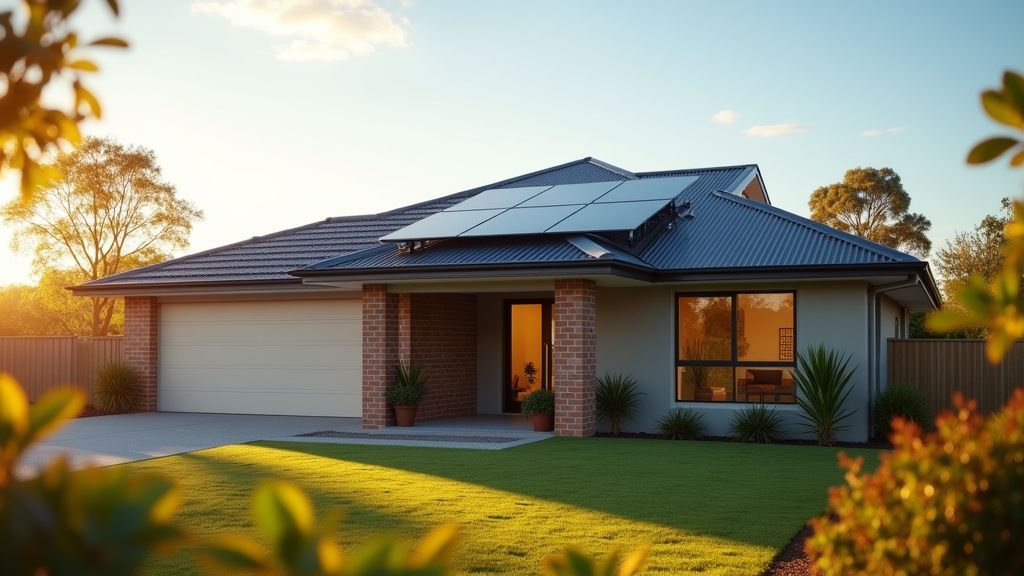
An 8kW system needs 45 to 60 square metres of usable roof and suits households that use a lot of power during the day. If that is not you, a 6.6kW system will serve you better for less. Our Complete Guide covers it in more detail.
What is an 8kW Solar System?
8 kilowatts of solar panels, which at today's panel wattages of 330W to 400W means around 20 to 24 panels. Each takes about 1.7 square metres, and you need clearance for access and airflow, so budget 45 to 60 square metres of roof.
That roof requirement is the constraint that rules 8kW out for many houses before cost ever enters the conversation.
Who is it For?
Households using well above average electricity: ducted air conditioning, a pool, a home business. It is a real step up from the standard 6.6kW system and sits comfortably under the common 15kW residential limit.
How Much Does It Cost?
The federal solar rebate covers roughly 30-35% of the upfront cost through the STC scheme.
After that rebate and including GST, an 8kW system averages around $7,467, varying by state.
Worth knowing: prices fell for a decade and have started rising again, on higher panel costs and a shrinking STC rebate that reduces every January.
How Much Power Will It Generate?
Depends on:
- Location: Measured in Peak Sun Hours, and it varies substantially across the country.
- Panel Angle and Orientation: North-facing captures the most in Australia.
- Shading: Even partial shade costs real output.
- Weather Conditions: Cloud cover.
- Panel Quality: A modest difference between tiers.
Approximate daily output by city:
- Sydney: around 32 kWh
- Melbourne: around 28 kWh
- Brisbane: around 36 kWh
- Perth: around 38 kWh
- Adelaide: around 34 kWh
Perth generates about 36% more than Melbourne off the same array, which changes the payback considerably.
Is It a Good Investment?
Yes, but the return comes from self-consumption rather than exports. Feed-in tariffs have fallen a long way, while retail electricity runs from 18¢ to 27¢ per kWh and up.
Every kilowatt-hour you use as you generate it is worth that retail rate. Every one you export earns a fraction of it.
Key Considerations
- Energy Consumption: Get your average daily usage off your bills.
- Roof Space: 45-60 square metres, unshaded, ideally north-facing.
- Electricity Usage Patterns: 8kW suits high daytime consumption. If the house is empty until six, you will export most of it.
- Future Needs: An EV changes your consumption profile more than anything else you are likely to add.
- Professional Installation: Clean Energy Council-accredited installer, which is also a rebate condition.
How to Maximise Your Savings
- Self-Consumption: Shift appliances into daylight hours. This is the highest-return change available and it costs nothing.
- Battery Storage: Turns exported surplus into avoided evening purchases, at a cost worth modelling against your own usage.
Conclusion
Measure your usable roof area first. If you have 45 to 60 square metres of unshaded north-facing roof and you use power during the day, 8kW is a good fit. Fail either test and 6.6kW is the better buy.