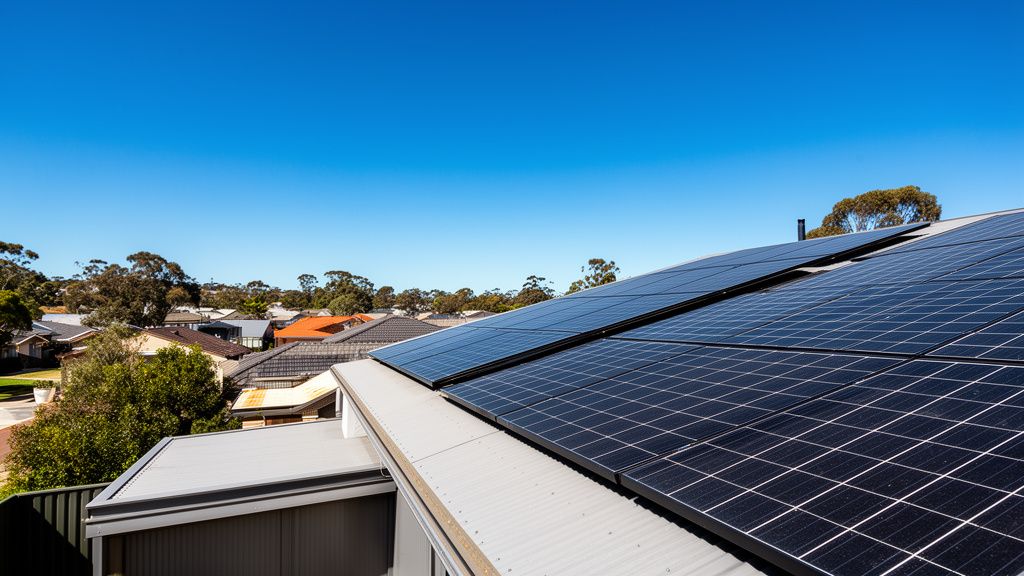
TL;DR: BloombergNEF's Tier 1 list assesses solar panel manufacturers' financial stability and bankability, not product quality. PV Evolution Labs (PVEL) conducts independent, rigorous product performance and reliability testing. When a brand like REC appears on both, it means the company is financially sound and its panels perform exceptionally well, offering Australian homeowners strong peace of mind.
What is the Bloomberg Tier 1 list, and how does it rank solar panel manufacturers?
The Bloomberg New Energy Finance (BloombergNEF) Tier 1 list identifies solar module manufacturers that are considered "bankable" by project financiers. This isn't a rating of product quality or performance. Instead, BloombergNEF ranks manufacturers based on their ability to supply modules to at least six different non-recourse financed projects (meaning the lender cannot go after other assets of the developer) from six separate commercial banks in the last two years. The projects must use the manufacturer's own-brand products, not rebadged modules. It essentially tells financiers which manufacturers are large, stable, and trusted enough to secure financing for utility-scale projects. For Australian homeowners, this means the manufacturer has a strong financial backing, which can be important for long-term warranty claims.
Why Bloomberg Tier 1 matters for financial security
A Tier 1 ranking signals a solar panel manufacturer possesses significant financial stability and a proven track record in securing large-scale project financing. This provides an indirect level of comfort for consumers. If a company goes out of business, its product warranty becomes worthless. A Tier 1 company is less likely to disappear overnight, meaning the 25-year performance warranty on your solar panels has a higher chance of being honoured. However, it is important to remember this rating says nothing about how well the panel performs in Queensland's heat or how long it actually lasts on a roof in Melbourne. It is a financial health check, not a technical one.
How does PV Evolution Labs (PVEL) test solar panels, and what do their reports indicate?
PV Evolution Labs (PVEL) provides independent, third-party testing for solar modules, focusing on real-world performance and reliability that goes well beyond standard IEC certification. PVEL's rigorous Product Qualification Program (PQP) puts panels through accelerated stress tests designed to simulate decades of outdoor exposure in harsh conditions. These tests include intense thermal cycling, damp heat, dynamic mechanical load, and critical degradation tests like Potential Induced Degradation (PID) and Light-Induced Degradation (LID). PVEL publishes an annual PV Module Reliability Scorecard, highlighting "Top Performer" modules that show minimal degradation across these demanding tests. For Australian conditions, where panels face extreme UV, heat, and sometimes cyclonic winds, PVEL's findings offer strong insights into how a module will actually perform over time.
Understanding PVEL's "Top Performer" designation
When PVEL designates a module as a "Top Performer," it signifies that the panel has demonstrated superior reliability and minimal power degradation across their detailed test suites. This means the panel is more likely to maintain its rated power output over its expected lifespan and resist common degradation mechanisms like PID, which can drastically reduce efficiency in humid Australian climates. PVEL's reports give Australian solar buyers confidence in the actual hardware performance, indicating which modules are built to last and perform consistently under real-world stresses, directly impacting your system's output and financial returns. For example, a module that passes PVEL's PID test well means it is less likely to suffer voltage leakage and efficiency loss in high humidity environments common in coastal regions of Queensland or New South Wales.
Why is REC Solar's inclusion on both lists important for Australian solar buyers?
REC Solar holding positions on both the BloombergNEF Tier 1 list and consistently earning "Top Performer" status from PV Evolution Labs offers a unique and compelling advantage for Australian solar buyers. This dual recognition means REC panels come from a manufacturer with solid financial stability and a proven ability to back its warranties, while simultaneously having their actual product performance and durability validated by stringent, independent third-party testing. Many manufacturers are on one list or the other, but not both. For example, some Tier 1 companies might not achieve Top Performer status, indicating financial strength but average product reliability. Conversely, some small, innovative manufacturers might have great product test results but lack the financial scale to be Tier 1.
The combined benefit for your solar investment
For an Australian homeowner, selecting a brand like REC that excels in both financial bankability and product reliability means maximising your return on investment and minimising future headaches. You get the assurance that the company behind your 25-year performance warranty is financially sound, reducing the risk of a voided warranty due to company collapse. At the same time, the PVEL Top Performer status confirms the panels themselves are engineered for high performance and longevity, proven to withstand harsh conditions like those found across Australia. This dual validation provides thorough peace of mind, ensuring your significant solar outlay, typically $6,000-$10,000 for a 6.6kW system, is protected by both a strong company and a superior product. It means you are investing in a solar system that is built to last and is also backed by a company that will likely be around to honour its commitments.
Key Takeaways
- Always consider both the financial stability of a solar panel manufacturer (like Bloomberg Tier 1) and the independent product quality testing (like PVEL).
- Bloomberg Tier 1 assesses a company's bankability and financial health, providing confidence that your warranty issuer will likely remain in business.
- PVEL's rigorous testing evaluates actual panel performance and durability in real-world conditions, identifying modules with minimal degradation over time.
- Choosing a brand like REC that appears on both lists provides the strongest assurance for your long-term solar investment in Australia.
- A financially stable company behind a high-performing product means better protection for your solar system and its expected output over decades.
