You've probably heard the claim: "95% of a solar panel is recyclable." It's a figure that gets thrown around a lot in discussions about solar sustainability. But is it true? And what does it actually mean in practice for Australian homeowners?
The answer is: it's complicated. The theoretical recyclability of a panel and the practical recovery rate at a real-world recycling facility are two different things. Let's dig into the detail.
For the full recycling landscape, see our Complete 2026 Guide to Solar Panel Recycling in Australia.
What's Inside a Solar Panel?
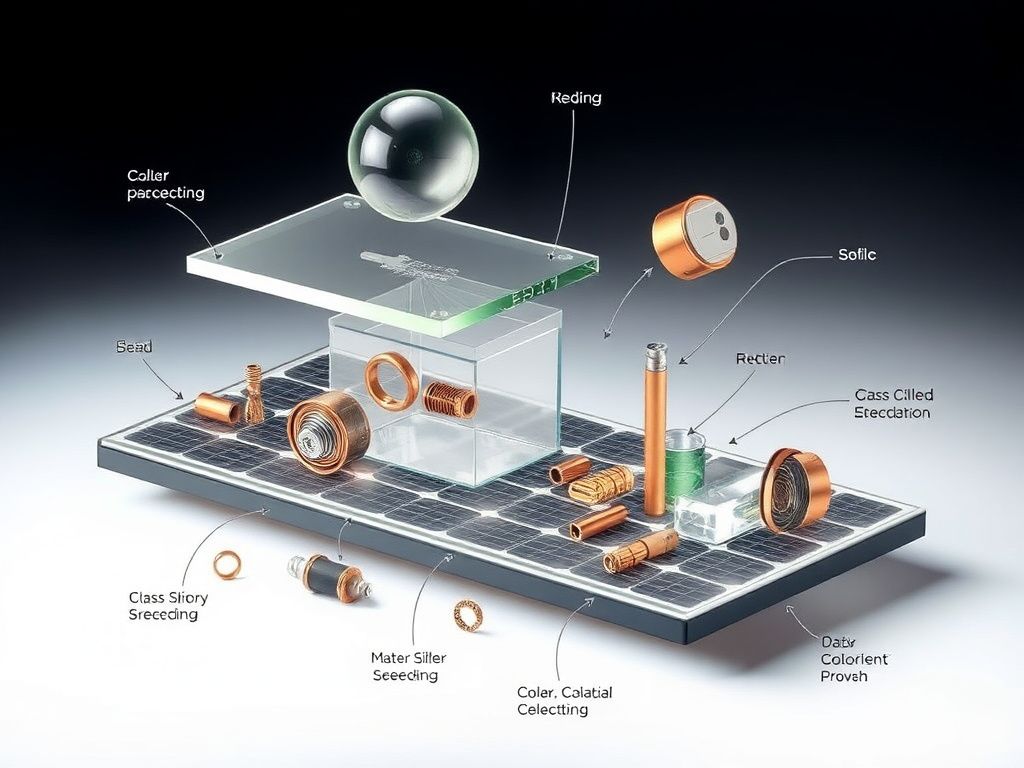
To understand what can be recycled, you first need to know what you're dealing with. A standard crystalline silicon solar panel (which accounts for over 95% of panels installed in Australia) contains:
| Material | % by Weight | Recyclable? |
|---|---|---|
| Glass | 65-75% | Yes |
| Aluminium frame | 10-15% | Yes (easily) |
| Silicon cells | 3-5% | Yes (with advanced processing) |
| EVA encapsulant | 5-7% | Difficult |
| Polymer backsheet | 3-5% | Difficult |
| Copper wiring | 1-2% | Yes |
| Silver, tin, lead | <1% | Yes (with advanced processing) |
| Junction box (plastic + metal) | 1-2% | Partially |
The "95% recyclable" figure refers to the combined weight of glass, aluminium, silicon, and metals - materials that can be recovered with the right technology. The remaining 5% is mainly the EVA encapsulant and polymer backsheet, which are currently difficult to recycle economically.
The Gap Between "Recyclable" and "Actually Recycled"
Here's where reality gets interesting. Just because a material can be recycled doesn't mean it is being recycled at every facility.
Basic mechanical recycling (the most common approach in Australia until recently) involves:
- Removing the aluminium frame (easy, high recovery).
- Removing the junction box (easy).
- Shredding the remaining glass-silicon-polymer laminate.
- Separating materials by density and size.
This approach recovers 70-80% by weight, primarily aluminium and crushed glass (which is often downcycled into road base or aggregate rather than being reused as glass).
Advanced recycling (now available at leading Australian facilities) adds:
- Thermal or chemical delamination to separate glass from silicon cells intact.
- Hydrometallurgical extraction of silver, copper, and tin.
- Recovery of high-purity silicon suitable for reuse in new panels or electronics.
These facilities achieve 90-95% recovery by weight and recover materials at much higher value - intact glass sheets rather than aggregate, and semiconductor-grade silicon rather than industrial waste.
Material-by-Material Breakdown
Glass (65-75%)
Glass is the single largest component by weight. In basic recycling, it's crushed and used as aggregate. In advanced recycling, the intact glass sheet is separated and can be reused in new panels, construction, or other glass products. Recovery rate: near 100% in either case, but the quality of recovered glass varies significantly.
Aluminium (10-15%)
The easiest material to recycle. The frame is mechanically removed and sent to standard aluminium recyclers. It retains its full value and can be reused indefinitely. Recovery rate: ~100%.
Silicon (3-5%)
Silicon recovery is the holy grail of solar panel recycling. Standard-grade silicon is abundant and cheap, but the high-purity silicon used in solar cells is energy-intensive to produce. Advanced recycling can recover solar-grade silicon, but the process is complex. Recovery rate: 50-85% depending on the facility and technology.
Copper (1-2%)
Copper from wiring and the junction box is readily recovered through standard metal separation processes. Recovery rate: ~95%.
Silver (<1%)
Each panel contains a small but valuable amount of silver (around 10-20 grams in older panels, less in newer ones). Silver recovery requires chemical processing but is economically worthwhile given silver's high price. Recovery rate: 70-90% at advanced facilities.
EVA and Polymer Backsheet (8-12%)
These plastic materials are the main recycling challenge. EVA (ethylene-vinyl acetate) is used to laminate the cells to the glass, and the polymer backsheet (often Tedlar or similar) protects the rear of the panel. Both are difficult to separate and have limited recycling value. Most facilities either incinerate them for energy recovery or send them to landfill. Recovery rate: 0-30%.
What Australian Facilities Are Achieving
As of 2026, Australia has several commercial-scale recycling facilities:
- PV Industries (Bankstown, NSW) - uses proprietary deframing and delamination technology. Claims 90%+ recovery rate.
- Sircel (Parkes, NSW) - processes ~160,000 panels/year. Focuses on metal recovery for domestic markets.
- Elecsome (Victoria) - operates advanced separation technology with strong glass and silicon recovery.
- Queensland's first dedicated plant - opened 2025 with capacity for 240,000 panels/year.
The national average recovery rate is improving but still sits around 80-85% when you account for the mix of basic and advanced facilities. The target under the incoming product stewardship scheme is a minimum 85% recovery rate for accredited recyclers.
How Does Australia Compare Globally?
- European Union: Under the WEEE Directive, solar panels must achieve a minimum 80% recovery rate by weight. Leading facilities in Germany and France routinely exceed 90%.
- Japan: Advanced thermal processing achieves 90%+ recovery, with a strong focus on silicon reclamation.
- United States: No national mandate, but states like Washington require minimum 85% recovery. Several innovative startups are pushing the envelope on material-specific recovery.
Australia is catching up quickly, driven by growing volumes and regulatory pressure.
The Bottom Line for Homeowners
When someone says "solar panels are 95% recyclable," they're technically correct - but only if the panel reaches an advanced recycling facility. In practice:
- Basic facilities: ~70-80% recovery, mostly aluminium and crushed glass.
- Advanced facilities: ~90-95% recovery, including high-value silicon and metals.
The good news is that the proportion of panels reaching advanced facilities is growing every year, and the new national pilot program is channelling panels to accredited recyclers with minimum recovery standards.
Your job as a homeowner is simple: make sure your old panels reach a proper recycler, not a skip bin. The technology exists to give those panels a genuinely sustainable end of life.
Read the Complete 2026 Guide for practical steps on how to recycle your panels.
