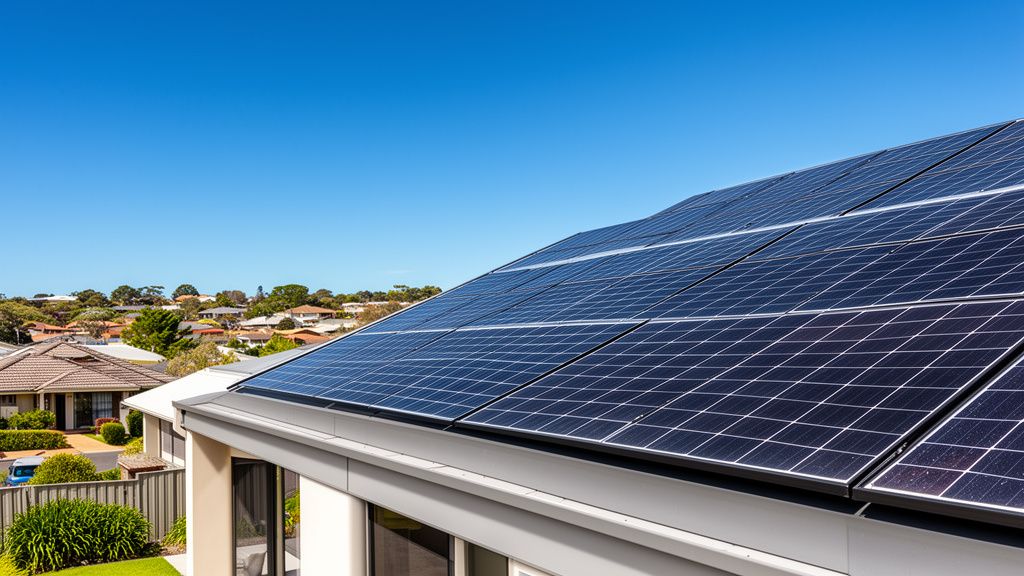
TL;DR: REC makes genuinely good panels. They hold their output in Australian heat better than most, the warranty is 25 years on both product and performance, and the Alpha series is among the highest-efficiency panels you can buy. You pay for it. Expect a 6.6kW system with REC panels to land $8,500 to $12,000 against $5,000 to $7,000 for entry-level gear.
Who Are REC and Why Do Installers Rate Them?
Norwegian in origin, manufacturing in Singapore, and in the solar panel business since 1996. That longevity matters more than it sounds, because a 25-year warranty is only worth what the company behind it is worth in year 24.
The panels themselves use N-type cells rather than the older P-type construction, which resists light-induced degradation and holds output better as the panel ages. The premium lines add heterojunction technology, a hybrid cell design that squeezes more power out of the same silicon.
For Australian conditions the number that matters most is not peak efficiency. It is the temperature coefficient.
Why Temperature Coefficient Beats Headline Efficiency Here
Panels are rated at 25C. A roof in Adelaide in February is nowhere near 25C, and a panel sitting on dark tiles can run 30 degrees above ambient.
Every panel loses output as it heats. The temperature coefficient tells you how fast. A panel losing 0.26% per degree above 25C is giving up roughly 10% of its output at 65C cell temperature. A panel losing 0.40% per degree gives up closer to 16%.
That difference does not show up in the specification sheet headline and it shows up in your production figures every summer. REC's premium lines sit at the good end of that range, which is the strongest practical argument for buying them in Australia.
The Alpha and N-Peak Series
The Alpha series pairs N-type cells with heterojunction construction and reaches efficiencies above 22%. On a roof with limited usable area, that density is the difference between fitting 6.6kW and fitting 5kW, and it matters again later if you add battery storage and want more generation from the same roof.
The N-Peak series drops the heterojunction layer but keeps N-type cells. It costs less, performs well in low light, and still holds up in heat. For most roofs with room to spare, N-Peak is the more sensible buy and the efficiency gap does not matter.
What the Warranty Actually Covers
REC offers 25 years on the product and 25 years on performance across its premium range.
Those are two separate things and people conflate them. The product warranty covers manufacturing defects: the panel fails, they replace it. The performance warranty guarantees the panel still produces above a stated percentage of its rated output after a given number of years, typically around 92% at year 25 on the Alpha line.
The ProTrust Catch
REC's ProTrust warranty extends coverage and adds labour, which is the part most warranties exclude. A replacement panel is worth little if you are paying an electrician for a day of scaffolding and access to fit it.
ProTrust is only available through REC-certified installers. If you buy REC panels from an installer who is not certified, you get the standard warranty and not the extended one. Ask the question before you sign, because the difference is real money and no installer volunteers it.
Warranties Are Only as Good as the Installer
Whatever the manufacturer promises, your first call in year seven will be to the company that installed the system. If that company has folded, you are dealing with REC directly and organising access yourself.
This is why installer selection matters at least as much as panel selection. A mid-tier panel fitted by a business that will still exist in a decade beats a premium panel fitted by whoever quoted cheapest last spring.
The Honest Downsides
Price
REC panels cost more. A 6.6kW system with REC panels typically runs $8,500 to $12,000 installed, including the inverter and after the STC discount is applied. Budget systems start around $5,000 to $7,000.
That gap is between two and five thousand dollars, and whether it is worth paying depends on how long you intend to stay in the house. Over 25 years the better temperature performance and lower degradation recover it. Over five years before you sell, they probably do not.
Prices move with STC pricing, state incentives and installer margins, so treat these as ranges rather than quotes.
Finding a Certified Installer
REC is well distributed in the capitals and thinner on the ground regionally. In parts of regional Queensland, WA and northern NSW you may find only one or two certified installers within reasonable distance, which weakens your negotiating position considerably.
If you cannot get three quotes from certified installers, the ProTrust advantage is worth less than it looks, and you are better comparing REC against other premium brands your local installers actually stock.
The Efficiency Premium Is Often Wasted
The Alpha series exists to solve a specific problem: not enough roof. If your roof has room for the array you want, you are paying for density you will not use.
Installers do sometimes push Alpha where N-Peak or a good mid-tier panel would do the same job for less. Ask directly how much usable north, north-east and north-west roof area you have before accepting that the higher-efficiency panel is necessary.
How REC Compares to Other Premium Brands
REC sits in the upper tier of solar brands without being at the absolute top of it. Maxeon and SunPower panels reach slightly higher efficiencies and cost more again. LG left the solar business in 2022, which stranded a large number of Australian warranties and is worth remembering when weighing brand longevity.
Against those alternatives, REC generally offers similar real-world output in Australian heat at a lower price per installed kilowatt. On a laboratory bench the gap in peak efficiency is measurable. On a Brisbane roof in January it largely closes, because the temperature coefficient does more work than the nameplate rating.
Where REC Loses
Against strong mid-tier brands such as Jinko Tiger Neo or Trina Vertex, the performance gap has narrowed considerably in recent years. Those panels now use N-type cells too, carry 25-year product warranties, and cost noticeably less.
The honest position is that REC is a premium product competing in a market where the mid-tier caught up faster than the premium tier expected. It is still a better panel. It is no longer a different category of panel.
Should You Buy Them?
Buy REC if you have limited roof area, you intend to stay in the house long term, a certified installer operates near you, and the price difference against a good mid-tier system is under about two thousand dollars.
Look elsewhere if your roof has plenty of space, you are optimising for payback period, or the only certified installer within reach has quoted well above the others. Overpaying for a premium panel fitted by an installer you did not choose freely is the worst of both outcomes.
Key Takeaways
- REC solar panels are a genuine premium product, using N-type cells and, on the Alpha line, heterojunction construction reaching above 22% efficiency.
- The temperature coefficient matters more than peak efficiency in Australia, and this is where REC earns its price.
- Warranties run 25 years on product and performance, but the extended ProTrust cover with labour requires a REC-certified installer.
- Expect $8,500 to $12,000 for a 6.6kW system against $5,000 to $7,000 for entry level. The gap only repays over a long ownership horizon.
- Strong mid-tier N-type panels have closed much of the gap. REC is still better, but the margin no longer justifies any price.
