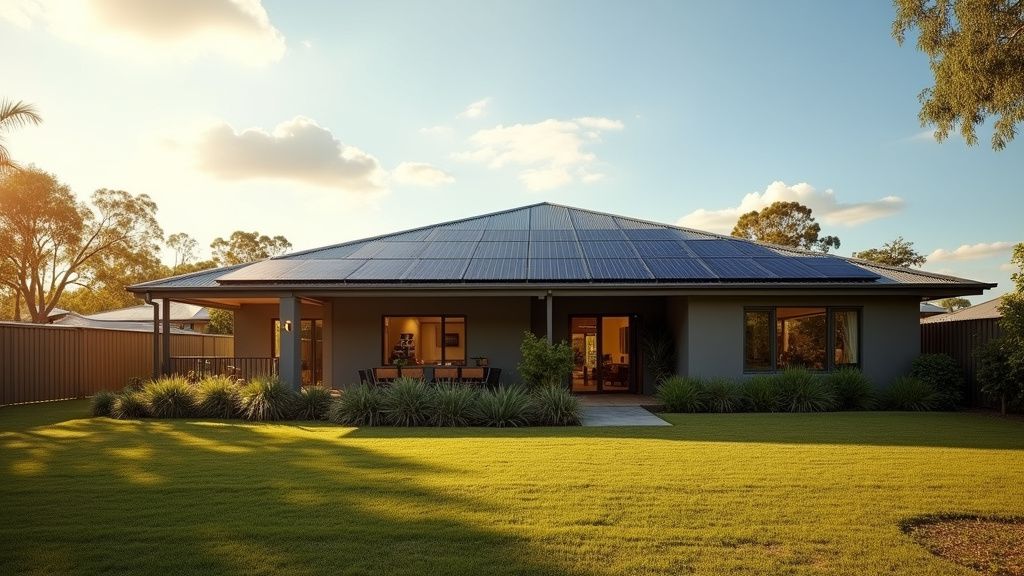
As Australians grapple with rising electricity prices and the increasing frequency of extreme weather events, the spotlight is firmly fixed on innovative solutions for a more resilient and affordable energy future. One such solution being actively explored in Queensland is the microgrid. Energy Queensland (EQ) is at the forefront of these trials, and it is time for a progress report.
For those looking to understand the broader context of smart grids and their role in fortifying Queensland's energy infrastructure, check out our Complete Guide.
So, what exactly is a microgrid? In essence, it is a localised energy grid capable of operating independently from the main electricity network. These mini-grids typically incorporate a mix of renewable energy sources (solar, wind), energy storage (batteries), and potentially traditional generation (diesel generators) to power a defined area, such as a remote community, a business precinct, or even a section of a larger city.
Why are microgrids so important for Queensland? The vastness of the state, combined with its vulnerability to cyclones and floods, makes centralised power distribution challenging and often unreliable. Microgrids offer a potential path to energy independence, particularly for remote and regional communities disconnected from the main grid or frequently affected by outages. They also enable greater integration of locally generated renewable energy, reducing reliance on fossil fuels and lowering carbon emissions.
Energy Queensland's Microgrid Initiatives: Where are we at?
EQ has been actively engaged in several microgrid trials across Queensland, each designed to address specific regional challenges and test different technological configurations. These projects are necessary for gathering real-world data on the performance, reliability, and cost-effectiveness of microgrids in the Australian context. While specific details on each project can vary, the overarching goals remain consistent:
- Improving Grid Resilience: To improve the ability of communities to withstand and recover from power outages caused by natural disasters.
- Integrating Renewable Energy: To maximise the use of locally generated solar and wind power, reducing reliance on imported electricity and fossil fuels.
- Lowering Energy Costs: To explore opportunities to reduce electricity bills for consumers by optimising energy generation and consumption within the microgrid.
- Improving Power Quality: To provide a more stable and reliable power supply, reducing voltage fluctuations and other power quality issues.
Key Learnings and Observations:
While detailed data from these trials is still being analysed, some key themes are emerging.
- Battery Storage is Essential: Battery storage is necessary for stabilising the grid and enabling the effective integration of intermittent renewable energy sources like solar. Systems are being assessed for optimal sizing and performance under varying load conditions.
- Communication is Key: Effective communication and control systems are required for managing the combination of different energy sources and ensuring smooth transitions between grid-connected and islanded modes of operation.
- Community Engagement is Central: The success of any microgrid project depends on the active involvement and support of the local community. Residents need to be informed about the benefits of microgrids and their role in the energy transition. This includes understanding feed-in tariffs for excess solar energy sold back to the grid, usually calculated in cents per kilowatt hour (c/kWh).
- Cost Remains a Challenge: While the cost of renewable energy and battery storage has fallen significantly in recent years, microgrid projects still require significant upfront investment. Finding innovative financing models and exploring opportunities for cost-sharing are necessary for wider adoption.
- Cybersecurity: These projects require strong cybersecurity protocols to ensure the security and reliability of these independent grids from external influence.
The Road Ahead:
Energy Queensland's microgrid trials are providing valuable insights into the potential of these technologies to change the state's energy landscape. These learnings will inform future policy decisions, regulatory frameworks, and investment strategies, paving the way for wider deployment of microgrids across Queensland and potentially, other parts of Australia.
As technology improves and the cost of key components continues to fall, microgrids are positioned to play a larger role in building a more resilient, sustainable, and affordable energy future for all Australians. It is likely that future projects will focus more on community-owned initiatives as well, supporting regions and creating local jobs.
Looking ahead, the focus will be on:
- Scaling up successful microgrid models: Identifying and replicating successful microgrid designs in other suitable locations.
- Developing supportive regulatory frameworks: Creating clear and consistent regulations that facilitate the development and operation of microgrids.
- Attracting private investment: Encouraging private sector investment in microgrid projects through appropriate incentives and risk mitigation strategies.
- Further reducing costs: Exploring innovative technologies and business models to further reduce the cost of microgrid components and operations.
Energy Queensland's work will continue to be important in this energy transition as more Australians adopt decentralised power generation. We will continue providing updates on this changing sector.