TL;DR: Australia's slow electric vehicle uptake stems from high initial costs, limited model availability, sparse charging infrastructure, and a historical lack of consistent government policies, but these barriers are gradually eroding with new incentives and an expanding market.
What are the primary roadblocks to widespread EV adoption in Australia?
Australia's EV adoption has been significantly hampered by a confluence of high upfront costs, limited model choice, and the perceived inadequacy of charging infrastructure, creating a hesitant market. Unlike many European nations or parts of Asia, where governments aggressively subsidised early EV purchases and mandated supply, Australian consumers faced premium pricing without significant federal support, making electric cars an expensive niche. The vast distances between major population centres also contribute to range anxiety, despite modern EVs easily covering hundreds of kilometres on a single charge. Furthermore, the initial cost of installing a dedicated home charging station, while beneficial for those with solar, adds another expense that some buyers hesitate to commit to upfront.
Why are EV prices still a major hurdle for Aussie buyers?
The primary reason for higher EV prices in Australia compared to overseas is varied. A significant factor has been the lack of extensive federal government incentives, meaning car manufacturers didn't prioritise the Australian market with their more affordable models. Instead, pricier, higher-margin EVs were often allocated here. Additionally, the Luxury Car Tax applies to EVs over $89,332 (for the 2023-24 financial year), penalising a segment of the market that's only just becoming competitive. This contrasts sharply with countries offering direct purchase rebates of thousands of dollars, making EVs a more palatable investment for the average Aussie household.
How does charging infrastructure impact buyer confidence?
The availability and reliability of public charging infrastructure shape buyer confidence, particularly outside metropolitan areas. While city centres and major highways are seeing an increase in rapid chargers, there are still significant charging deserts in regional and remote Australia. This uneven distribution fuels range anxiety, where potential buyers worry about being stranded, especially when planning longer trips. The pace of rollout, while improving, has been slower than consumer demand, and concerns about charger compatibility and payment systems can also deter first-time EV owners from making the switch.
How have government policies and incentives (or lack thereof) influenced Australia's EV market?
The absence of a strong, nationally consistent policy framework and financial incentives has historically placed Australia behind other developed nations in encouraging EV uptake. For years, federal policies were largely absent or even viewed as discouraging, sending mixed signals to both consumers and manufacturers. This lack of certainty meant Australia was often a low-priority market for global carmakers, leading to fewer models, longer waiting lists, and higher prices compared to markets with strong incentives. While states like NSW and Victoria have introduced varying stamp duty exemptions, rebates (e.g., $3,000 for EVs under $68,750 in NSW), and charging grants, this fragmented approach hasn't delivered the unified push seen in countries like Norway or Germany.
What impact do state-based incentives have on EV purchasing decisions?
State-based incentives have certainly made a difference, albeit creating a patchwork system across the country. For example, NSW offers a $3,000 rebate on new EVs under $68,750 and waives stamp duty, significantly reducing the upfront cost for eligible vehicles. Victoria and Queensland have similar, though often less generous, schemes. These incentives directly lower the purchase price and running costs for consumers in those states, making EVs more attractive. However, the variation means that what's a great deal in Sydney might not be available in Perth, leading to market inefficiencies and potential confusion for buyers considering interstate purchases.
How does the lack of a national EV strategy affect long-term growth?
The absence of a cohesive national EV strategy has profound implications for Australia's long-term growth in the electric vehicle sector. Without a unified vision, manufacturers face greater uncertainty, making it harder to commit to bringing a wider range of models or investing in local infrastructure and supply chains. This fragmentation can slow the overall market transition, hinder the standardisation of charging infrastructure, and complicate efforts to integrate EVs into the national energy grid. A clear federal roadmap, including fuel efficiency standards and a commitment to charging infrastructure, would provide the certainty needed to accelerate investment and adoption nationwide.
How is Australia's EV landscape currently transforming?
Australia's EV market is undergoing a significant transformation, driven by an influx of new, more affordable models, a rapidly expanding charging network, and evolving government support. We're seeing more manufacturers like BYD, MG, and even Tesla introducing models at competitive price points, directly challenging the notion that EVs are exclusively a luxury item. Concurrently, major players in the energy and fuel sectors, such as Ampol and BP, are investing heavily in public charging infrastructure, extending networks beyond major cities. This combined momentum, alongside the federal government's National EV Strategy, is beginning to dismantle the long-standing barriers to mass adoption, positioning Australia for accelerated growth in electric transport.
What new EV models are making electric vehicles more accessible?
The landscape of affordable EV models in Australia has expanded dramatically. Vehicles like the MG ZS EV, starting from around $40,000 drive-away, and the BYD Atto 3, priced from approximately $48,000 drive-away, have been game-changers. These models offer practical range and features at a price point that makes them competitive with equivalent internal combustion engine vehicles, especially when factoring in fuel and maintenance savings. Other manufacturers are also bringing in more entry-level options, providing Australian buyers with genuine choice that wasn't available just a few years ago, effectively shifting the market away from just premium Tesla and European offerings.
How is the charging infrastructure rapidly expanding across the country?
The charging infrastructure in Australia is expanding at an unprecedented rate, addressing a key barrier to EV adoption. Companies like Evie Networks, Chargefox, and Ampol are significantly increasing the number of rapid and ultra-rapid charging stations, particularly along key intercity routes and in regional hubs. Government initiatives, often in partnership with private industry, are also funding the rollout of chargers in areas previously underserved. The rollout involves more chargers, faster charging speeds and improved reliability, ensuring that drivers can confidently undertake longer journeys and making EVs a viable option for a broader segment of the Australian population.
What role does solar energy play in accelerating Australia's EV future?
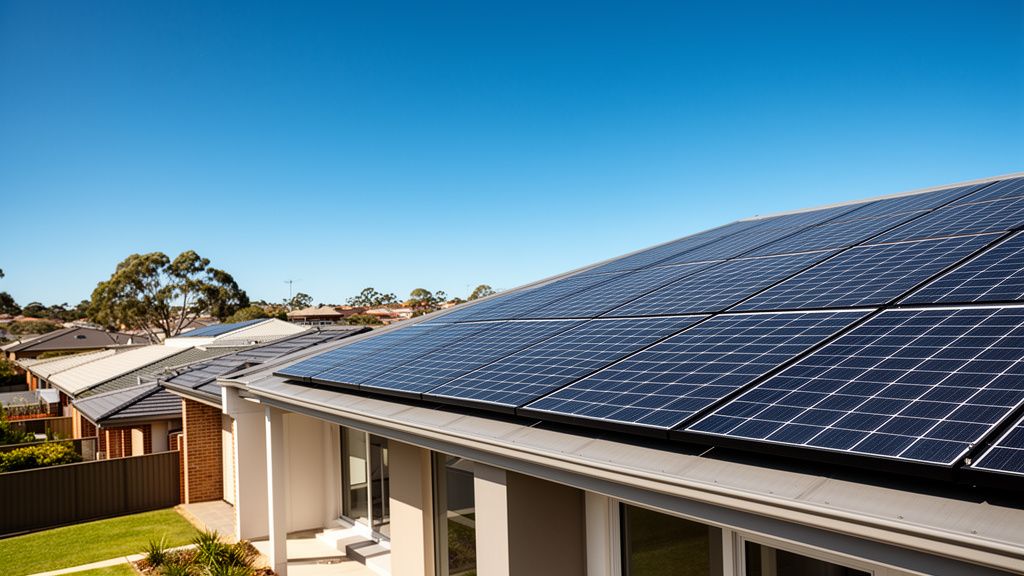
Solar energy is central to accelerating Australia's transition to electric vehicles, offering substantial cost savings for charging and contributing to a sustainable transport system. For many Australian households, installing solar panels means charging an EV becomes virtually free, dramatically cutting down on running costs compared to petrol. This synergy between rooftop solar and EVs transforms a car from a fossil-fuel consumer into a cleaner, cheaper mode of transport, powered directly by the sun. Beyond the financial benefits, using solar to charge EVs significantly reduces an individual's carbon footprint, aligning personal transport with broader environmental goals.
How do solar panels make home EV charging more affordable?
Pairing solar panels with an EV fundamentally changes the economics of car ownership. Instead of paying around $150-200 per month for petrol (at current prices for an average driver), or even $30-50 per month for grid electricity to charge an EV, solar owners can use their excess generated power to charge their vehicle at little to no extra cost. A typical 6.6kW solar system can generate more than enough energy to cover the average daily driving needs of most households. This effectively uses an existing asset to provide free fuel, making the total cost of EV ownership significantly cheaper over the vehicle's lifespan.
What are the environmental benefits of pairing solar with an EV?
The environmental benefits of pairing solar with an EV are substantial. When an EV is charged directly from rooftop solar panels, it operates almost entirely on renewable energy, eliminating tailpipe emissions and significantly reducing the lifecycle carbon footprint associated with its use. This dramatically cuts down on the demand for electricity generated from fossil fuels, particularly during peak charging times. Furthermore, the potential for Vehicle-to-Grid technology means EVs could eventually feed excess solar energy back into the home or grid, acting as mobile batteries and further stabilising the energy network, increasing Australia's renewable energy capacity.
Key Takeaways
- Australia's EV adoption has been hampered by high initial costs, limited model availability, and insufficient charging infrastructure, along with a lack of consistent government policy.
- State-based incentives like rebates and stamp duty exemptions are improving affordability but a national strategy is essential for long-term growth and market certainty.
- The EV landscape is rapidly changing with more affordable models entering the market and significant investment in expanding public charging networks.
- Rooftop solar energy provides a powerful solution to make EV ownership more affordable by enabling virtually free home charging, drastically cutting running costs.
- Pairing solar with an EV maximises environmental benefits by reducing reliance on grid electricity and cutting carbon emissions from transport.
