TL;DR: Alinta is a credible mid-sized retailer with solar plans in NSW, VIC, SA and QLD, decent customer satisfaction scores, and a payment-smoothing option that suits solar households with lumpy quarterly bills. The problem is upstream: its parent company owns coal generation and plans to keep burning it until 2047, which puts Alinta near the bottom of Australia's environmental rankings.
Where Alinta Operates
Electricity, gas and solar plans in New South Wales, Victoria, South Australia and Queensland. Gas only in Western Australia.
The company has been supplying Australian homes for over 30 years and sits in the tier just below AGL, Origin and EnergyAustralia. That size matters practically: it is large enough to have a proper call centre and a working app, and small enough that it competes on price rather than assuming you will not switch.
What You Get Beyond the Rates
SmoothPay is the one feature here that changes anything. Instead of a large quarterly bill, you pay a fixed weekly, fortnightly or monthly instalment based on your estimated annual usage, reconciled periodically.
For a solar household that swing is real. Your bill in October can be a credit and your bill in February can be three hundred dollars, and SmoothPay flattens that. It has to be set up by contacting Alinta directly; it is not a checkbox in the sign-up flow.
There is also a rewards program offering up to 5% off retail, electronics, groceries and dining, and up to 10% off experiences. Sign-up credits appear and disappear, but recent NSW offers have included a $100 electricity credit on the HomeDeal On plan and a $50 gas credit on HomeDeal Select. Conditions apply and these are marketing spend, not a reason to choose a retailer.
Alinta's Solar Plans and Feed-in Tariffs
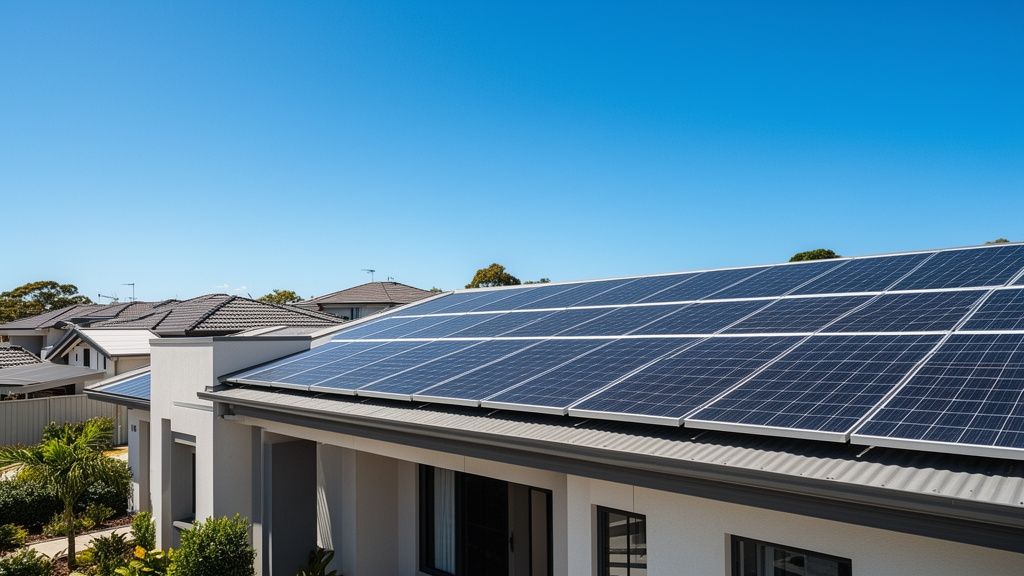
Alinta offers dedicated solar plans in NSW, VIC, QLD and SA.
The feed-in tariff is not a single number. It varies by state, by distribution zone and by plan, and it changes without much notice. Anyone quoting you a national Alinta feed-in rate is guessing. Check the current figure against your own postcode on Alinta's site or through the government's Energy Made Easy comparison service.
The Feed-in Tariff Is Not the Number That Matters
Feed-in rates across the whole market have fallen hard. Most retailers now sit below 5c/kWh, and the reason is straightforward: so much rooftop solar exports at the same time that midday wholesale prices frequently go negative.
This changes how you should compare retailers. A plan advertising a high feed-in tariff often pairs it with a higher daily supply charge or higher usage rates, and the headline number is doing marketing work rather than saving you money.
What actually decides your bill is how much grid power you buy and at what rate. Self-consumption is worth four to eight times what export is worth, which is why battery and load-shifting decisions move the needle far more than switching to a retailer offering an extra cent per exported kilowatt-hour.
How to Compare Properly
Take your last four bills. Note your total imported kWh, your total exported kWh, and how those imports split across peak, shoulder and off-peak if you are on a time-of-use tariff.
Run those figures against Alinta's daily supply charge, usage rates and feed-in tariff, then against two competitors. That arithmetic tells you something. Comparing advertised feed-in rates does not.
Households exporting a large surplus, typically big arrays with low daytime consumption, are the exception. For them the feed-in rate does carry weight and should be chased.
The Environmental Problem
Alinta ranked 32nd out of 39 providers in the 2022 Green Electricity Guide, scoring 3.14 out of 10.
That score is mostly about its owner rather than Alinta itself. Chow Tai Fook Enterprises owns coal-fired generation and has signalled it intends to keep burning coal until 2047. On the guide's assessment, the group is Australia's seventh largest climate polluter.
Alinta has committed to building out renewable generation, pledging 1,500MW and reaching 860MW at the time of that assessment. That is real investment, and it does not offset the coal position in the way the marketing implies.
If you are choosing a retailer partly on environmental grounds, this is the fact that should decide it. Buying GreenPower as an add-on is a separate transaction and available through most retailers, so it does not resolve the question of who you are sending your money to.
Customer Service
Alinta scores well here. It has taken solar provider awards in Finder's 2024 and 2025 customer satisfaction rankings, which is a survey result rather than an audit but still tells you something about the experience of dealing with them.
Phone support runs most days, with online channels alongside. Billing enquiries and plan changes are handled without the escalation loops that plague some larger retailers.
For solar customers specifically, the useful test is how quickly a retailer processes your solar connection paperwork and starts crediting exports after installation. Delays there are common across the industry and cost real money while your system exports uncredited. Alinta's record on this is reasonable but worth confirming with your installer, who will have dealt with every retailer in your state.
Should You Sign Up?
Alinta is worth including in a shortlist if you want a mid-sized retailer with responsive service and flexible payment options, and you are comparing on total annual cost rather than headline feed-in rates.
Rule it out if the parent company's coal position matters to you, because no plan Alinta sells changes that.
Either way, do the comparison on your own consumption figures and redo it annually. Retailers reprice, discounts expire quietly, and the plan that was competitive when you signed rarely stays that way.
Key Takeaways
- Alinta sells electricity, gas and solar plans in NSW, VIC, SA and QLD, and gas in WA.
- Solar feed-in tariffs vary by state, zone and plan. Check your own postcode rather than trusting a national figure.
- Feed-in rates market-wide now sit below 5c/kWh. Compare on total annual cost, not on the advertised export rate.
- SmoothPay evens out the seasonal swings that make solar households' quarterly bills unpredictable.
- The environmental ranking is poor because of the parent company's coal generation, despite Alinta's own 860MW of renewables.