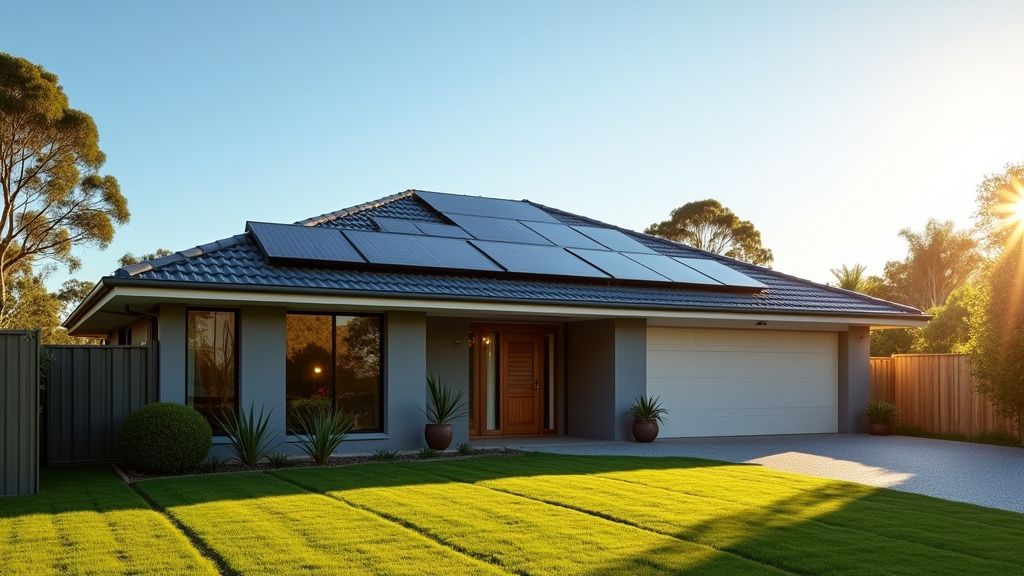
SolarInsights: Picking the Perfect Panels – A Guide to Solar Panel Types for Australian Conditions
Thinking about going solar? Excellent choice! Australia's abundant sunshine makes solar power a fantastic investment. But with so many options available, choosing the right solar panels can feel overwhelming. This blog post will break down the best solar panel types for Australian conditions, along with their typical efficiencies, helping you make an informed decision. For a more comprehensive understanding of efficiency, check out our Complete Guide.
Understanding Solar Panel Basics
Before diving into specific panel types, let's cover some fundamentals. Solar panels, also known as photovoltaic (PV) panels, convert sunlight into electricity through the photovoltaic effect. They work with both direct sunlight and diffuse sunlight, meaning they can still generate power on cloudy days, albeit less than on a clear day.
The power a solar panel generates under ideal conditions is called its "rated capacity," measured in watts (W). A typical home solar system consists of multiple panels to increase generating capacity, which is measured in kilowatts (kW). A system with 19 x 350W panels, for instance, would have a capacity of 6.65kW.
Importantly, a panel's efficiency is the percentage of sunlight it converts into electricity. For panels of the same size, a higher efficiency rating translates to a greater power output. Over time, solar panel performance decreases slightly, known as degradation. Solar panel warranties specify the maximum degradation expected over their lifespan.
The Top Solar Panel Types for Australia
Now, let's explore the common types of solar panels suitable for the Australian climate:
1. Monocrystalline Solar Panels:
- Description: These panels are made from a single crystal of silicon, giving them a uniform, dark appearance.
- Efficiency: Monocrystalline panels are known for their high efficiency, typically ranging from 20% to over 22%. Some premium panels even exceed this range.
- Pros: Highest efficiency, excellent performance in high temperatures, sleek aesthetic.
- Cons: Generally the most expensive option.
- Australian Suitability: Excellent. Their high efficiency makes them ideal for roofs with limited space or where maximum power generation is desired. Their temperature tolerance is beneficial in Australia's hot summers.
2. Polycrystalline Solar Panels:
- Description: Polycrystalline panels are made from multiple silicon crystals, giving them a blue, speckled appearance.
- Efficiency: Polycrystalline panels are less efficient than monocrystalline, typically ranging from 15% to 18%.
- Pros: More affordable than monocrystalline panels.
- Cons: Lower efficiency, slightly lower performance in high temperatures compared to monocrystalline.
- Australian Suitability: Good. While less efficient, their lower cost makes them a viable option for larger roofs where space isn't a constraint. However, their performance may dip slightly in extremely hot conditions.
3. Thin-Film Solar Panels:
- Description: Thin-film panels are made by depositing a thin layer of photovoltaic material onto a substrate. They are flexible and lightweight.
- Efficiency: Thin-film panels have the lowest efficiency, typically ranging from 10% to 13%.
- Pros: Most affordable, flexible and lightweight, can be integrated into building materials.
- Cons: Lowest efficiency, require more roof space, shorter lifespan compared to crystalline panels.
- Australian Suitability: Less common for residential applications due to their lower efficiency. They may be suitable for niche applications like curved roofs or portable solar solutions.
Choosing the Right Panel for Your Needs
Selecting the best solar panel type for your home depends on several factors:
- Budget: Polycrystalline and thin-film panels are generally more budget-friendly than monocrystalline.
- Roof Space: If you have limited roof space, high-efficiency monocrystalline panels are the best choice.
- Climate: All three types perform well in most Australian climates, but monocrystalline panels have a slight edge in high-temperature environments.
- Aesthetics: Consider the visual appeal of the panels and how they will complement your home's design.
- Energy Needs: How much energy do you need to generate to offset your electricity bills?
Understanding Solar Panel Output in Australia
The amount of electricity your solar panels will generate depends on several factors, including your location, the angle and orientation of the panels, and shading. In Australia, 1kW of solar panels can generate between 3.5 kWh and 5 kWh of electricity per day, averaged over a year. Sunny locations will generate more than cloudy locations, and summer months will typically see higher production than winter months.
Working with a Solar Installer
It's always best to consult with a qualified solar installer to determine the most suitable solar panel type and system size for your specific needs and location. They can assess your roof, energy consumption, and budget to design a custom solar solution that maximizes your savings and environmental impact.
Going solar is a smart move for Australian homeowners. By understanding the different types of solar panels and their efficiencies, you can choose the best option for your needs and enjoy the benefits of clean, affordable energy for years to come.
